
The Advanced Carbons Council runs an independent testing programme built to answer the question the market keeps asking: does this material actually do what the datasheet says? We characterise and validate advanced carbon materials against internationally recognised standards and established best practice, so producers, buyers, investors and regulators can work from the same evidence base rather than competing marketing claims.
Where Testing Is Used
Independent testing underpins decisions across the carbon value chain:
Supplier qualification. Confirm a producer's material meets its stated specification before you commit to a supply agreement.
Certificate of analysis validation. Verify batch-to-batch consistency and check incoming material against the COA and technical datasheet.
Investment and technical due diligence. Substantiate the performance and production claims behind an acquisition, funding round or partnership.
Application development and benchmarking. Compare candidate materials on a like-for-like basis to choose the right carbon and processing route for a product.
Standards and dispute resolution. Provide a neutral, method-traceable result when a specification, contract or claim is contested.
Standards and Best Practice
Our methods follow the frameworks recognised across the materials industry, including standards published by ISO, IEC and ASTM, and the ISO-based classification framework that gives advanced carbons a shared vocabulary. Every reported result is traceable to a defined, validated method, so it can be repeated and defended.
Testing spans more than twenty validated analytical methods, grouped by what they measure:
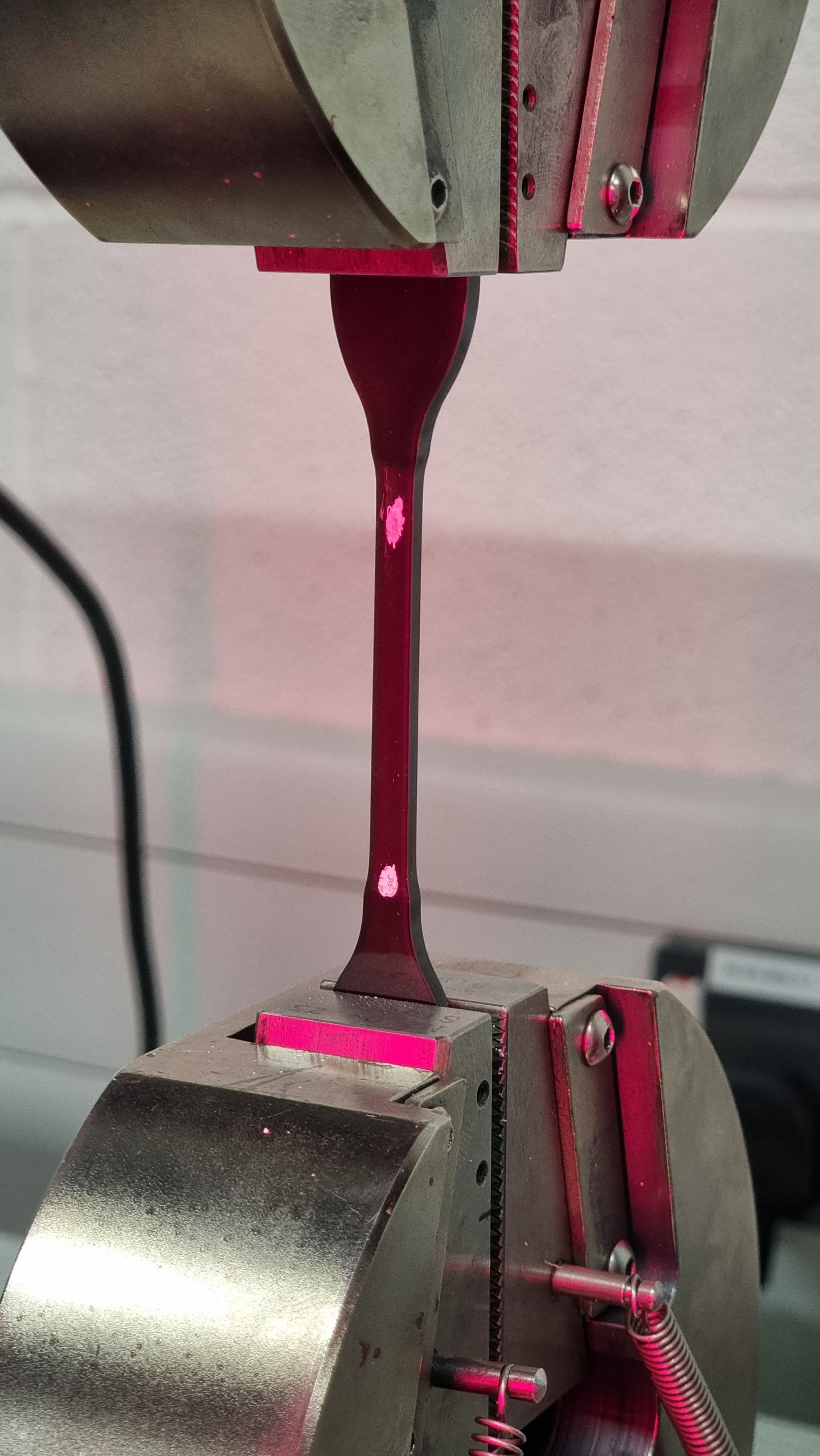
Mechanical testing: tensile strength and modulus, flexural and compressive strength, impact resistance, hardness, and interlaminar shear for fibres and composites.
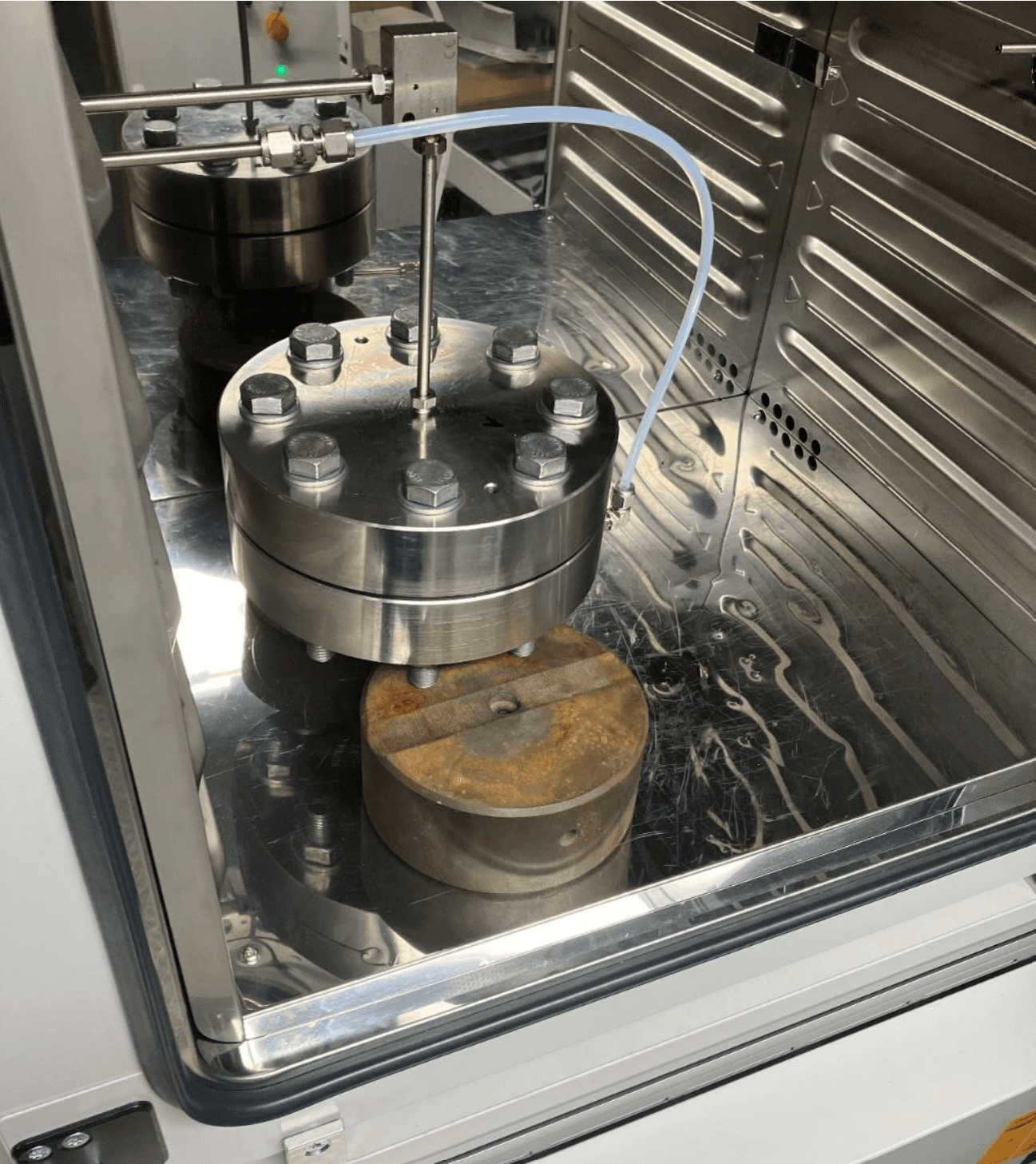
Barrier and permeation testing: hydrogen permeation and gas barrier performance for composites, liners and pressure components.
Thermal testing: thermogravimetric analysis (TGA) for purity, thermal stability and ash content, differential scanning calorimetry (DSC), and thermal conductivity.
Structural and spectroscopic analysis: Raman spectroscopy for layer count, defect density and structural quality, and X-ray diffraction (XRD) for crystallinity.
Surface area and porosity: BET analysis for specific surface area and pore structure.
Morphology and imaging: scanning and transmission electron microscopy (SEM and TEM) for particle size, morphology and dispersion.
Surface chemistry: X-ray photoelectron spectroscopy (XPS) and FTIR for functionalisation and oxidation state.
Chemical purity and composition: elemental and trace-metal analysis, including ICP, plus ash and residue content.
Electrical characterisation: sheet resistance, bulk and surface conductivity, and EMI shielding effectiveness.
These methods apply across the ten carbon material segments the Council tracks, from graphene, carbon nanotubes and nanodiamonds to carbon fibre, graphite, biochar and recycled carbons.
The methods above are a starting point, not the limit. We also run application development and use-case testing, building bespoke programmes around how your material behaves in a real product or process. If your requirement is not listed, contact us and we will scope it with you.
From Testing to Verification
Testing is the evidence layer beneath ACC Verification. Where an independent test confirms a company genuinely produces a material to standard, that result can support entry to the ACC Verified registry, the in-person, on-site programme that separates real production capacity from announced capacity. Testing tells you what a material is; verification confirms the company can make it, repeatably.
Learn about ACC Verification →How it works
A straightforward path from enquiry to a report you can act on.
01
Scope and quote
Tell us the material and the decision the result needs to support. We scope the right methods, then confirm cost and timeline before any work begins.
02
Sample submission
Send your samples with any existing datasheet or certificate of analysis. We confirm receipt and the requirements for quantity, form and handling.
03
Testing and analysis
Our technical team runs each method to recognised standards, with every measurement traceable to a defined, validated procedure.
04
Reporting
You receive a clear, method-referenced report with measured values and interpretation, ready to support qualification, due diligence or verification.
Request Testing
Request testing or a quote
Tell us the material, the properties you need measured, and the decision the result will support. The team will scope the right methods and respond directly.