Advanced carbon material
Biochar
A simple idea with serious climate weight. Biochar locks carbon from biomass into a stable, porous solid that improves soils, filters water and counts as durable carbon removal.
What is biochar
Biochar is a stable, carbon-rich solid made by pyrolysing biomass in a low-oxygen environment. The process drives off volatile compounds and leaves a highly porous carbon skeleton with a large internal surface area. Because that carbon resists decay, biochar can keep it out of the atmosphere for a long time, which is why it sits at the centre of durable carbon dioxide removal. The same porosity gives it real value in soils, in filtration and as an additive in construction materials and other engineering applications.
Material properties
What makes biochar exceptional
Market outlook
A market scaling fast
Global market reports identify at least 350,000 metric tonnes of biochar production in 2023, with industry revenue above $600 million, driven mainly by demand for durable carbon removal and carbon credits.
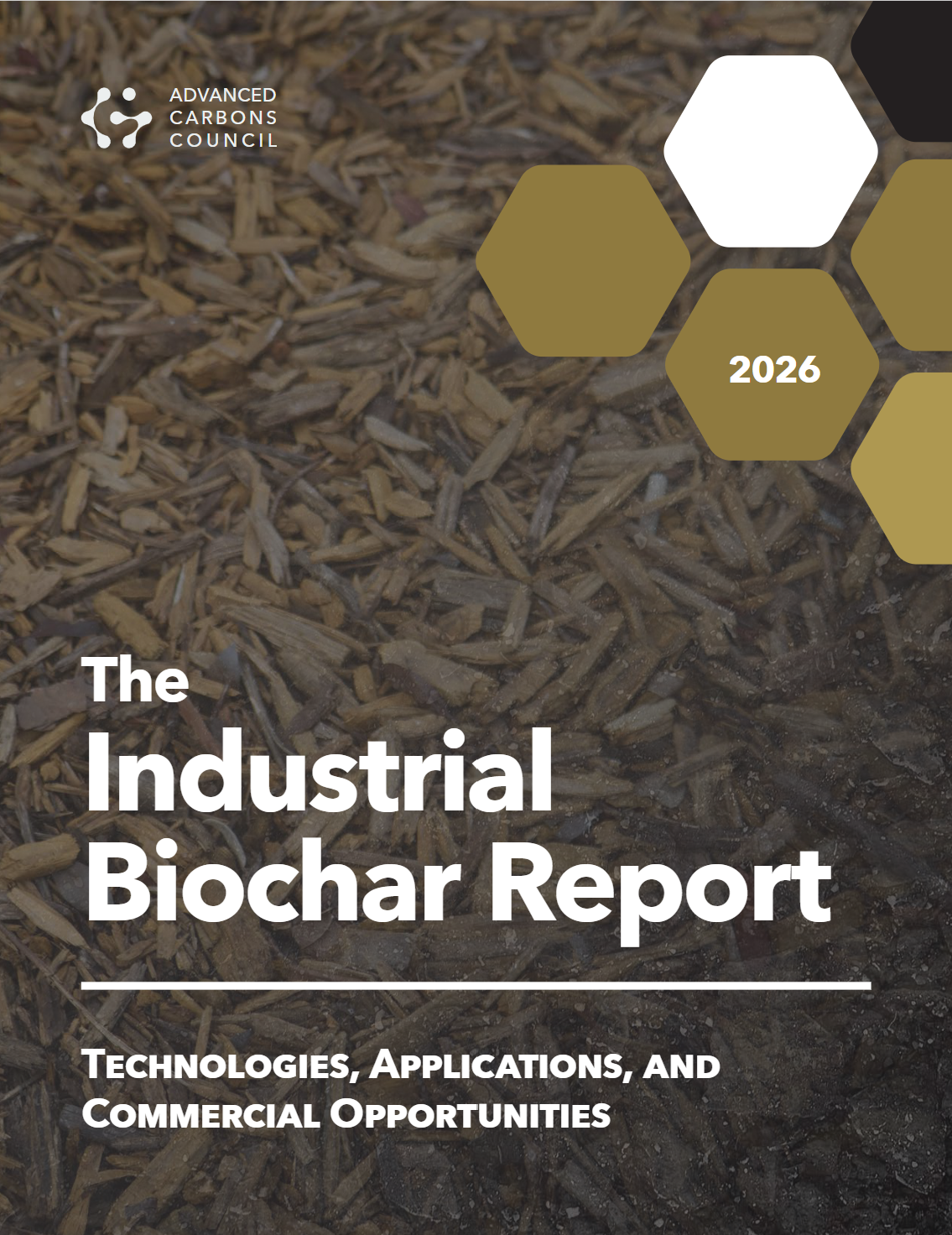
ACC Intelligence
The Biochar Report
Independent market sizing, the producer and feedstock landscape, and demand forecasts across carbon removal and industrial uses, refreshed every year.
Where biochar appears in our coverage
Application sectors
How biochar fits the carbon ecosystem
Ecosystem map
The above is for illustration purposes only and does not represent every possible data point.
Innovation activity
Biochar patents
Tracked live from the Advanced Carbons Council patents database, updated as new filings are indexed.
Request biochar patent intelligence →Standards and certification
Key Biochar standards
Recent coverage
What we’re reporting
Explore further
Used in these applications
Enquire about Biochar
Ask the ACC team about Biochar: sourcing, applications, membership, or connecting with producers in the network.
Get the briefing
Advanced carbons intelligence in your inbox. Always free.
Weekly. No spam. Unsubscribe anytime.
At a glance