Ultrafast imaging shows graphene electrons crossing energy gaps with 100% probability
Researchers in Germany used ultrafast imaging to observe electrons in graphene crossing energy gaps with a 100% probability, revealing insights into quantum transitions under intense electric fields.
Researchers have achieved a breakthrough in observing electron transitions in graphene with unprecedented precision. Utilizing a novel imaging technique with attosecond accuracy, scientists have captured Landau-Zener-Majorana transitions in graphene, where electrons cross energy gaps with a probability of up to 100%.
This advancement was made possible by expanding the momentum area accessible at subcycle resolution by over 100 times compared to previous methods. The experiments provide critical insights into how electron scattering affects light-driven motion, which is vital for understanding the limits of ultrafast electronic control.
The study, conducted by researchers from the University of Regensburg, Philipps University of Marburg, and Forschungszentrum Jülich in Germany, demonstrates how intense electric fields can drive quantum transitions in real time. By combining ultrafast lasers with electron microscopy, the team tracked electron movements in graphene, an atomically thin carbon material.
In solids, electrons occupy specific energy ranges known as bands, separated by energy gaps where electrons typically cannot exist. However, quantum mechanics allows electrons to tunnel between these bands. The probability of such transitions is influenced by the speed at which an electron approaches the energy gap.
The researchers employed extremely short laser pulses alongside a photoemission momentum microscope to observe this process. Unlike traditional microscopes, this instrument maps the energies and motion of electrons, providing a detailed view of their distribution within a material.
The laser pulses generated strong, rapidly changing electric fields, propelling electrons through graphene's electronic energy structure. "If you want to know who has won a race, you have to watch all participants," explained Vincent Eggers, the study's first author. "Similarly, we must observe as many electrons as possible to catch those undergoing quantum mechanical transitions."
Under experimental conditions, the measurements revealed that electrons could cross the energy gap with a tunneling probability reaching 100%. This finding indicates that transitions between separated energy states become highly probable when electrons are driven rapidly enough.
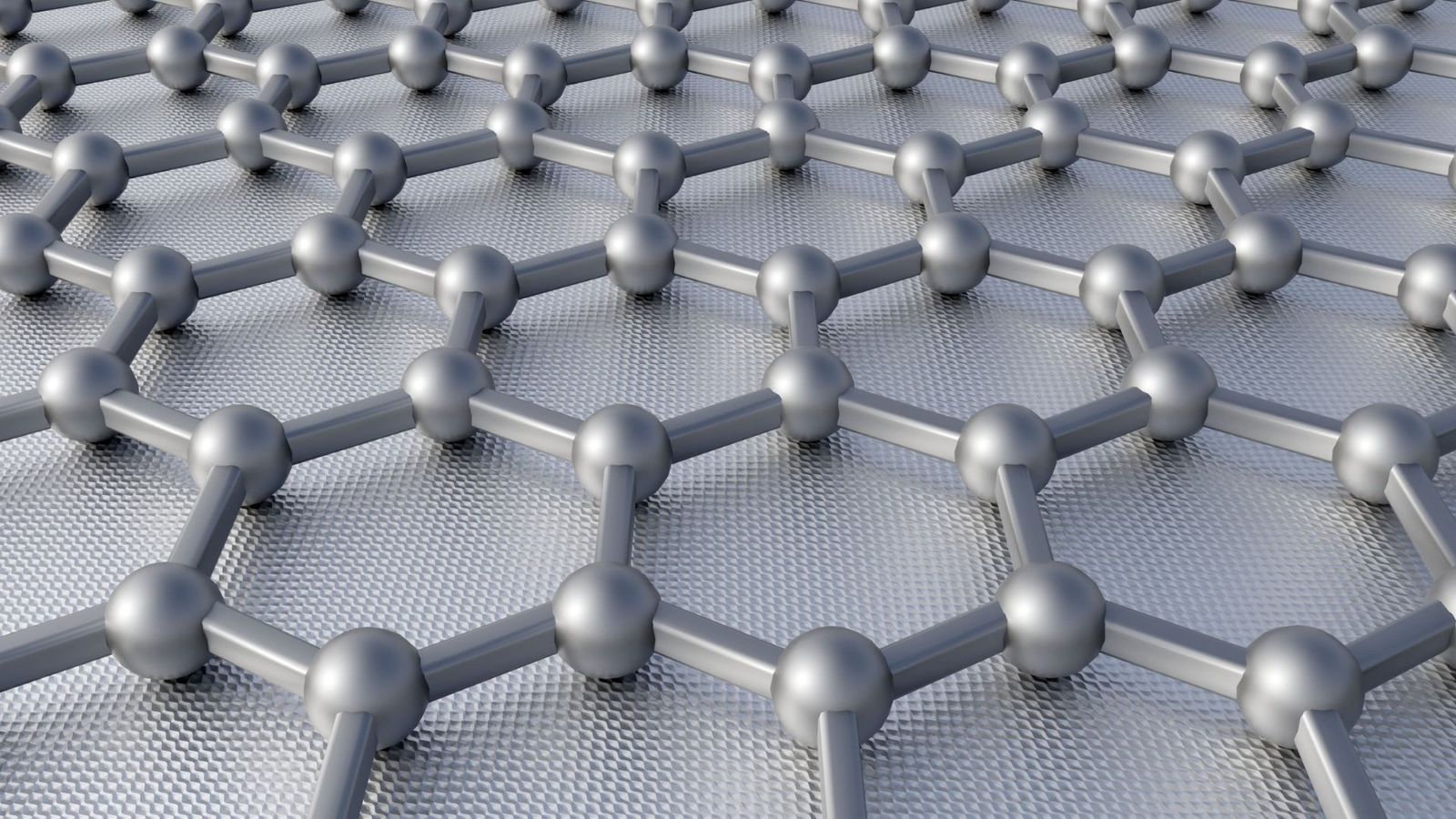
The team utilized specially prepared graphene samples from Forschungszentrum Jülich. Graphene, a single layer of carbon atoms in a hexagonal structure, is ideal for studying electron responses to external electric fields. The experiments used exceptionally pure samples, including rotated graphene structures, to facilitate the observation of quantum dynamics.
"These precision experiments require material that is nearly perfect at the atomic level," stated Stefan Tautz of Forschungszentrum Jülich. "This ensures that impurities do not obscure the delicate quantum dynamics of the electrons."
The technique also allowed researchers to study how interactions between electrons and the crystal lattice disrupt their coordinated motion. Understanding these effects could help define the physical limits of controlling electrons with rapidly oscillating light fields, a potential pathway to developing electronics faster than current devices relying on conventional voltage switching.
The researchers suggest their approach could be extended to other quantum materials, enabling the study of electronic behaviors previously difficult to observe. "Our experiment opens a panoramic window into the quantum world," said Giacomo Inzani of the University of Regensburg. "Now, we can follow in real time how electrons move through the energy landscape of a material. And this is just the beginning." The study is published in Nature.
Source: Graphene Feed