Canatu secures additional CNT reactor order from FST for EUV pellicle production
Canatu has secured an additional CNT100 SEMI reactor order from FST for CNT-based EUV pellicle production. The contract exceeds EUR 5 million including earlier long-lead items. The order follows prior reactor qualification and licensing, supporting further scale-up of Canatu’s CNT technology.
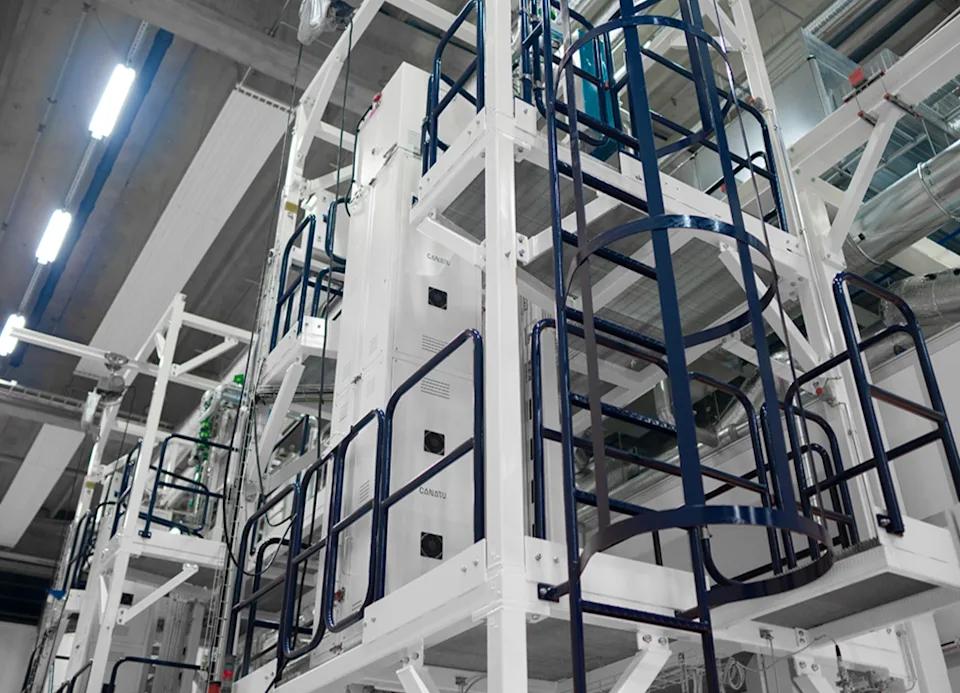
Canatu has received an order for an additional CNT100 SEMI reactor from South Korean semiconductor company FINE SEMITECH CORPORATION (FST), extending the companies’ collaboration around the manufacture of carbon nanotube-based pellicle membranes for extreme ultraviolet (EUV) semiconductor processing.
The order follows FST’s earlier purchase of long-lead-time components for the system and represents a further expansion of its CNT pellicle manufacturing capacity. Including the previously ordered components, Canatu classifies the total contract value as exceeding EUR 5 million, excluding royalties and other recurring revenue elements.
Delivery of the reactor is scheduled for 2027. Canatu expects the order to begin contributing to revenue during the second half of 2026, although most of the associated revenue is expected to be recognised in 2027.
The latest order is significant primarily as a continuation of the technology’s transition from equipment qualification towards larger-scale commercial production. CNT membranes are being developed for use as pellicles in EUV lithography, where the membrane protects the photomask while allowing EUV radiation to pass through during semiconductor manufacturing.
Canatu’s approach is based on CNT membranes produced using its patented reactor technology and Dry Deposition by Canatu process. The company supplies both CNT products and manufacturing systems, with the latter business model combining reactor sales with technology licensing, proprietary consumables and royalties from customer-operated production.
Expansion follows qualification of first CNT100 SEMI system
Canatu shipped its first CNT100 SEMI reactor in September 2024. The system, together with associated post-processing equipment, received customer approval in July 2025, enabling commercial-scale production of CNT-based EUV pellicles.
The commercial relationship with FST progressed further in October 2025, when Canatu granted the company a production licence covering its CNT technology. Under that arrangement, commercial manufacturing can generate recurring revenue for Canatu through royalties in addition to sales of proprietary consumables used during CNT production.
FST subsequently placed an order for long-lead-time components earlier in 2026. The newly confirmed reactor order completes the next stage of that capacity expansion.
According to Canatu CEO Dr. Maximilian Slawinski, the repeat equipment order provides further evidence of customer confidence in both the CNT material technology and the reactor platform, while supporting the wider commercial development of CNT pellicles for EUV semiconductor manufacturing.
CNT membranes target demanding EUV pellicle requirements
Pellicles used in advanced lithography have to operate under an unusual combination of requirements. In addition to protecting the photomask from contamination, the membrane must interfere as little as possible with the radiation passing through it and remain functional under the thermal and mechanical conditions associated with the lithography process.
CNT networks are being developed for this application because their nanoscale structure enables extremely thin, low-mass membranes to be manufactured while retaining useful mechanical properties.
For Canatu, the importance of the FST order therefore extends beyond the sale of an additional production system. The transaction indicates continued investment in dedicated manufacturing capacity for CNT pellicles following the earlier installation, qualification and licensing stages.
Once commercial production using the additional reactor begins, Canatu expects its revenues associated with the installation to extend beyond the initial equipment sale through royalties and sales of proprietary process consumables.
The order also illustrates the equipment-and-licensing route Canatu is using to scale its CNT manufacturing technology. Rather than producing all material centrally, the company can deploy its CNT reactors at customer sites while licensing the associated production process.
Canatu, headquartered in Finland, develops CNT materials, products and manufacturing equipment for applications including semiconductor processing, robotics, mobility and defence, and medical diagnostics. Its semiconductor activities currently centre on CNT membranes for EUV processes. The company was founded in 2004 as a spin-off from Aalto University’s Nanomaterials Group and employs 185 full-time-equivalent staff across operations that include Finland, the US, Japan and Taiwan.