Graphene addresses zinc-air battery losses
Chinese researchers achieved 98% energy recovery in a rechargeable zinc-air battery using a fluorine-engineered graphene catalyst.
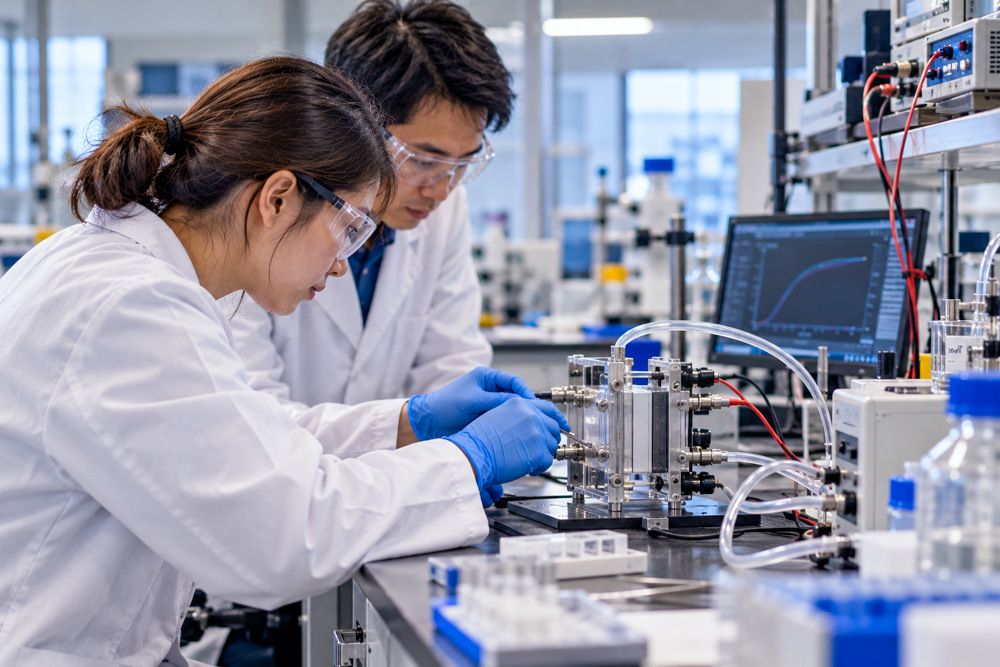
Researchers at the Chinese Academy of Sciences have developed a fluorine-engineered graphene catalyst that achieves 98% energy recovery in an experimental rechargeable zinc-air battery. This advancement addresses the energy losses that have historically limited the efficiency of zinc-air batteries.
Zinc-air batteries generate electricity by combining zinc metal with oxygen from the air, offering high energy storage potential due to abundant zinc resources and a design that does not require internal oxygen storage. However, making these batteries rechargeable is challenging, particularly at the air-facing electrode where oxygen undergoes slow reactions during both charging and discharging, leading to energy losses.
To mitigate these losses, researchers explored a method that converts oxygen into hydrogen peroxide during discharge and reverses the reaction during recharging. This process requires a catalyst that can facilitate both reactions without losing conductivity or degrading over time.
Graphene, a carbon-based material known for its electrical conductivity and modifiable surface, was chosen as a potential catalyst. By bonding fluorine to graphene's carbon structure, researchers aimed to enhance its catalytic properties without compromising conductivity.
Professors Zhenhai Wen and Junheng Huang led a team that developed a catalyst by heating fluorine-rich graphene, gradually removing fluorine to restore conductivity. They identified a composition, FG-3, with 3.1% fluorine, which effectively directed 97.4% of oxygen conversion to hydrogen peroxide, maintaining 98% electrical charge efficiency.
Incorporating FG-3 into a zinc-oxygen battery, the team achieved a peak power output of 569 milliwatts per square centimeter, significantly higher than previous studies. The experimental battery recovered 98% of energy during charging, with only 2% loss over a full cycle, and retained 97.6% energy recovery after 1,500 cycles, operating stably for over 820 hours.
This research not only improves rechargeable zinc-air battery performance but also suggests potential applications in other metal-air energy systems and localized hydrogen peroxide production.
Source: Graphene Feed