Paper and biofuel waste converted into strong, affordable carbon fiber
Researchers converted pyrolysis bio-oil into carbon fiber that surpasses Department of Energy automotive performance targets, costing less than five dollars per pound.
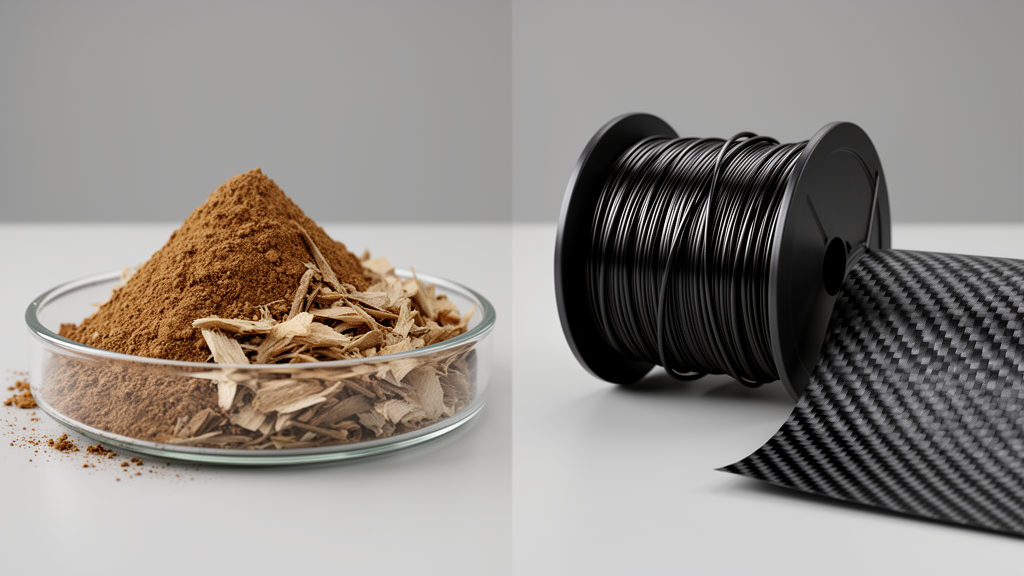
Researchers at Iowa State University have developed a method to produce high-performance carbon fiber using lignin and bio-oil, coproducts of the paper and biofuel industries. Lignin, a byproduct of paper manufacturing, and bio-oil, derived from biomass through fast pyrolysis, are abundant and low-cost resources. The research team, led by Professor Xianglan Bai, has demonstrated that these materials can be chemically transformed into carbon fiber with properties comparable to, or exceeding, those of traditional petroleum-based fibers.
Carbon fiber is essential in lightweight engineering applications, including aerospace, automotive, and wind energy sectors, due to its strength and light weight. However, the high cost of conventional carbon fiber, typically made from petroleum-derived polyacrylonitrile, limits its use in cost-sensitive industries. The Iowa State research offers a promising alternative by utilizing renewable feedstocks to reduce production costs while maintaining performance standards.
The innovation centers on a process called thermo-mechanochemistry, which introduces mechanical stress during the carbonization of lignin-based fibers. This approach enhances the tensile strength and stiffness of the resulting carbon fiber, achieving a tensile strength of up to 2.45 gigapascals and a tensile modulus of up to 236 gigapascals. These metrics surpass the U.S. Department of Energy's recommendations for automotive applications, which require a tensile strength of at least 1.72 gigapascals and a tensile modulus of at least 172 gigapascals.
A second innovation involves using a fraction of bio-oil to chemically modify lignin, making it suitable for melt spinning and reducing stabilization time from tens of hours to just two to four hours. This advancement addresses a significant bottleneck in carbon fiber production, further lowering costs and increasing throughput.
The synergy between these innovations creates a commercially viable process by leveraging lignin and bio-oil, both byproducts of existing industries. This approach not only reduces the cost of carbon fiber production but also adds value to the paper and biofuel sectors. The U.S. National Science Foundation has supported this work with a grant to transition from laboratory-scale to commercial production.
Industry partners, including Harper International and Latis Materials, are collaborating with Iowa State to develop the necessary infrastructure for large-scale production. This collaboration aims to ensure that the entire production pathway, from biomass fractionation to carbonization, is optimized for commercial viability. The project holds strategic importance as it could secure a domestic supply of carbon fiber, reducing reliance on overseas production and enhancing U.S. economic competitiveness.
Source: Carbon Fiber Feed