£1.2m granted to study water's atomic-scale electrical behaviour
The University of Manchester's National Graphene Institute received £1.2 million to study water's electrical properties at the atomic level.
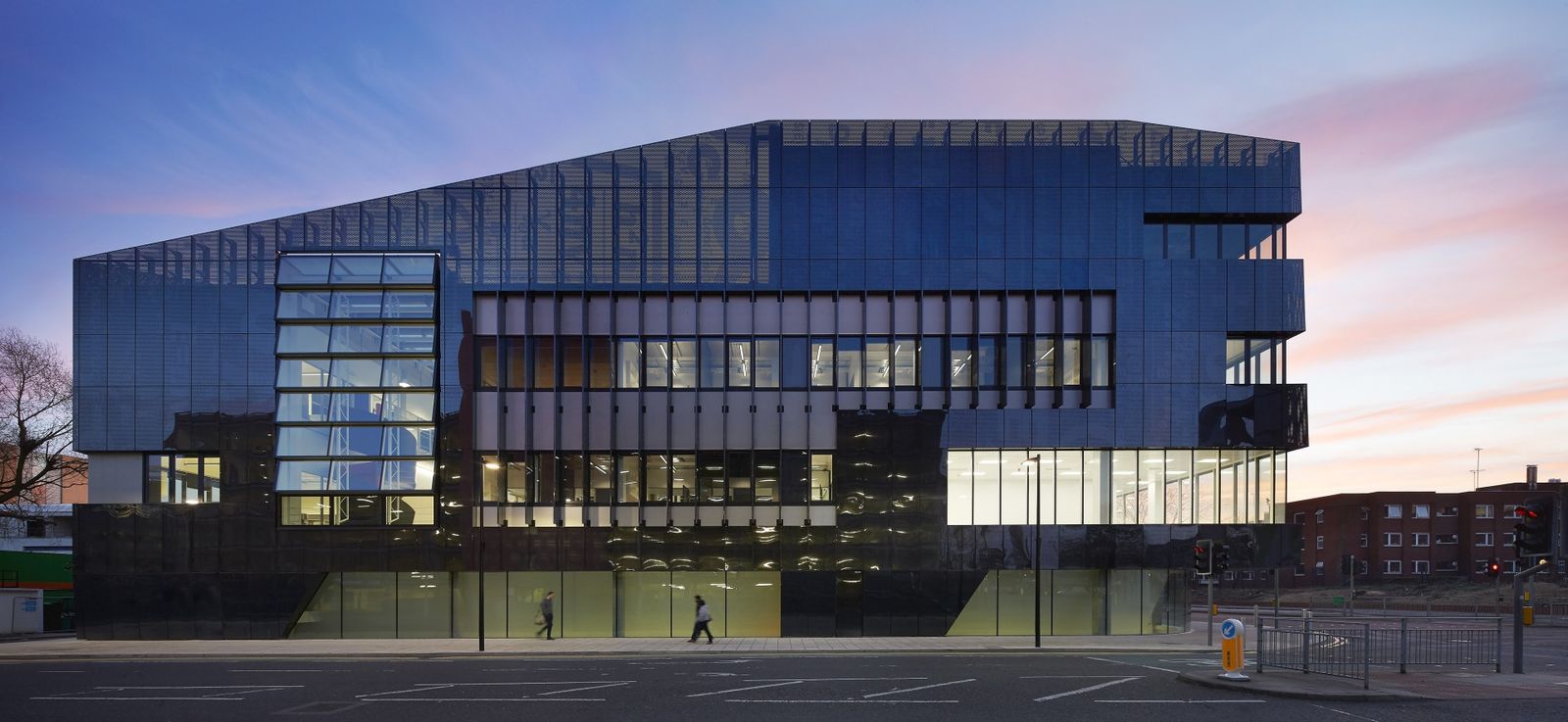
Researchers at the National Graphene Institute (NGI) at The University of Manchester have received a £1.2 million grant from the Engineering and Physical Sciences Research Council (EPSRC) to study the electrical properties of water and aqueous electrolytes confined to atomic-scale spaces. This project aims to address challenges in nanoscience, energy technologies, and molecular biology by exploring how these substances behave when restricted to channels only a few atoms thick.
The project, titled "Unravelling the Electrical Properties of Two-Dimensional Water and Aqueous Electrolytes," is led by Dr. Laura Fumagalli. It involves collaboration with researchers from Politecnico di Milano, the University of Cambridge, and Oxford Instruments Asylum Research. The Manchester team includes Professor Sir Andre Geim and Dr. Alessandro Principi as co-investigators.
Water's electrical properties are crucial for various processes, including energy storage and electrochemistry, yet they remain poorly understood, especially near surfaces and under extreme confinement. The Manchester team has developed an experimental platform to confine water within atomically thin channels, allowing for nanoscale precision in probing its electrical behavior. Previous studies have shown that water confined to layers one to two nanometers thick can exhibit unusual electrical polarizability and high conductivity compared to bulk water.
The research will focus on creating new devices from two-dimensional materials to confine water and electrolytes within atomically thin channels. Using scanning dielectric microscopy, the team will measure electrical properties such as conductivity and dielectric response with high spatial resolution. The project will also develop theoretical models to explain the behavior of water and ions under confinement, providing experimental benchmarks for simulations in physical chemistry and molecular science.
The findings could impact various fields, as confined water and electrolytes are central to technologies like batteries, fuel cells, supercapacitors, filtration membranes, and emerging iontronic devices. Improved understanding of their behavior could guide future developments in energy technologies, water treatment, sensing, and nanofluidic systems.
Professor Sarah Sharples, Vice-President and Dean of the Faculty of Science and Engineering at The University of Manchester, noted that the properties of water under extreme confinement have previously surprised researchers. By combining advanced two-dimensional materials with new nanoscale measurement techniques, the project aims to investigate questions that have been experimentally inaccessible for years.
The three-year project will be conducted at the National Graphene Institute, leveraging Manchester's expertise in two-dimensional materials, nanoscale device fabrication, and scanning probe microscopy, in collaboration with theoretical and industrial partners in the UK and Europe.
Source: Graphene Feed