Old Tyres Turned Phosphorus Magnets Could Feed Crops and Clean Wastewater
Researchers converted waste tyre biochar using hydrogen peroxide to create a material that removes 99% of phosphorus from wastewater.
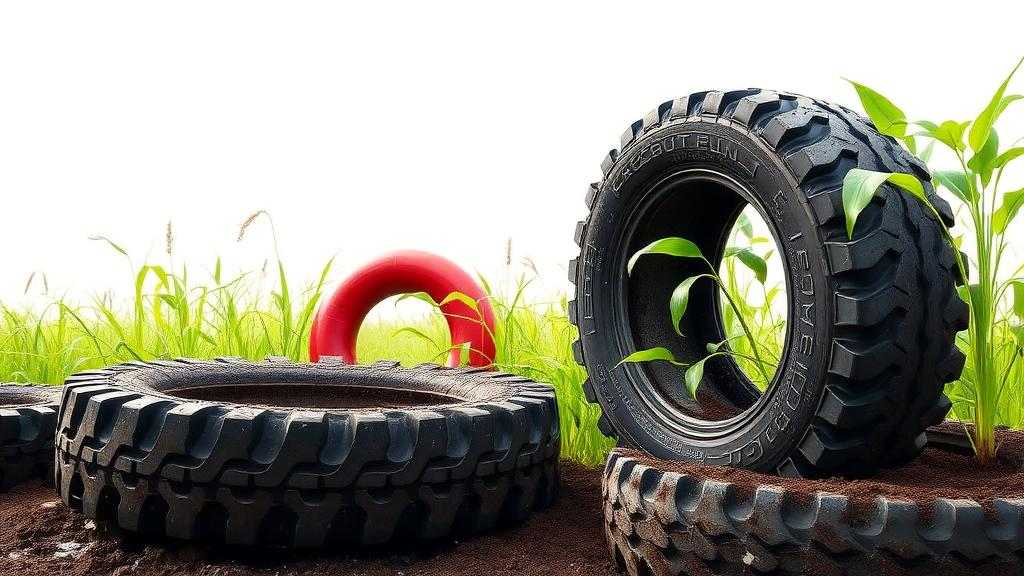
Researchers at The University of Western Australia have developed a method to convert waste tyre rubber into a phosphorus-absorbing biochar, offering a dual solution to tyre waste and phosphorus scarcity. The study, published in Plant and Soil, describes how biochar derived from pyrolysed waste tyres can be modified to act as a slow-release fertiliser. This approach addresses the environmental challenges posed by discarded tyres and the finite availability of phosphorus, a critical nutrient in agriculture.
Led by Hend A. Mohamed, the research team utilized biochar made from waste tyres, which are abundant in Australia. At the Advanced Tyre Resource Recovery Facility, tyres are processed to produce carbon char, crude oil, and fuel gas. The tyre biochar, however, contains toxic compounds and metals, necessitating further treatment. By soaking the biochar in hydrogen peroxide, the researchers significantly enhanced its phosphorus adsorption capacity, making it suitable for environmental applications.
The chemical treatment increased the surface area and oxygen content of the biochar while reducing zinc levels. This modification improved its ability to capture phosphorus from solutions, with the treated biochar removing up to 99% of phosphorus compared to only 20% by untreated biochar. The modified biochar's adsorption capacity was stable across various pH levels, making it effective for wastewater treatment.
In glasshouse experiments, phosphorus-loaded modified biochar significantly enhanced maize growth in nutrient-poor soil. The study showed that this biochar increased shoot and root biomass nearly threefold compared to untreated biochar. However, the researchers caution that further studies are needed to assess long-term field performance and environmental safety, particularly concerning metal leaching and polycyclic aromatic hydrocarbons.
The economic feasibility of this approach remains under consideration, as the adsorption capacity of the modified biochar is lower than that of metal-modified biochars. Nonetheless, the study highlights a potential circular economy model where waste tyres are repurposed to clean wastewater and improve soil fertility, addressing both environmental and agricultural challenges.
Source: Biochar Feed