Composites narrow thermal gap between CFRP and CMC
CompositesWorld reports that new composite materials marketed as PyroKarb, PyroSic, and PyroXide are narrowing the thermal performance gap between carbon fiber-reinforced polymers (CFRPs) and ceramic matrix composites (CMCs). This development is significant for applications requiring high thermal resistance, enhancing the utility of CFRPs in industries like aerospace and automotive.
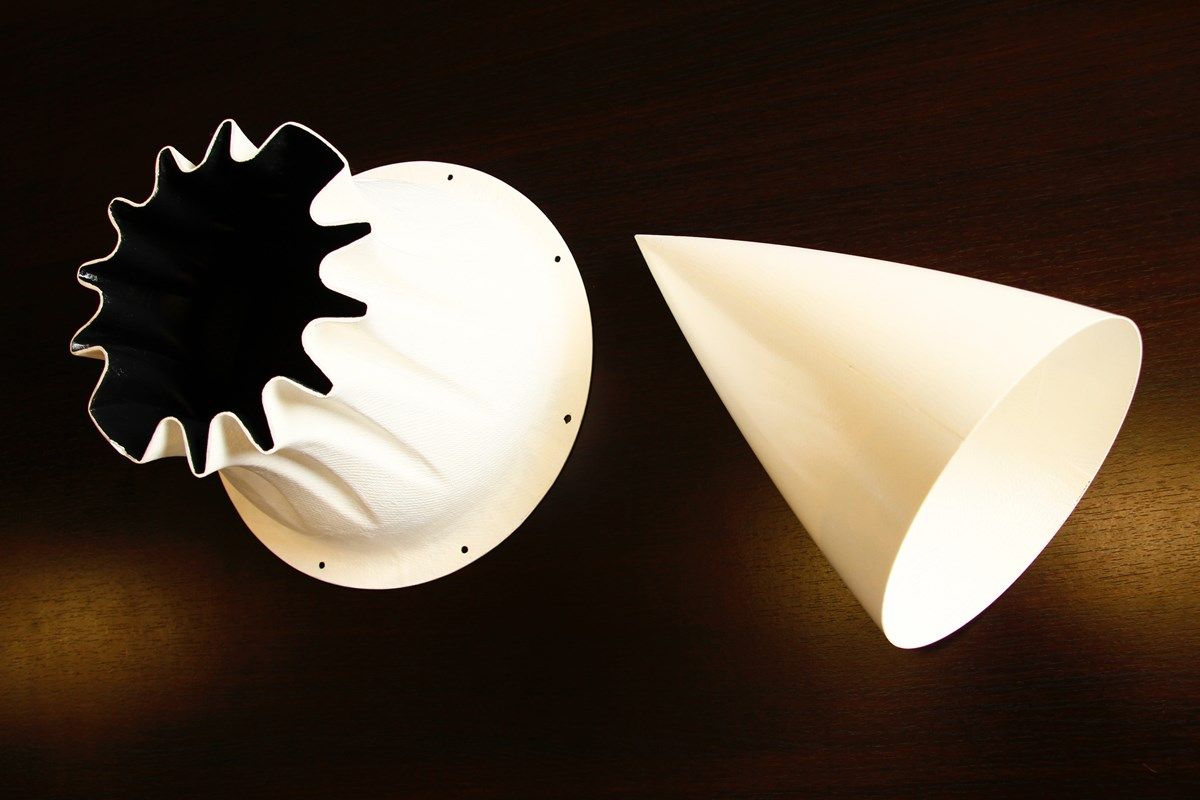
Pyromeral Technology, based in Sunnyvale, California, is advancing high-temperature composite materials to bridge the gap between carbon fiber-reinforced polymers (CFRPs) and ceramic matrix composites (CMCs). Their products, PyroKarb, PyroSic, and PyroXide, are designed for components exposed to temperatures ranging from 500°F to 2000°F and beyond.
The company's proprietary geopolymer ceramic matrices offer a unique processing advantage. Unlike traditional organic polymers and ceramic matrices, these materials can be processed using a low-temperature autoclave cure followed by a single freestanding post-cure. This process allows for net or near-net shape manufacturing without the need for densification or infiltration, streamlining production and reducing costs compared to conventional CMC methods.
PyroKarb, reinforced with high-modulus carbon fiber, maintains structural integrity at continuous temperatures of 1000°F and offers up to 60% weight savings over titanium. PyroSic, with silicon-carbide fiber reinforcement, withstands temperatures up to 1500°F and provides up to 75% weight savings compared to Inconel.
PyroXide, reinforced with aluminum-oxide fiber, extends temperature resistance up to 2000°F, with short-duration capability up to 3000°F. Its radio frequency transparency makes it suitable for high-temperature nose cones and radio-frequency apertures. In exhaust nozzle applications, PyroXide offers up to 70% weight savings over Inconel.
At CAMX 2026, Pyromeral showcased a large-format hot-structure PyroXide rib and a net-shape part produced via chopped fiber compression molding. These examples highlight the company's ability to produce a wider range of parts with cost-effective manufacturing for higher-volume applications.
Pyromeral's materials are utilized in various applications, including engine heat shielding, hypersonic fins, external skins, and battery thermal runaway protection in the advanced air mobility sector. Pyromeral Technology US is ITAR registered and certified to AS9100D and ISO 9001 standards.
The company will exhibit its new technology at CAMX 2026 in Atlanta, Georgia, this September. Attendees can meet their team and explore their offerings.
Additionally, under contract with the Air Force Research Laboratory (AFRL), Firefly is leveraging its expertise to design, build, and test a composite-based nozzle extension aimed at reducing costs and improving rocket engine performance.
Two Department of Energy (DOE) projects are demonstrating C/C-SiC production in 3-5 days with less than 5% shrinkage, under 10% porosity, and at half the cost of conventional C/C and C/C-SiC.
The industry is seeing an increase in new players, expanding CMC materials and manufacturing capacity, and introducing novel processes and automation to meet the demand for higher part volumes and performance.
Source: Carbon Fiber Feed