SK On Develops CNT Powder Process to Reduce LFP Costs, Wins Top Prize at Future Event
SK On has created a process to replace costly carbon nanotube paste with powder in LFP battery cathodes, reducing production costs.
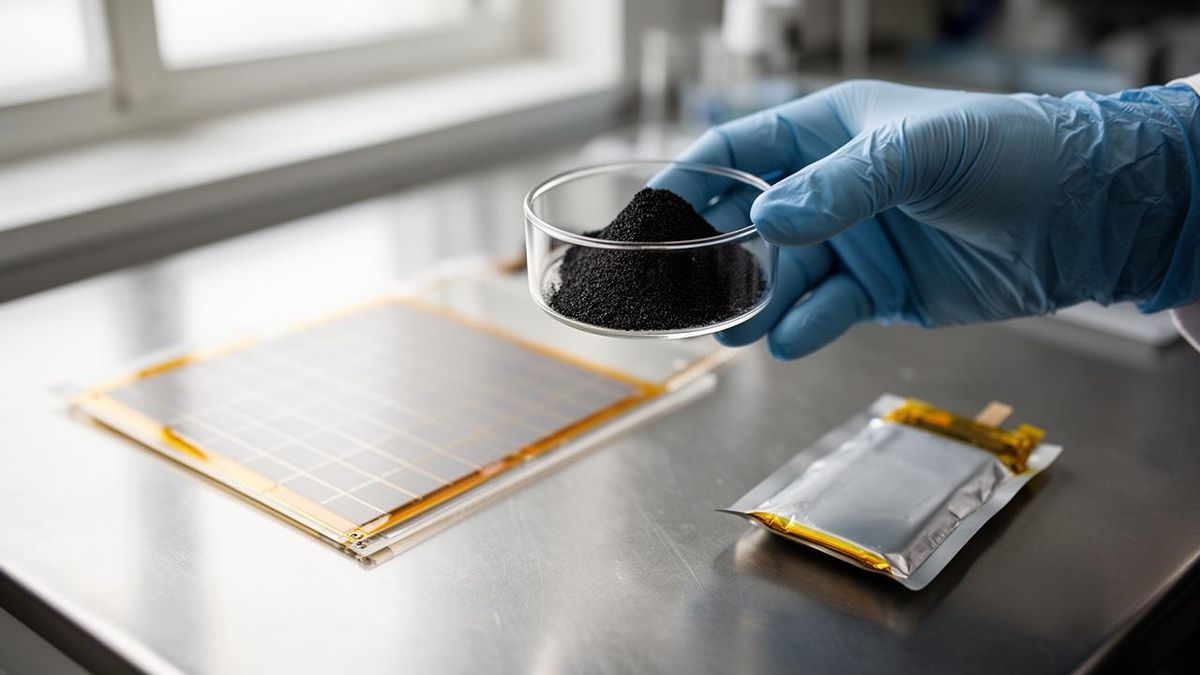
SK On has developed a new process utilizing carbon nanotube (CNT) powder to reduce the manufacturing costs of lithium iron phosphate (LFP) battery cathodes. This innovation replaces the more expensive CNT paste while maintaining equivalent performance. The company is evaluating its feasibility for mass production applications.
The research was awarded the grand prize at the "2nd Future Technology Institute Academic Conference," held on October 14-15 in Daejeon. The event, themed "The Future We Create," featured SK On President Lee Yong-wook and Future Technology Institute Director Park Ki-soo.
Approximately 300 research projects were submitted across six categories, including battery process, cell, and materials, marking a 15% increase from the previous year. Award winners were selected through a blind review based on criteria such as topic relevance and research differentiation.
The winning team developed technology to uniformly disperse CNT powder into cathode materials, a significant advancement due to the cost reduction potential compared to the paste process. SK On will assess the technology's application in production processes.
The top excellence award recognized a team for electrode design technology for large-area pouch-type lithium-metal batteries. Another team received the excellence award for a model predicting capacity degradation and internal resistance.
The conference included a technology exhibition where researchers presented their work and engaged in Q&A sessions. The exhibition featured on-site voting to evaluate the technologies.
Professor Lee Yong-min of Yonsei University delivered the keynote speech on digital twin technology, discussing its role in virtual battery design and performance analysis. He also participated in a Q&A session on battery technology trends and industry-academia collaboration.
SK On's process development aligns with the increasing importance of LFP battery cost competitiveness. LFP batteries, while having lower energy density than nickel-cobalt-manganese (NCM) batteries, are cheaper and offer higher thermal stability, supporting their demand growth as electric vehicle adoption expands.
The transition from CNT paste to powder is crucial in the competitive landscape. Powder form reduces material and logistics costs but presents challenges in uniform dispersion, a critical factor for mass production viability.
The top excellence award for lithium-metal battery electrode design is significant, as lithium-metal batteries promise higher energy density by replacing graphite anodes with lithium metal. Large-area pouch-type cell design is a major commercialization challenge.
SK On plans to make the academic conference a regular event to foster technical exchange and collaboration. The company aims to enhance next-generation battery technology competitiveness through systematic research sharing and evaluation.
President Lee Yong-wook emphasized the conference's role in translating research achievements into SK On's technology competitiveness. The company intends to cultivate a research-centric culture to lead the next-generation battery market.
SK On operates production bases in Georgia, Kentucky, Hungary, and China, while preparing for LFP battery mass production and developing lithium-metal and solid-state batteries. The application of conference research achievements to products and processes will test the company's future technology competitiveness.
Source: Carbon Nanotubes Feed