Graphene can host multiple superconducting states, a new study finds
MIT researchers published a study in Nature finding that rhombohedral graphene, a naturally occurring stacked structure within ordinary graphite, hosts at least four distinct superconducting states, three of which persist under magnetic fields up to 9 tesla and one of which strengthens under a perpendicular magnetic field. The findings expand understanding of graphene's electronic behavior, reinforcing its relevance as a platform for discovering unconventional quantum phenomena in carbon-based materials.
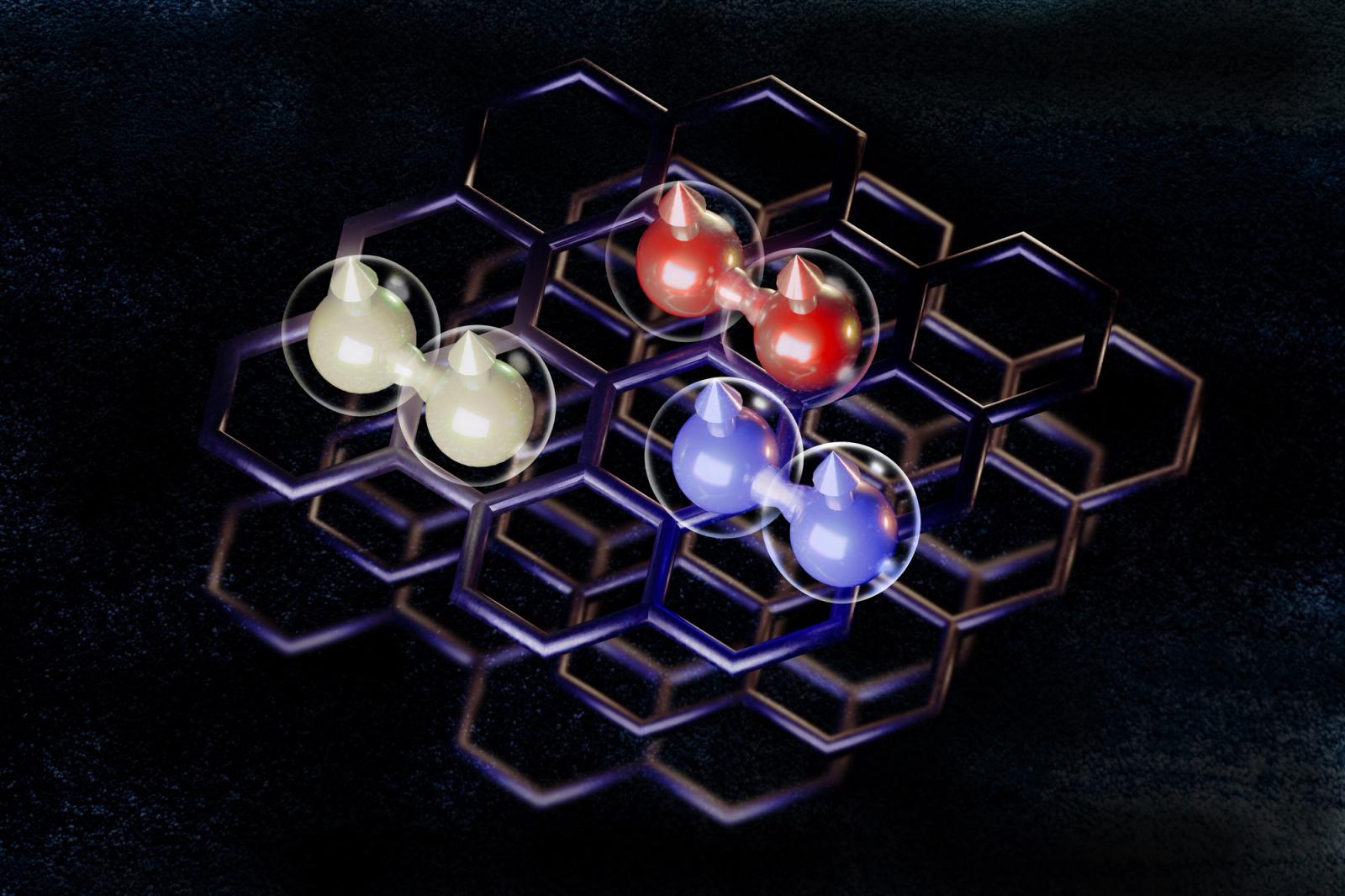
Researchers at the Massachusetts Institute of Technology (MIT) have discovered that graphene, a single-atom-thin sheet of carbon atoms, can host multiple superconducting states. This finding, published in Nature, highlights the complex properties of graphene, a material derived from graphite. Superconductivity, where electrons move through a material without resistance, is rare to find in multiple forms within a single material.
The team focused on rhombohedral graphene, a natural structure within graphite composed of stacked graphene layers. They found that several superconducting states in this form of graphene persist and even strengthen in the presence of a magnetic field, which typically disrupts superconductivity. This discovery points to a new family of unconventional superconducting states in graphene.
Long Ju, Associate Professor of Physics at MIT, emphasized the ability to control graphene's properties by adjusting experimental parameters such as electrical voltages. The study's co-authors include Junseok Seo, Shenyong Ye, and others from MIT, along with collaborators from the University of Basel, Florida State University, and the National Institute for Materials Science in Japan.
The researchers explored the behavior of rhombohedral graphene by removing electrons and applying magnetic fields. They observed four distinct superconducting states at certain electron densities, with three states surviving in magnetic fields up to 9 tesla. Surprisingly, superconductivity increased when the magnetic field was applied perpendicularly, allowing the material to conduct at higher temperatures than expected.
The team proposes that in rhombohedral graphene, electrons may pair with aligned spins, allowing superconductivity to persist despite magnetic fields. This hypothesis requires further investigation. The study demonstrates the potential for new phenomena in carbon materials through precise experimental control.
This research was partially funded by the U.S. Office of Naval Research, with device fabrication conducted at MIT.nano.
Source: Graphene Feed