Tiny doses of MXene nanosheets transform flexible polymer films
Researchers in India discovered that incorporating 1.5 weight percent of Ti3C2Tx MXene nanosheets into PVA/PEG polymer films enhances their properties.
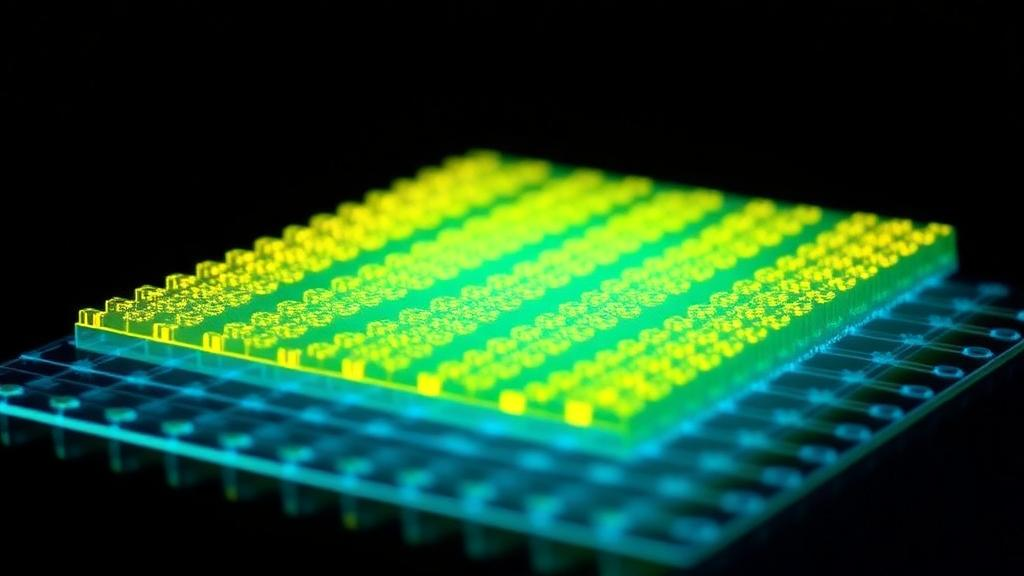
Researchers in Assam, India, have demonstrated that minimal amounts of two-dimensional titanium carbide, known as MXene, can significantly alter the structure and optical properties of flexible polymer thin films. The study, published in Frontiers in Materials, involved creating nanocomposite films from poly(vinyl alcohol) (PVA) and poly(ethylene glycol) (PEG), incorporating 0.5 to 1.5 weight percent of Ti3C2Tx MXene. The results showed that the optical band gap of the films could be reduced from an insulating 5.17 electron-volts to a semiconducting 3.28 electron-volts in the indirect transition. This finding suggests a cost-effective method for adjusting the electronic properties of plastic films, which is essential for applications such as flexible sensors and energy-harvesting devices.
MXenes, a class of two-dimensional transition-metal carbides, nitrides, and carbonitrides, were first discovered in 2011. Ti3C2Tx, the most studied MXene, is produced by etching aluminum from Ti3AlC2 using hydrofluoric acid, resulting in titanium carbide sheets with surface terminations like hydroxyl, oxygen, and fluorine. These terminations enable compatibility with polymers by forming hydrogen bonds with the hydroxyl-rich backbones of PVA. Ti3C2Tx is also an excellent electrical conductor, enhancing the functionality of insulating plastics when used as a filler.
In their research, the team synthesized MXene by adding 1.5 grams of Ti3AlC2 MAX phase powder to a 30 weight percent hydrofluoric acid solution, stirring at 50 degrees Celsius for twelve hours. The product was then filtered, washed to a neutral pH, and further processed to obtain single and few-layer nanosheets. X-ray diffraction confirmed successful synthesis, as indicated by the disappearance of the MAX phase peak and the shift of the basal reflection.
The structural analysis revealed a 33 percent increase in interlayer spacing from the parent MAX phase to the MXene, attributed to the removal of aluminum layers and the addition of surface groups. The average crystallite size decreased slightly, and electron microscopy showed the transformation from a dense structure to an accordion-like arrangement of nanosheets. Energy-dispersive X-ray spectroscopy confirmed a significant reduction in aluminum content and the emergence of oxygen and fluorine, indicating new surface chemistry.
X-ray photoelectron spectroscopy provided detailed insights into the surface composition, identifying carbon-titanium-fluorine terminations and other chemical states. The films were produced by dissolving PVA and PEG in water, adding dispersed MXene, and then casting and drying the mixture. Infrared spectroscopy showed that increasing MXene content strengthened hydrogen bonds between polymer chains and nanosheets without forming new chemical bonds.
The study also examined the effect of MXene on crystallinity. At 0.5 weight percent, the crystallinity index increased, but higher loadings led to decreased crystallinity due to chain confinement and nanosheet aggregation. The optical properties were notably affected, with the band gap energies decreasing as MXene content increased. The films maintained moderate transparency in the visible region while enhancing ultraviolet absorption, making them suitable for protective coatings and optoelectronic applications. The research highlights the importance of filler loading in tuning the properties of polymer nanocomposites, providing a quantitative framework for future MXene applications.
Source: MXenes