How Fluorescence Spectroscopy Is Transforming Bioengineering
Researchers synthesized graphene quantum dots from eucalyptus tree leaves.
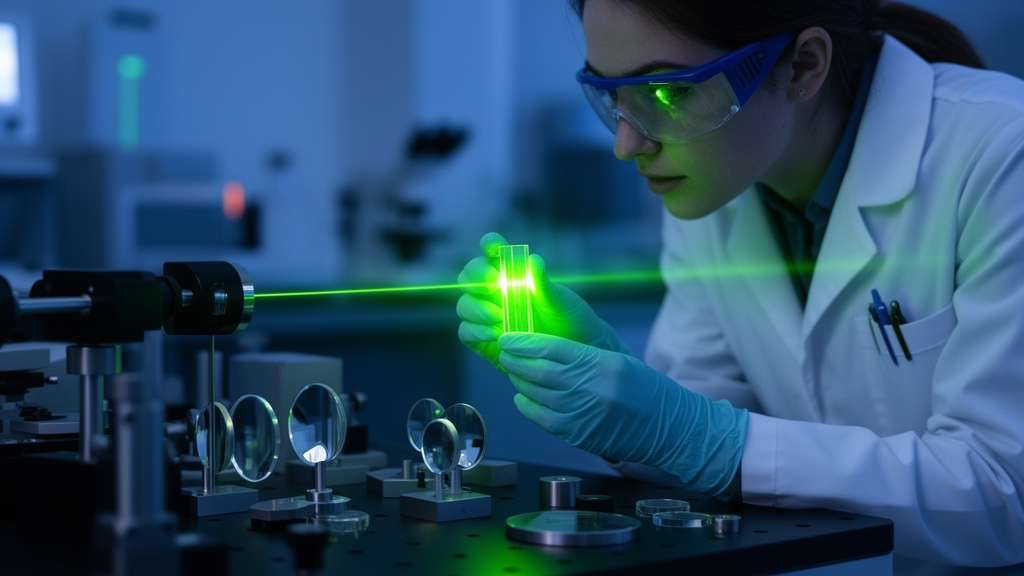
Fluorescence spectroscopy, a powerful analytical tool, is advancing the study of carbon-based materials in environmental monitoring and diagnostics. A review by Dayananda Sagar University researchers, published in Discover Chemistry, highlights fluorescence's evolution from a 19th-century curiosity to a crucial technique in detecting pollutants, imaging cells, and designing optoelectronic devices. The review, led by Nagarjun Somaprakash and Pradeep Kumar Badiya, emphasizes fluorescence's role in materials science, where it probes structure and function with precision.
The foundational work of George Gabriel Stokes in 1852 introduced the Stokes shift, a key concept in fluorescence. This shift, the difference in wavelength between absorbed and emitted light, simplifies measurements by distinguishing them from background light. Quantum mechanics further explained the process: a molecule absorbs a photon, transitions to an excited state, and emits a photon upon returning to its ground state. Factors like structural rigidity and electronic configuration affect fluorescence efficiency, making probe design a specialized field.
Fluorescence spectroscopy offers exceptional sensitivity and non-destructive analysis compared to other techniques. It surpasses UV-Vis absorption in detection limits and selectivity, although it requires fluorescent analytes. While Raman and infrared spectroscopy provide detailed structural information, they lack fluorescence's sensitivity. Mass spectrometry offers molecular specificity but is slower and costlier. Chromatographic methods excel in separating mixtures but demand more resources. Fluorescence balances sensitivity, simplicity, and real-time capability, making it a unique choice depending on the analytical goal.
In materials science, fluorescence tracks polymer structure by embedding molecules like pyrene into matrices. This allows researchers to assess chain conformation and microenvironmental polarity. Pyrene's emission bands reveal polymer miscibility and aggregation. In semiconductors, photoluminescence identifies defect states and recombination pathways, informing the development of efficient solar cells and LEDs.
Fluorescence also addresses heavy metal pollution detection. Traditional methods like atomic absorption spectroscopy are accurate but costly and unsuitable for rapid analysis. Fluorescence sensing offers an alternative, converting molecular binding events into optical signals. Recent sensors achieve detection limits below regulatory thresholds, using materials like graphene quantum dots and carbon dots for selective ion detection.
In biomedicine, fluorescence enables visualization of cellular processes and drug delivery. Carbon nanoparticles derived from peanut shells show strong fluorescence in cancer cells, aiding in drug delivery and monitoring. Fluorescent materials can target specific organelles, providing real-time therapeutic feedback.
Forensic science benefits from fluorescence in fingerprint analysis. Traditional techniques struggle with contrast on complex surfaces, while organic fluorophores and quantum dots offer high-contrast imaging. These materials preserve biological evidence for further analysis, enhancing forensic capabilities.
The review links these applications to the United Nations Sustainable Development Goals, highlighting fluorescence's role in achieving clean water, good health, and energy efficiency. Future advances include density functional theory for designing tailored fluorophores, surface plasmon-coupled emission for improved detection, and machine learning for data analysis. These developments promise new diagnostic devices and environmental sensors, demonstrating fluorescence's enduring impact.
Source: Emerging Nano Carbons