How Twisting 2D Materials Led to a New Field of Research
Researchers funded by the DOE's Office of Science established the basis for twistronics by twisting graphene layers.
Researchers supported by the Department of Energy's Office of Science have pioneered the field of twistronics by manipulating layers of graphene. By twisting these two-dimensional carbon materials, they discovered unique electronic properties that have opened new avenues in material science.
In 2009, Eva Andrei's team at Rutgers University, with support from the DOE, began exploring the properties of stacked two-dimensional materials. Graphene, a single-atom-thick form of carbon, exhibits remarkable strength and conductivity. The team's work led to the discovery of twistronics, which examines how twisting layers of graphene affects electron movement.
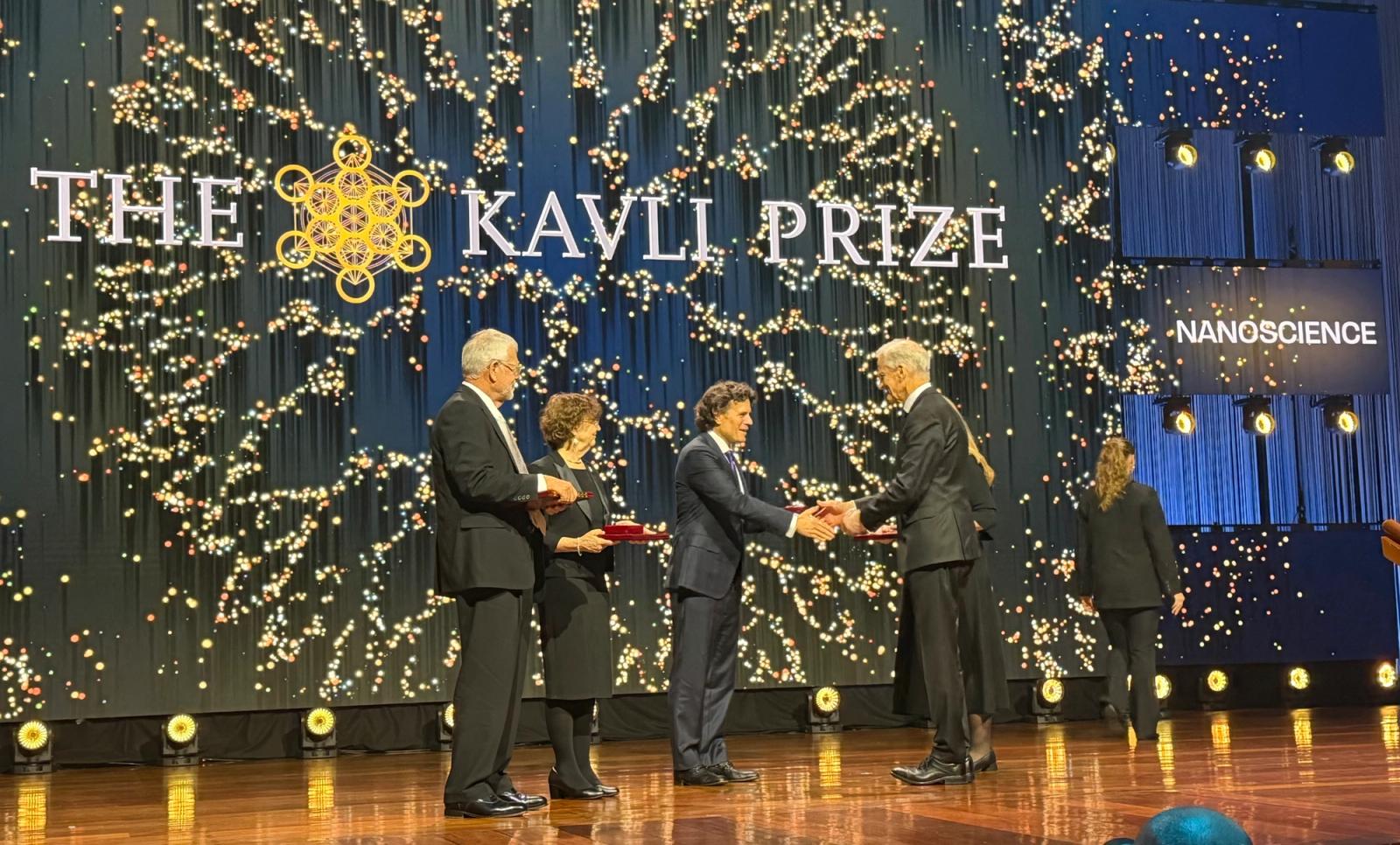
The Kavli Prize in Nanoscience recently honored Andrei, Pablo Jarillo-Herrero, and Allan H. MacDonald for their contributions to this field. Their research laid the groundwork for ongoing studies at DOE's National Laboratories and other institutions.
Andrei's interest in graphene stemmed from its unique electron movement. Her team's findings challenged the prevailing belief that electrons in graphene did not interact significantly. This discovery was recognized by Nature magazine and named a Top 10 Scientific Breakthrough by Science.
When Andrei's group received a graphene sample from MIT, they discovered it had multiple stacked layers due to a base material change. This serendipitous event revealed moiré patterns, which the team then investigated for their electronic properties. They found that the electronic structure of twisted bilayer graphene differed significantly from a single layer.
The team identified a specific twisted angle of 1.07 degrees, resulting in a flat electronic band where electrons could occupy the same energy level more densely. This discovery indicated potential for superconductivity, where electricity flows without resistance.
Allan H. MacDonald's team at the University of Texas at Austin developed a theoretical model in 2011 to explain this phenomenon. In 2018, Jarillo-Herrero's group at MIT confirmed that the magic angle led to unconventional superconductivity, which could operate at higher temperatures than traditional superconductors.
Twistronics has since become a burgeoning field, offering potential advancements in computing, quantum sciences, and material design. By altering the geometry of materials rather than their chemistry, scientists can control electron movement, paving the way for more efficient devices and energy storage solutions.
Research supported by the DOE Office of Science continues to explore the manipulation of moiré superlattices and their quantum properties, contributing to the rapid development of twistronics. This accidental discovery has sparked a decade of innovation and exploration in material science.
Source: Graphene Feed