Introducing rare earth MXenes
Researchers have developed a straightforward method to produce water-repellent graphene, enhancing its potential applications in various industries.
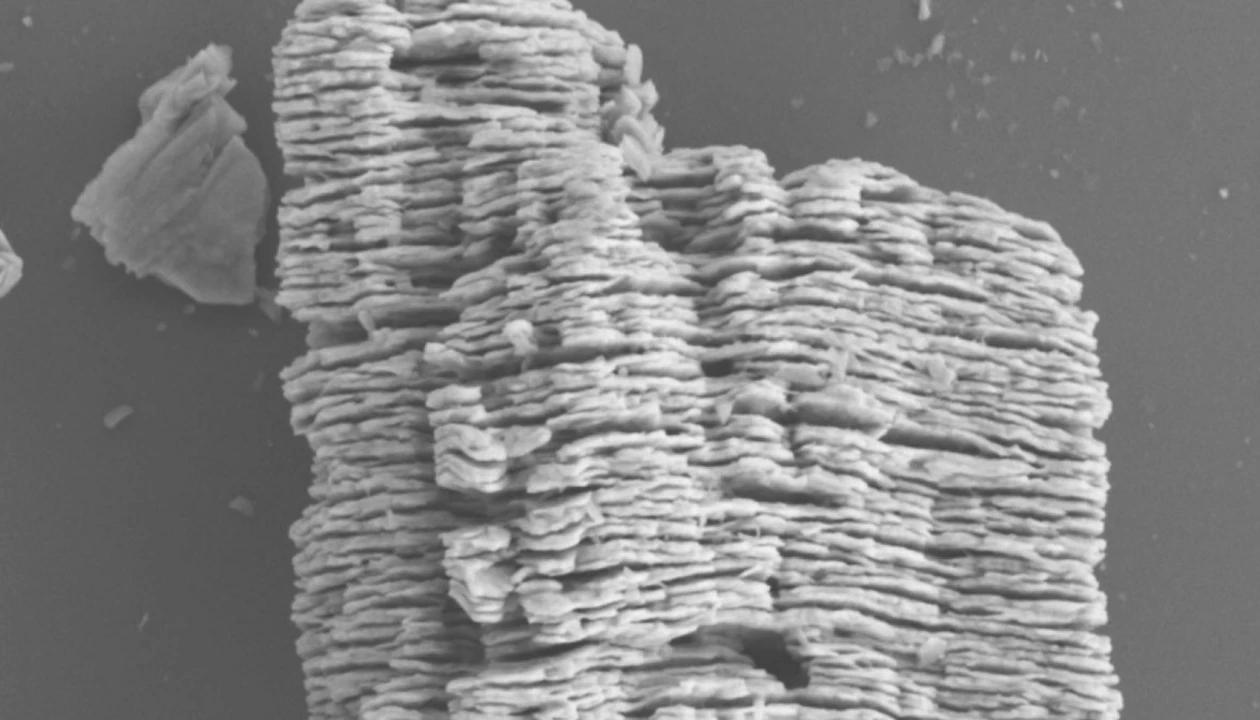
Researchers have developed a novel synthesis method to create 2D materials known as MXenes incorporating rare earth elements for the first time (Nature 2026, DOI: 10.1038/s41586-026-10802-2). These materials exhibit a unique combination of semiconducting and magnetic properties, which could be valuable for next-generation energy-efficient electronics.
This advancement expands the MXene family and enhances understanding of their formation mechanisms. Babak Anasori, a MXene expert at Purdue University, notes that the research provides a detailed reaction pathway, offering the MXene community new opportunities to explore the periodic table.
MXenes, discovered in 2011, are composed of layers of metal and carbon or nitrogen atoms. By adjusting the elemental composition and structure, researchers have developed MXenes with properties such as high electrical conductivity and radiation shielding. However, incorporating rare earth metals into MXenes has been challenging due to their tendency to oxidize.
Traditional MXene synthesis involves etching precursor materials called MAX phases, which do not contain rare earths. To overcome this, Qing Huang from the Yongjiang Laboratory and Hongxin Yang from Zhejiang University developed a bottom-up synthesis approach. They mix and grind copper halide with a rare earth metal, press the mixture into pellets, and heat it with graphite in a furnace.
This process forms rare earth monohalides with a layered structure similar to MXenes. Carbon atoms from graphite diffuse into the matrix, avoiding oxidation. The resulting rare earth MXenes have the chemical formula Ln2CT2, where Ln is a lanthanide and T is chlorine or bromine, and they possess a bandgap akin to silicon.
Magnetic semiconductors, such as these new MXenes, are crucial for future electronic and spintronic devices, which aim to utilize electron charge and spin for faster and more energy-efficient data processing. While this research is fundamental, it introduces new possibilities for 2D materials.
Yury Gogotsi, the Drexel University scientist who discovered MXenes, states that this work advances research on 2D magnetic MXenes. The new synthesis method could lead to many more novel 2D materials, marking a significant step in MXene synthesis and exploration of their quantum properties.
Source: Graphene Feed