Carbon-based materials revolution reaches inflection point, starting next year
Graphene Square plans to start mass-producing graphene at its Pohang plant next year for use in home appliances and electronics.
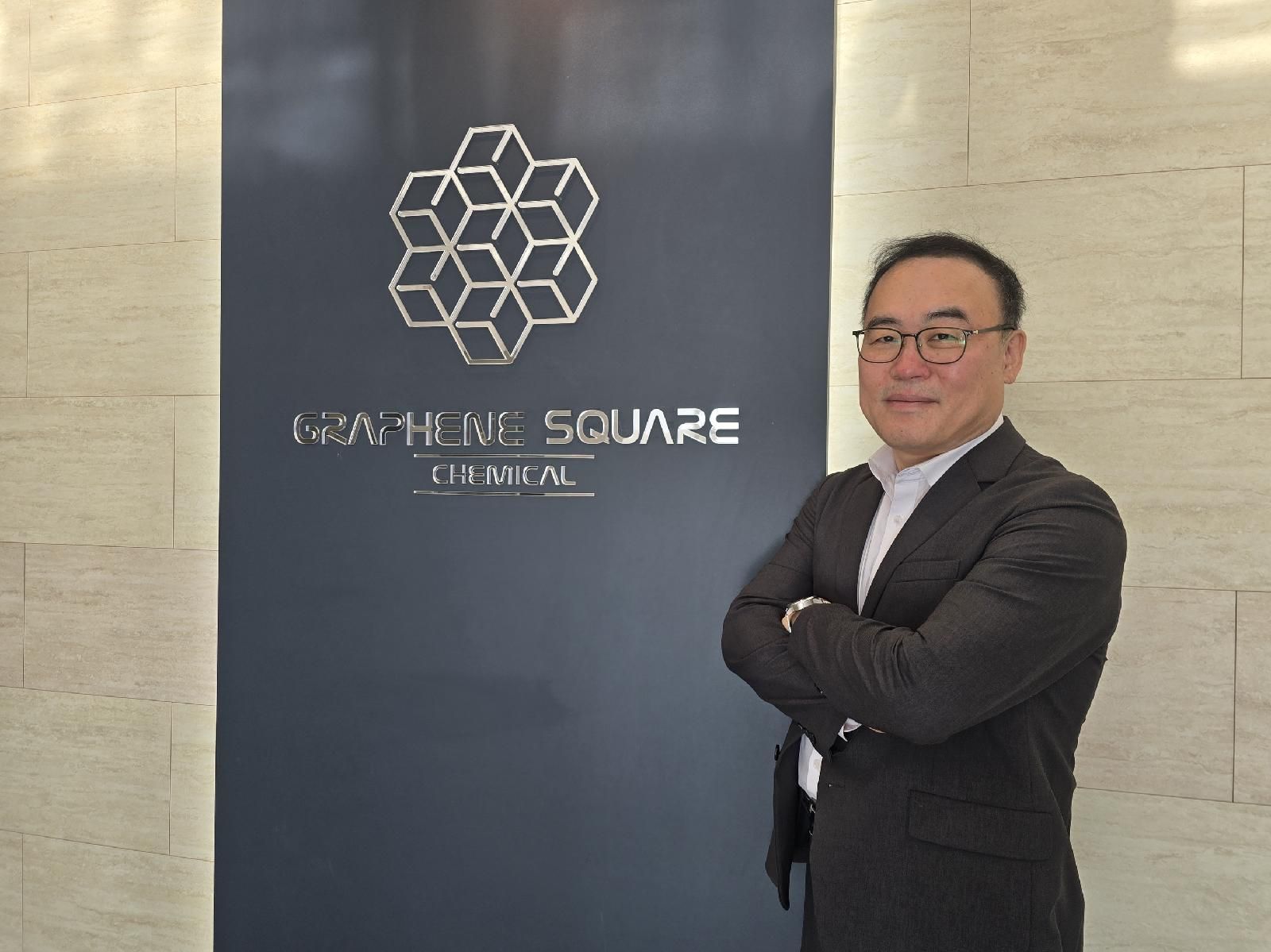
Graphene Square is set to revolutionize the carbon materials industry with its upcoming mass production of graphene at the Pohang plant, starting next year. This development will see graphene applied to home appliances and electronics, marking a significant milestone in the commercialization of this advanced material.
Hong Byung-hee, CEO of Graphene Square and a chemistry professor at Seoul National University, is a leading figure in the graphene field. He founded Graphene Square in 2012 and has been pivotal in advancing graphene technology. In 2009, he published a study on large-area graphene synthesis using chemical vapor deposition (CVD) in Nature. This technique allows for the creation of a perfect two-dimensional honeycomb structure of carbon atoms on a copper catalyst, resulting in electrical conductivity 100 times faster than copper and thermal conductivity twice that of diamond.
In 2010, a roll-to-roll based 30-inch graphene transfer technology was introduced in Nature Nanotechnology, enhancing productivity by streamlining processes like synthesis, etching, and transcription. Graphene Square's strength lies in its continuous production techniques, which improve the quality uniformity of large-area graphene films. The company uses approximately 200 meters of copper foil for continuous synthesis, minimizing process condition deviations and enhancing film quality. Additionally, AI vision-based non-destructive inspection automates defect detection and quality control. To further improve efficiency, the company plans to recycle up to 97% of the copper used in production by next year using its proprietary copper etching solution.
Last year, Graphene Square invested 42 billion won to establish a production plant in Pohang Blue Valley National Industrial Complex. The facility has the capacity to produce 300,000 square meters of CVD graphene film annually, exceeding global demand. The clean room, roll-to-roll synthesis line, and module assembly line are operational, with process tuning underway to supply samples and mass-produce home appliance modules. The company aims to achieve a plant utilization rate of 70-80% by early 2027, aligning with mass production plans coordinated with global home appliance partners.
The first commercial applications are expected in small home appliances. Graphene heating elements are being integrated into cooking utensils and hair and beauty devices, with commercialization underway. A multi-cooker, which uses medium-infrared rays for cooking, is undergoing KC certification and mass production company selection, targeting a launch in the first half of 2027. Hair and beauty devices are also slated for mass production in the first quarter of 2027. These devices use mid-infrared rays to penetrate hair deeply, enabling styling at lower temperatures and reducing energy consumption.
CEO Hong highlighted that the graphene-based multi-cooker operates at about 600W, half the power of existing products (1.2 to 1.5kW), allowing battery operation. He noted that the medium-infrared rays efficiently transfer energy to food, resulting in approximately 30% higher efficiency.
In the semiconductor sector, Graphene Square is developing pellicles for extreme ultraviolet (EUV) exposure equipment and materials for heat dissipation and electromagnetic wave shielding in packaging. The EUV pellicle is undergoing long-term durability verification, with mass production aimed for 2029. Heat dissipation and shielding materials are expected to enter the market between 2027 and 2028.
CEO Hong envisions creating a 'Global Graphene Valley' in Pohang, connecting research institutes, universities, and manufacturing plants. He aims to demonstrate the technological and industrial viability of graphene, positioning Korea as a leader in carbon materials.
Source: Graphene Feed