New infrared microscopy method maps hidden nanoscale forces in quantum materials
Researchers used a modified tear-and-stack technique with a PDMS/PPC stamp to prepare twisted bilayer graphene samples for infrared microscopy analysis. The method enables nanoscale force mapping in graphene, which could improve characterization of stacked graphene structures used in advanced carbon materials research.
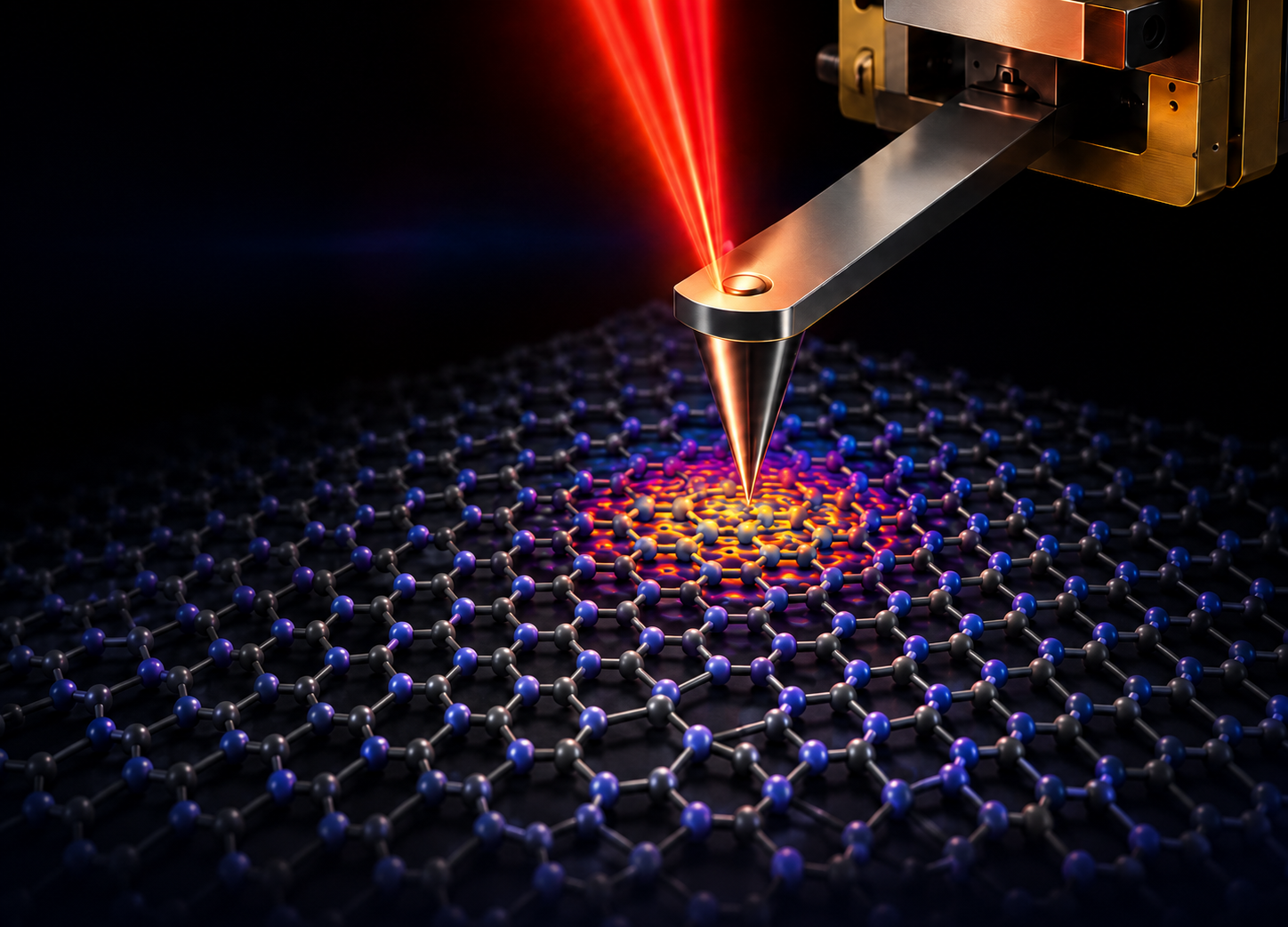
Researchers have developed a new infrared microscopy method to map nanoscale forces in quantum materials, using a modified tear-and-stack technique to prepare a twisted bilayer graphene sample. This approach involves a PDMS/PPC stamp, which is crucial in the fabrication stage. The method allows for detailed analysis of the graphene's properties, potentially advancing the understanding of quantum materials.
The study highlights the significance of graphene in exploring quantum phenomena due to its unique electronic properties. By employing this innovative microscopy technique, scientists can gain insights into the interactions at the nanoscale, which are often hidden in traditional analysis methods.
This advancement could pave the way for further research into the applications of graphene and other quantum materials, enhancing their potential use in various technologies. The ability to map these forces accurately is a critical step in the development of future materials with advanced functionalities.
Source: Graphene Feed