Twistronics: Graphene's Magic Angle and the Anti-Philosopher's Stone
Researchers at IMDEA Materials Institute discovered that rotating graphene by about 1.1 degrees can induce superconductivity.
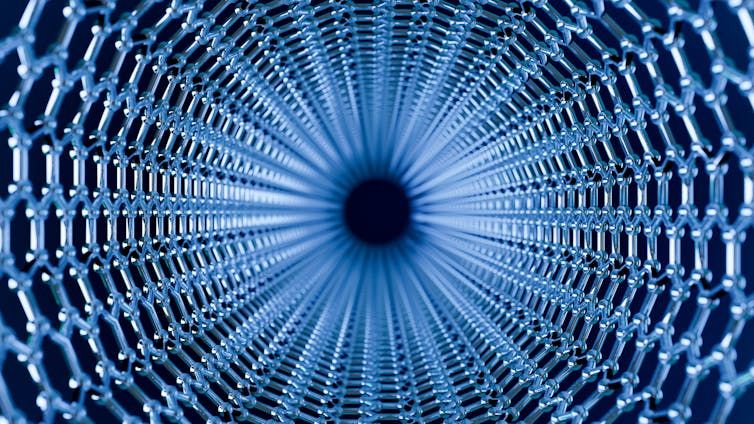
Recent advancements in the study of graphene have highlighted the transformative potential of twistronics, a field that explores the effects of slight rotational misalignments between layers of atom-thick graphene sheets. This phenomenon, known as the 'magic angle,' has opened new avenues for engineering materials with unique electronic properties.
Graphene, a single layer of carbon atoms arranged in a hexagonal lattice, is renowned for its strength, lightweight nature, and electrical conductivity. The discovery of twistronics traces back to 2009 when researchers observed unexpected behaviors in graphene layers with a slight twist, leading to a Moiré pattern and altered electron behavior.
Theoretical physicist Allan MacDonald developed a mathematical framework to explain these observations, demonstrating that a rotation of approximately 1.1 degrees could induce superconductivity in graphene. This work laid the foundation for further exploration of different twist angles, predicting various electronic states.
The term 'twistronics' was introduced in 2016, reflecting the control of electronic properties through rotational alignment. A breakthrough came in 2018 when Pablo Jarillo-Herrero's team at MIT successfully fabricated multilayer graphene with precise twist angles, confirming theoretical predictions and sparking widespread interest in the field.
Twistronics research has since expanded beyond graphene to include materials like Transition metal dichalcogenides and Hexagonal boron nitride, with potential applications in quantum computing, optoelectronics, and ultra-low-power electronics. These developments align with the European Union's focus on 1D, 2D, and nanomaterials for future technological transitions.
The primary challenge remains scaling up production for industrial applications. However, the integration of artificial intelligence in materials discovery may accelerate the transition from laboratory research to practical applications.
Source: Graphene Feed