AI finds multiple methods to grow identical carbon nanotube forests
Researchers have used AI to develop various growth methods for producing identical carbon nanotube forests.
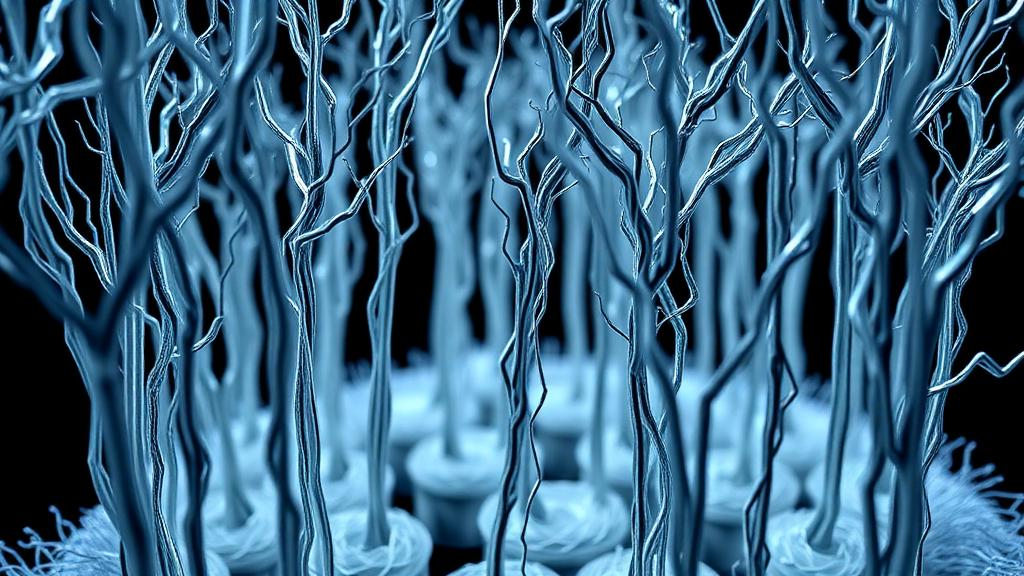
Researchers have demonstrated that multiple distinct processing recipes can produce carbon nanotube forests with identical structural characteristics. The study, published in National Science Review, utilized an artificial intelligence framework to identify different growth conditions that achieve the same height, density, and alignment of nanotubes. This approach could transform the synthesis of carbon nanotube arrays, which are crucial for applications such as thermal interface materials, energy storage electrodes, and flexible electronics.
Carbon nanotubes are cylindrical structures composed of carbon atoms, known for their exceptional mechanical, thermal, and electrical properties. When grown in large numbers on a substrate, they form an array or 'forest,' with performance characteristics determined by their height, density, and alignment. Traditional methods of growing these forests involve chemical vapor deposition, where a carbon feedstock gas decomposes on catalytic nanoparticles. The study focused on water-assisted chemical vapor deposition, which introduces water vapor to maintain catalyst activity and extend growth. However, the process involves numerous interdependent variables, making optimization challenging.
The research team from Huazhong University of Science and Technology and Beihang University developed an AI-assisted inverse-design framework. This method specifies the desired structural outcome first and uses an algorithm to find the processing conditions that will achieve it. By analyzing a database of 200 distinct recipes, a neural network learned the complex relationships between processing conditions and structural outcomes. An optimization algorithm then identified multiple recipes for each target structure, demonstrating that different processing paths can lead to the same result.
Experimental validation confirmed the AI framework's effectiveness. For each of three structural targets, three distinct recipes were tested, resulting in 27 validation runs. Of these, 26 achieved structural descriptor matching scores above 95%, proving the reproducibility of the AI-identified recipes. Interestingly, while the arrays appeared identical at the macro level, electron microscopy revealed differences in the individual nanotubes' diameters and wall structures. This suggests that applications sensitive to these finer details may respond differently to arrays that meet the same overall specifications.
The study suggests a shift in the goals of inverse synthesis. Instead of seeking a single optimal recipe, the framework identifies a range of viable alternatives, each with different practical requirements. This flexibility allows engineers to choose recipes based on available equipment and materials. Although extending the approach to other catalysts or methods requires new data and model retraining, the framework offers a reusable map of synthesis space within its trained domain. Led by Lei Zhu and Professor Ming Xu, the research highlights the potential of AI to navigate the vast space of processing variables, uncovering multiple paths to achieve the same material structure.
Source: Carbon Nanotubes Feed