Can two millimeters of carbon fiber change power distribution?
Researchers explore using carbon fiber composites to improve power distribution systems. The material's minimal thermal expansion, compared to steel, offers potential advantages in maintaining structural integrity.
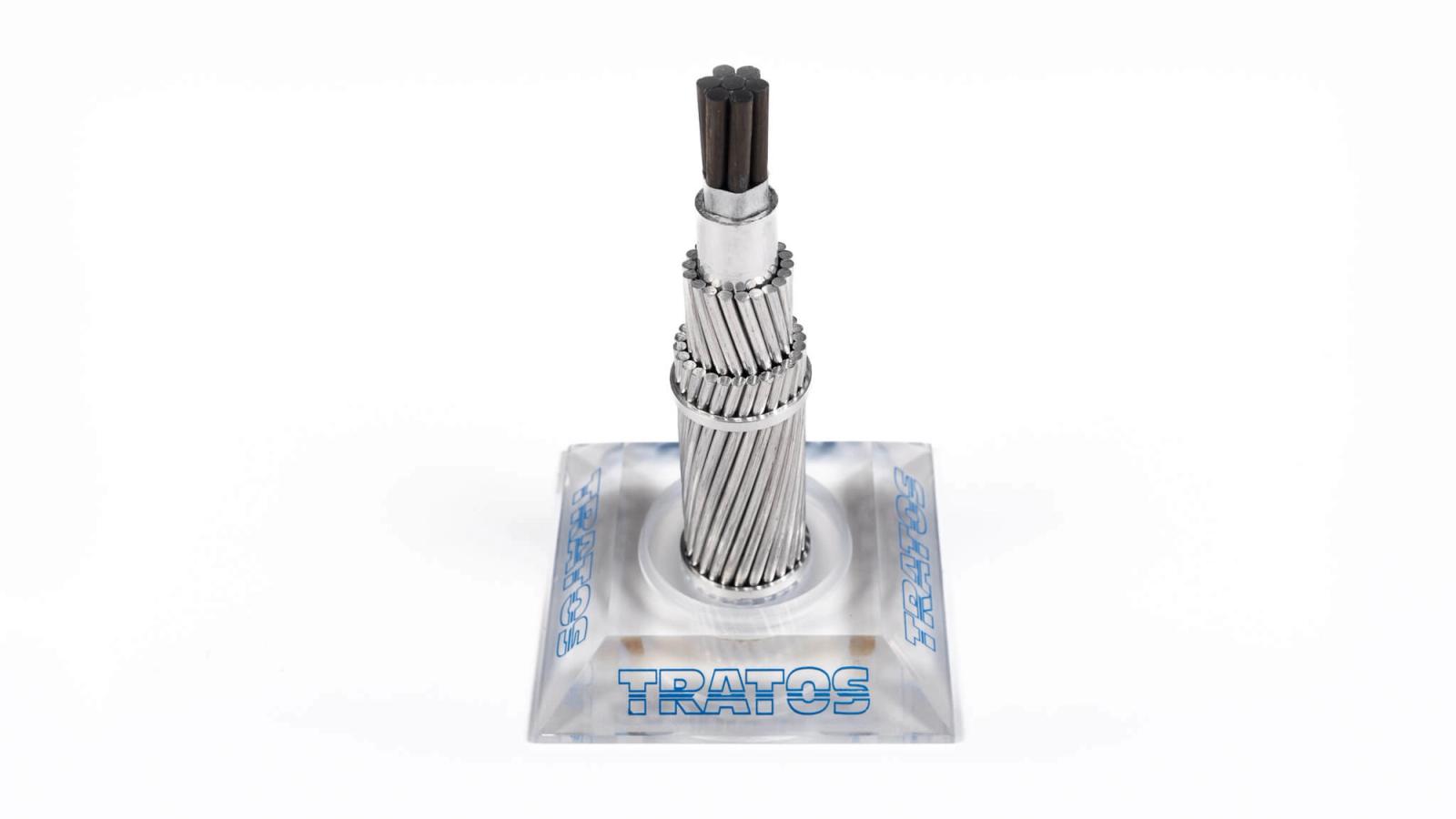
The European power sector faces the challenge of aging transmission and distribution networks, with up to 55% of European distribution lines projected to be over 40 years old by 2030, according to Eurelectric. In response, Italian transmission system operator Terna has partnered with conductor manufacturer Tratos and Exel Composites to explore the feasibility of using advanced composite conductor cores to upgrade Italy’s electrical transmission lines.
Advanced composite conductor cores, particularly those utilizing carbon fiber, have demonstrated significant benefits in high-voltage transmission applications, including a 50% increase in ampacity and a 20-50% reduction in transmission losses. Despite their advantages, these materials have not been widely adopted in smaller conductors suitable for both transmission and lower-voltage distribution networks. Terna is currently assessing a product that could change this trend.
Traditionally, Tratos has focused on supplying underground cables and conductors for medium-voltage power distribution. However, since 2008, the company has shifted towards high-voltage, overhead transmission conductors. This shift has involved replacing the standard 31.5 mm aluminum core steel reinforced (ACSR) conductors, driven by the costs and time associated with building and modifying pylons, as well as concerns about thermal sag.
To meet the increasing demand for electrification and decentralized power generation, transmission system operators must enhance their network's overall transmission capacity. Building new power lines is costly and time-consuming, compounded by stringent regulations. Elisabetta Bragagni Capaccini, CEO of Tratos Group, noted that regulatory permissions for altering or constructing new power lines can take years to acquire, particularly in Italy.
Line sag poses a significant safety issue, as the steel core of conductors expands and contracts with temperature changes, causing sag between towers. Carbon fiber's negligible coefficient of thermal expansion and superior strength compared to steel allow for better tension maintenance, minimizing sag. Additionally, carbon fiber's strength-to-weight ratio enables the creation of lightweight conductors with higher conductive cross-sections, increasing transmission capacity by up to 50%.
The financial considerations for using carbon fiber in distribution differ from long-distance transmission. While aluminum alloy conductors are cheaper, carbon fiber's advantages become apparent when existing lines require reconductoring without tower replacement. Heini Kloster, product manager for conductor cores at Exel, acknowledged the higher CapEx of carbon fiber but emphasized its extended service lifetime and loss prevention benefits.
Tratos and Exel Composites first collaborated at JEC World in Paris in 2017. For Terna's project, Exel designed a 1.82 mm diameter carbon fiber profile, overcoming challenges in the pultrusion and re-reeling processes. The resulting carbon fiber rods are stranded together and encased in an aluminum tube to form the conductor.
Rigorous testing, including isothermal ageing and dynamic mechanical analysis, confirmed the viability of the 1.82 mm rod. The accelerated thermal ageing technique, simulating 40 years of service in about a year, demonstrated the rod's performance under high temperatures. Terna's specific regulations for composite-core conductors are met by Tratos, leveraging its expertise to benefit both companies.
Currently, the conductor using the 1.82 mm carbon fiber core is under feasibility review by Terna. This development could provide new options for lower-voltage operators. Kloster emphasized the importance of practical use cases and data in supporting product adoption, while Bragagni Capaccini highlighted the role of collaboration in advancing the technology.
Tratos values its partnership with Exel, appreciating the frequent interactions and shared mindset. This collaboration exemplifies how strong supplier relationships can drive progress in the industry.
Source: Carbon Fiber Feed