Carbon dots on graphene offer a metal-free way to produce green hydrogen peroxide
Researchers have developed a method using carbon dots on graphene to produce hydrogen peroxide without metals, offering a cost-effective and sustainable alternative.
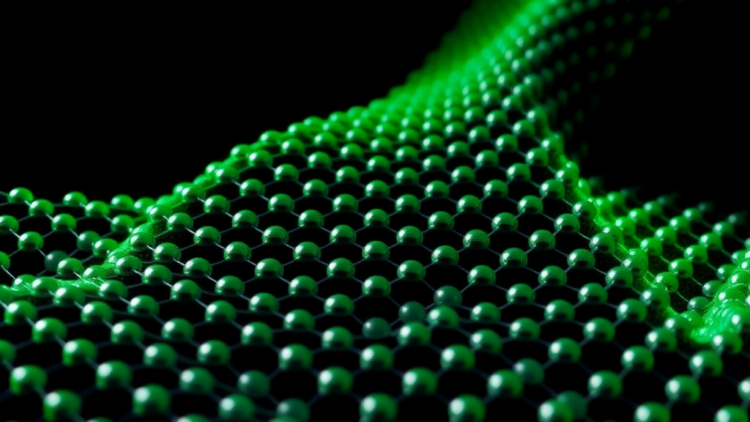
Researchers at Banaras Hindu University in India have developed a metal-free nanocomposite catalyst composed of carbon dots and functionalized graphene, offering a new method for producing hydrogen peroxide. This catalyst enables the direct generation of hydrogen peroxide from oxygen and electricity, bypassing the traditional anthraquinone process that relies on expensive and hazardous materials. The study, published in Discover Electrochemistry, highlights the catalyst's ability to favor the two-electron oxygen reduction reaction (ORR), achieving an 85% conversion rate to hydrogen peroxide under alkaline conditions.
The ORR is a key process in fuel cells and electrosynthesis, where selectivity between the two-electron and four-electron pathways is crucial. While noble metal catalysts have been the standard for peroxide-selective ORR, their cost and toxicity are drawbacks. Carbon-based materials, including carbon dots and graphene, present a more sustainable alternative due to their abundance and favorable properties. However, standalone carbon dots have limitations in terms of current density and stability.
To overcome these challenges, the researchers synthesized carbon dots from D-galactose and combined them with reduced carboxylic acid-functionalized graphene (rCA-G) to form the composite CDs@rCA-G. This integration was confirmed through various characterization techniques, revealing well-dispersed carbon dots on the graphene surface and a significant presence of oxygen-bearing groups, which are believed to enhance catalytic activity.
Electrochemical tests demonstrated that the CDs@rCA-G composite outperformed its individual components, showing improved onset and half-wave potentials, as well as higher limiting current densities. The composite also exhibited a high hydrogen peroxide yield of approximately 85% in rotating ring-disk electrode experiments, attributed to the oxygen functionalities of the carbon dots that influence the electronic structure of the graphene.
The durability of the composite was tested through accelerated stress tests, showing minimal loss in catalytic activity after repeated cycling. This stability, combined with the absence of precious metals, positions the catalyst as a viable candidate for commercial-scale hydrogen peroxide production. The researchers acknowledge the need for further validation through large-scale product collection and chemical titration.
The potential impact of this development is significant, as decentralized hydrogen peroxide production could transform supply chains by enabling on-site generation from air, water, and renewable electricity. This approach eliminates the need for hazardous transport and reduces the environmental footprint of traditional peroxide manufacturing. The study's findings suggest that carbon-based catalysts could play a crucial role in advancing sustainable chemical production.
Source: Graphene Feed