Coconut shell carbon outperforms kluwak shell in supercapacitor electrodes
Researchers demonstrated that coconut shell-derived carbon electrodes reached 130.83 farads per gram, surpassing kluwak shell-derived materials in supercapacitor performance.
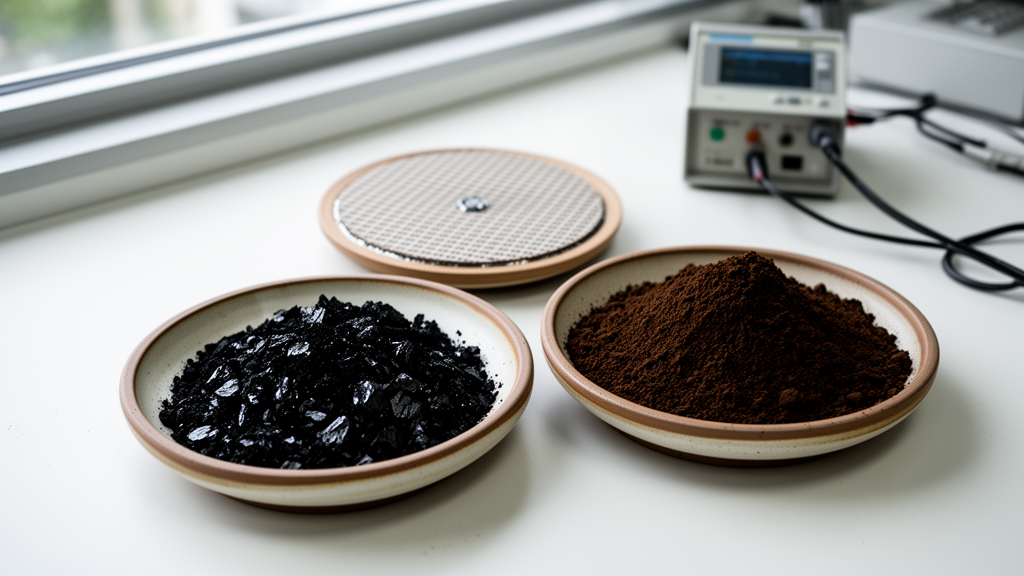
A recent study has explored the potential of using waste shells from coconuts and kluwak nuts as carbon electrodes in electrical double-layer capacitors, revealing significant performance differences between the two biomasses. Researchers transformed these materials into activated carbon and then into partially reduced graphene oxide (p-rGO), examining the effects of microwave treatment conditions on the electrodes produced.
Initially, the team created activated carbon from both types of shells. This activated carbon was then oxidized into graphite oxide using a modified Hummer’s method. The graphite oxide underwent reduction in ethylene glycol through a microwave-assisted solvothermal process, resulting in p-rGO.
The study's innovation lies in utilizing kluwak shell as an alternative carbon source and systematically comparing its electrochemical performance with coconut shell-derived materials under controlled microwave conditions. For coconut shell-derived p-rGO, microwave power levels of 100, 180, and 300 watts were tested, while kluwak shell-derived p-rGO was subjected to irradiation times of 15, 30, and 45 minutes.
Structural analysis indicated that increased microwave intensity reduced interlayer spacing and enhanced pore development, suggesting improved reduction and structural organization of the carbon material.
Electrochemical evaluations employed cyclic voltammetry, galvanostatic charge-discharge, and electrochemical impedance spectroscopy. These tests collectively showed that coconut shell-derived materials outperformed kluwak shell-derived materials under all conditions tested.
Quantitative results underscored the disparity between the two precursors. Coconut shell activated carbon achieved a specific capacitance of 130.83 farads per gram, while its p-rGO version reached 103.58 farads per gram, with electrical conductivities of 0.78 and 0.30 siemens per meter respectively at 300 watts of microwave power.
In contrast, kluwak shell-derived materials performed significantly worse. After 45 minutes of irradiation, kluwak shell activated carbon and p-rGO showed specific capacitances of only 1.39 and 3.73 farads per gram, with conductivities of 0.063 and 0.157 siemens per meter respectively. The findings highlighted a strong link between electrical conductivity and electrochemical performance, with the more conductive coconut-derived carbons storing considerably more charge.
The study concluded that coconut shell is a more favorable precursor for supercapacitor electrodes, though kluwak shell remains a promising sustainable alternative for biomass-derived carbon electrodes. As both feedstocks are agricultural wastes, this approach suggests a pathway to low-cost, sustainable electrode materials for energy storage devices, with precursor selection and microwave processing conditions being crucial for optimizing performance.
Source: Biomass & Recycled Carbons Feed