EPFL Studies Water Behavior At A Few-Nanometer Scale
EPFL researchers, led by Nikita Kavokine at the Quantum Plumbing Lab, are studying water confined to nanometer-scale channels and found that electromagnetic coupling between water molecules and channel wall electrons creates a friction mechanism not predicted by classical hydrodynamics. For the carbon nanotubes sector, this work helps explain the anomalously fast water flow observed through carbon nanotubes and points toward nanotube-based systems capable of converting hydraulic energy or improving filtration efficiency.
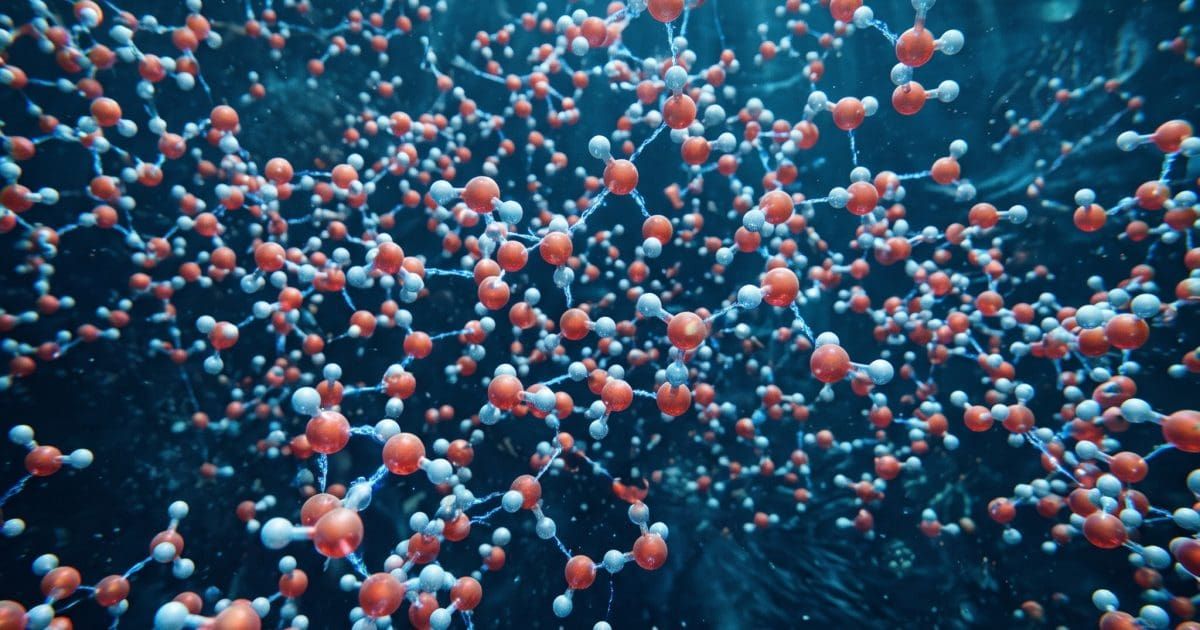
Researchers at the École polytechnique fédérale de Lausanne (EPFL) are investigating the unexpected behavior of water as it flows through carbon nanotubes, where it moves significantly faster than classical physics would predict. This phenomenon is prompting a re-evaluation of hydrodynamic models at the nanoscale, where the interaction between water molecules and the atomic structure of the channel walls plays a crucial role. Nikita Kavokine, a tenure-track assistant professor leading the EPFL Quantum Plumbing Lab, explains that the electromagnetic coupling between water molecules and channel walls creates a new friction mechanism, potentially offering a novel method for converting hydraulic energy at this scale.
The study of water confined to nanometer-wide spaces challenges established physics, as water molecules interact with the electrons in the channel walls, leading to energy dissipation and momentum transfer. This interaction results in a hydro-electronic drag, where the flow of water induces an electric current, presenting opportunities for energy recovery in filtration processes and energy harvesting from salinity gradients. However, the experimental realization of single nanochannels, essential for these studies, remains technically challenging, with ongoing efforts to develop new theoretical models to better understand these observations.
Biological systems, such as aquaporins in cell membranes, have long demonstrated the ability to manipulate water at the nanoscale, efficiently filtering water while blocking ions and other molecules. This biological proficiency inspires current research at EPFL, where the focus is on understanding the interactions between water and channel boundaries that create new friction mechanisms. Kavokine notes that these interactions could lead to innovative ways of converting hydraulic energy at the nanoscale.
In addition to the work on carbon nanotubes, Sylvie Roke, professor and director of the EPFL Laboratory for Fundamental BioPhotonics, has elucidated the molecular mechanisms governing the stability of oil-water emulsions. Utilizing advanced optical techniques, Roke's team discovered that the stability of these emulsions is due to the transfer of electric charge from water to oil, facilitated by weak hydrogen bonding interactions. This finding provides insight into a range of pH-dependent processes across various fields, including biology, chemistry, and nanotechnology.
Roke's team has also developed a method to measure interacting hydrogen bonds within bulk water, offering new insights into molecular couplings and charge transfer at the atomistic scale. This capability is crucial for understanding water's behavior at a molecular level and has implications for diverse scientific fields. The ongoing research at EPFL's Quantum Plumbing Lab aims to bridge the gap between classical physics and quantum mechanics as it applies to liquid behavior, with the ultimate goal of creating artificial nanofluidic networks that mimic natural systems.
Source: Carbon Nanotubes Feed