Experimental and numerical study on mechanical performance of natural materials
Researchers incorporated carbon fiber into jute-based laminates, enhancing the mechanical performance of the composite compared to other materials.
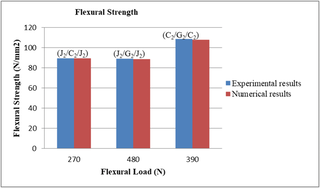
The study investigates the mechanical performance of hybrid composite laminates reinforced with both natural and synthetic fibers, focusing on carbon fiber's role in enhancing strength. Three laminate configurations, J2/C2/J2, J2/G2/J2, and C2/G2/C2, were fabricated using a hand lay-up technique, with a [0°/90°] stacking sequence. These laminates underwent tensile, compressive, and flexural testing according to ASTM standards. Finite element simulations using ANSYS Mechanical APDL 2020 R1 validated the experimental results. The incorporation of carbon fiber into jute-based laminates improved strength by approximately 88%, while glass fiber resulted in a 55% improvement. The C2/G2/C2 laminate demonstrated the highest tensile strength (140 MPa), compressive strength (39 MPa), and flexural strength (109 MPa). The study confirms hybridization's effectiveness in enhancing laminate mechanical performance, identifying C2/G2/C2 as the most promising configuration.
Fiber-reinforced polymer composites offer high specific strength and stiffness, corrosion resistance, and design flexibility, making them suitable for aerospace, automotive, and marine applications. Hybridization of natural and synthetic fibers balances mechanical performance, sustainability, and cost. Synthetic fibers provide high strength and stiffness, while natural fibers are lightweight and biodegradable. Hybrid composites achieve a balance between structural performance and environmental sustainability.
The study highlights the influence of matrix and reinforcement on composite strength and stiffness. Fiber orientation significantly affects performance, with composites containing 60 wt.% fiber content exhibiting higher mechanical performance. The study uses a [0°/90°] ply orientation to ensure consistent comparison among hybrid material systems, facilitating effective load transfer and balanced mechanical performance.
The hand lay-up technique was used for laminate fabrication, involving bidirectional woven jute, glass, and carbon fiber fabrics. The matrix material comprised epoxy resin. Reinforcement materials were sourced from VRUKSHA Composites, Andhra Pradesh, India. The study's findings contribute to understanding natural-synthetic fiber hybridization's influence on mechanical behavior, providing insights for lightweight structural applications.
Source: Carbon Fiber Feed