Fe-biomass carbon aerogels combine conductive and magnetic properties
Researchers created iron-infused carbon aerogels from biomass, achieving 0.454 Ω·cm resistivity and 458.9 m²·g⁻¹ surface area, suitable for energy storage and electromagnetic shielding.
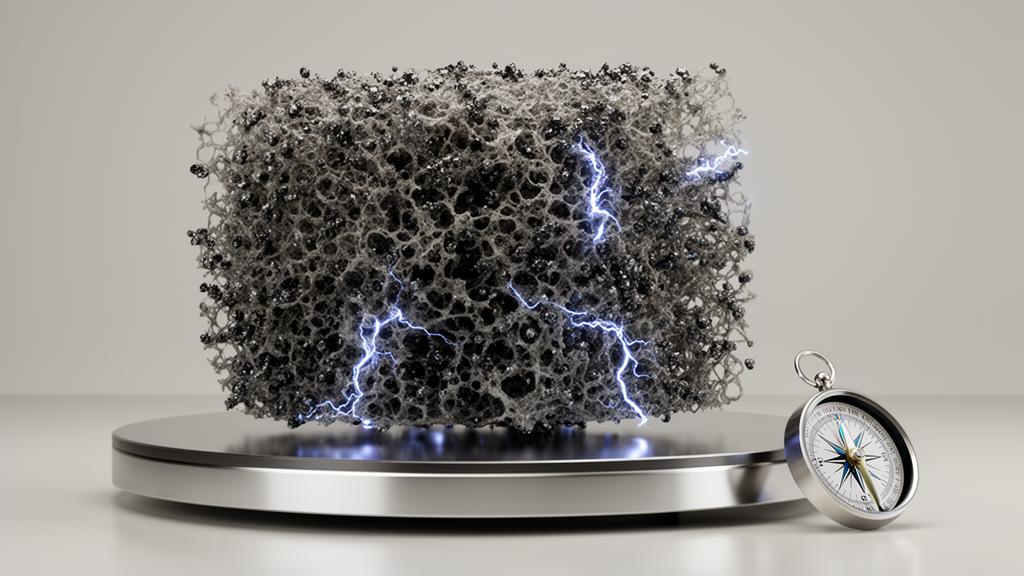
Biomass-derived carbon aerogels infused with iron have demonstrated a combination of hierarchical porous structure, low electrical resistivity, and magnetic properties, making them suitable for energy-storage and electromagnetic-shielding applications. The optimized formulation, known as CS/CMC-50%-C, is produced from chitosan and sodium carboxymethyl cellulose. It achieved a resistivity of 0.454 Ω·cm and a specific surface area of 458.9 m²·g⁻¹, while maintaining stable electrical conductivity and structural integrity through ten consecutive charge–discharge cycles.
The creation of these aerogels involved a multistep process starting with Fe³⁺-mediated coordination cross-linking of the biomass precursors. Directional freeze-drying was used to develop a high-porosity precursor aerogel, which was then carbonized at high temperatures. This process allowed researchers to control the material’s microscopic morphology and electrical properties by adjusting the precursor ratio. The resulting material featured a well-developed hierarchical porous architecture and a higher degree of graphitization, contributing to its performance as a lightweight conductive solid.
Iron played both structural and functional roles during carbonization, resulting in the formation of Fe₃O₄ nanocrystals in situ and the creation of Fe–C bonds. These features provided the carbon aerogel with favorable magnetic behavior and reinforced its internal conductive network. The integration of the iron-containing phase into the carbon matrix not only added magnetism but also preserved electrical transport pathways, demonstrating coupled magnetic and electrical characteristics rather than a simple physical mixture of iron and carbon.
The study highlighted the importance of directional freezing and Fe³⁺ cross-linking in controlling the precursor’s structure before carbonization. The balance between chitosan and carboxymethyl cellulose was found to influence the final morphology and conductivity. With a reported surface area of 458.9 m²·g⁻¹, low resistivity, and a three-dimensional porous network, the optimized aerogel shows promise as a lightweight material for electromagnetic shielding and energy storage. The ten-cycle result suggests initial electrical and structural stability under repeated charge–discharge operations, though long-term cycling durability and performance under practical conditions remain to be established.
Subject of Research: Fabrication and characterization of magnetic conductive carbon aerogels derived from iron-cross-linked chitosan and carboxymethyl cellulose.
Source: Biomass & Recycled Carbons Feed