Max Planck researchers produce nanodiamonds from graphene
Researchers at the Max Planck Institute for Polymer Research, led by Yingke Wu and Tanja Weil, synthesized nanodiamonds of 3–4 nanometers from graphene fragments using high pressure and high temperature, publishing the results in Nature. The bottom-up method allows precise control over nanodiamond size, structure, and dopant atoms—such as nitrogen for vacancy centers or silicon for photoluminescence—which is relevant for graphene-derived carbon nanomaterials and quantum photonics applications.
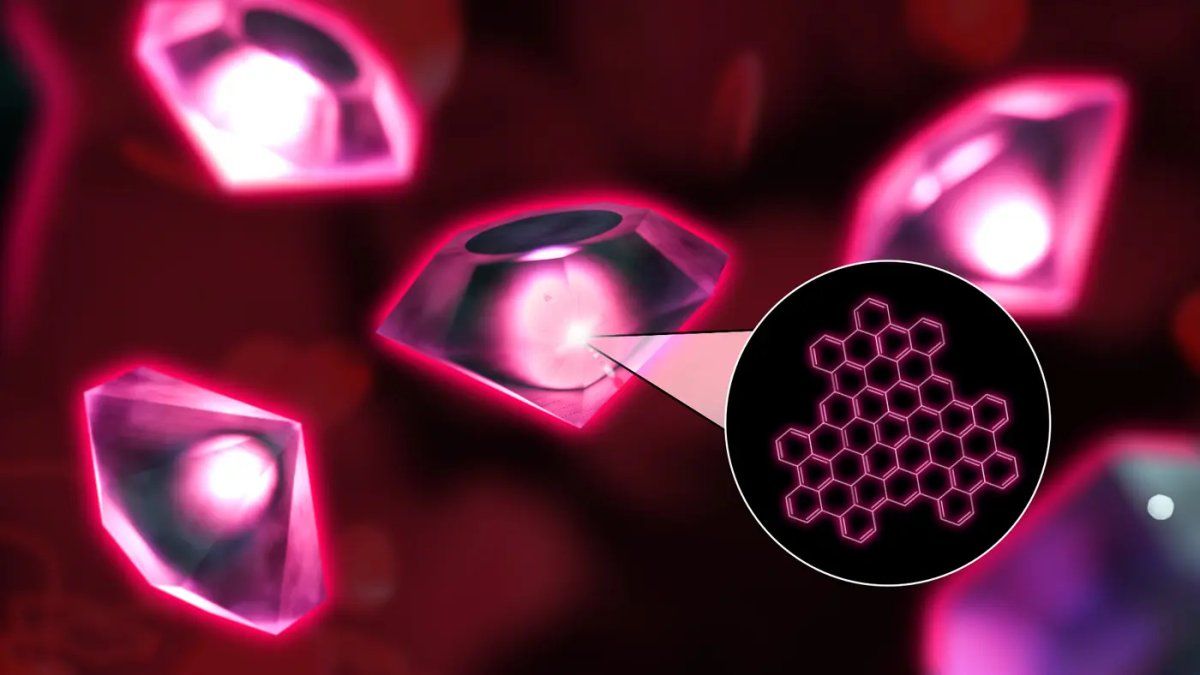
Researchers at the Max Planck Institute for Polymer Research have developed a method to synthesize nanodiamonds from graphene. Graphene, a single-layer form of carbon, is transformed into diamond-like nanostructures under high pressure and temperature, resulting in diamonds approximately three to four nanometers in size.
This approach, detailed in the journal Nature, allows precise control over the structure, composition, and size of the nanodiamonds based on the starting material. Unlike traditional methods that involve crushing larger diamonds, this technique offers greater control over the final product. Additionally, synthesizing from graphene enables the incorporation of other atoms, such as silicon or germanium, which can alter the color of the nanodiamonds, or nitrogen, which creates nitrogen-vacancy centers useful as photon sources.
Nanodiamonds have potential applications as light sources, sensors for measuring weak magnetic fields, and as qubits in quantum computing. According to Tanja Weil, this platform could provide a scalable foundation for developing quantum sensors, integrated photonic emitters, and programmable diamond-based nanomaterials.
The project involved collaboration between the Max Planck Institute for Polymer Research, the Max Planck Institute for Colloids and Interfaces, the German Electron Synchrotron (DESY), the Leibniz Institute for New Materials, and several universities including those in Frankfurt, Göttingen, Mainz, Ulm, Cambridge, and Saarland.
Source: Graphene Feed