New research reveals what really controls water chemistry in nanoscale spaces
Researchers from Cambridge, Harvard, Caltech, and the Max-Planck Institute for Polymer Research used machine-learning simulations to study water confined between graphene and hexagonal boron nitride sheets, finding that confinement alone does not alter water's reactivity but that pressure and surface chemistry of the confining material are the controlling factors. For the carbon materials sector, the study establishes that graphene's chemically inert surface does not enhance water dissociation, while reactive surfaces like hBN do, offering a design principle for selecting 2D carbon and non-carbon materials in membranes, fuel cells, and electrochemical systems.
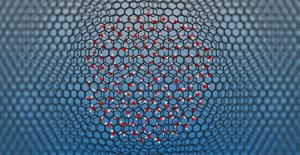
Recent research has provided new insights into the chemical behavior of water when confined in nanoscale spaces, with implications for advanced carbon materials. The study, published in Science Advances, involved collaboration between researchers from the University of Cambridge, Harvard University, California Institute of Technology, and the Max-Planck Institute for Polymer Research. It focused on water confined between sheets of graphene and hexagonal boron nitride (hBN), both atomically thin materials with distinct surface chemistries.
The research revealed that the reactivity of water in these confined spaces is highly sensitive to factors such as density, pore width, wall flexibility, and surface chemistry. Notably, when conditions such as chemical potential were controlled, the confinement itself did not alter water's reactivity. This finding helps explain previous contradictory results in the literature, which often did not account for differences in effective pressures or densities.
Advanced simulations using machine learning allowed the team to explore a wider range of conditions with quantum-mechanical accuracy. The study found that water trapped between graphene or hBN sheets experiences internal pressures of several gigapascals due to van der Waals forces. These pressures significantly increase water dissociation, but the effect is consistent with bulk water under similar pressures, indicating that pressure, rather than confinement, is the primary driver of increased reactivity.
The research also highlighted the role of the confining material in influencing water chemistry. In hBN, hydroxide ions formed at the droplet edges chemically bond to the material, stabilizing the ions and enhancing water splitting. This effect was absent in graphene, which does not participate in the reaction due to its chemically inert surface. This suggests that selecting appropriate confining materials can tailor water reactivity in nanoscale environments.
This study provides a framework for understanding water chemistry at the nanoscale and offers practical design principles for engineering chemical environments in technologies such as hydrogen fuel cells, batteries, and catalytic systems. Future research will explore more realistic confinement environments and screen various two-dimensional materials to optimize water reactivity for specific applications.
Source: Graphene Feed