Twisted carbon nanotube fibers with gold nanoparticles record brain signals in mice
Researchers used carbon nanotube fibers with gold nanoparticles to record brain signals in mice.
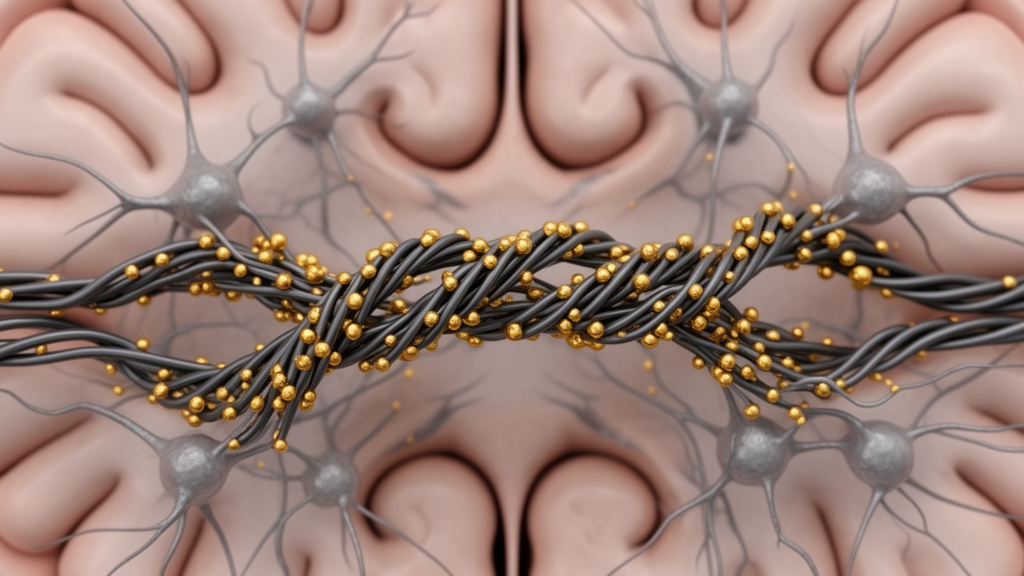
Carbon nanotube fibers enhanced with gold nanoparticles have been developed to improve neural electrode performance, as reported in the Journal of Materials Science. These fibers, densified by twisting and decorated with electrochemically deposited gold, were used in neural electrode arrays implanted in mice. The study demonstrated their ability to record brain signals effectively during two-hour sessions.
The research utilized continuous ribbons of carbon nanotube fiber produced via floating chemical vapor deposition. Twisting these ribbons into fibers densified the structure, enhancing mechanical integrity and providing a substrate for gold nanoparticle deposition. This process increased the fibers' electrical conductivity to 2.90 × 10⁵ siemens per meter, addressing a key limitation of carbon nanotube materials in neural applications.
Beyond conductivity, the study highlighted improvements in mechanical properties. A gold thickness of 50 nanometers increased fracture elongation to 28 percent, and the electrodes maintained electrical continuity through 5,000 bending cycles, with resistance changes below 11 percent.
Electrochemical analysis revealed mixed capacitive-resistance behavior at the electrode-electrolyte interface. Although cathodic charge-storage capacity declined slightly over repeated cycles, the fibers maintained their performance in acute testing.
The optimized fibers were integrated into multi-channel neural electrode arrays and implanted into the hippocampal region of mice. Recordings showed a median impedance magnitude of 13.13 kilohms at 1 kilohertz, with a signal-to-noise ratio of 6.86, indicating effective coupling to neural tissue.
Carbon nanotube fibers offer a flexible alternative to rigid probes, but their practical use has been limited by low conductivity and mechanical challenges. This study's approach addresses these issues by combining structural densification with gold nanoparticle enhancement, providing a promising platform for advanced neural interfaces.
While the study represents an early-stage demonstration, it establishes a framework for designing high-performance, flexible neural electrodes. Future research will need to address long-term biocompatibility and stability to advance these materials for chronic applications.
Source: Carbon Nanotubes Feed