Unitree Robotics' STAR Market listing boosts China's robotics composites
Unitree Robotics' STAR Market listing is set to enhance the use of carbon-fiber-reinforced materials in robotics.
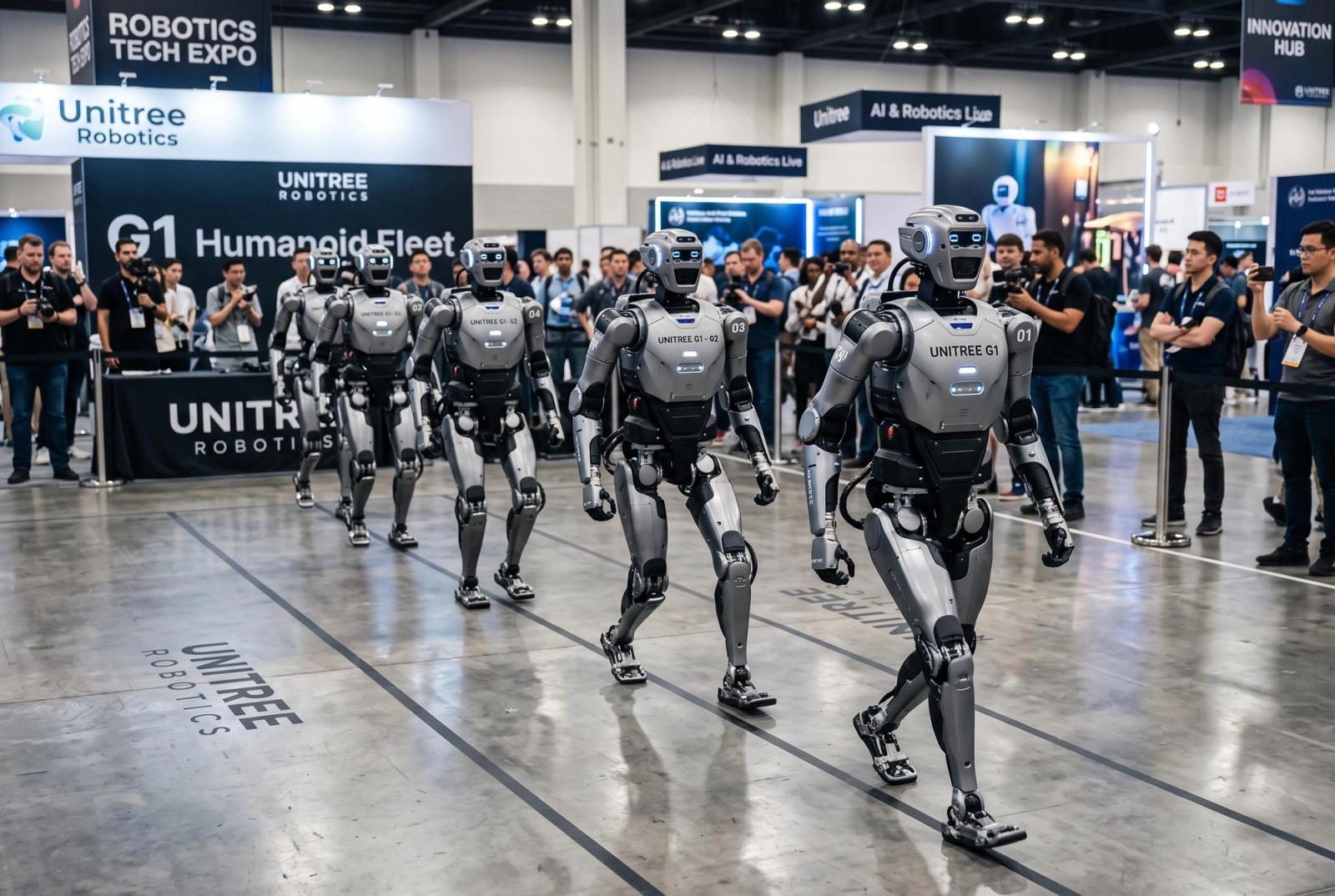
Unitree Robotics' listing on Shanghai's STAR Market in August 2026 highlights the expanding role of composite materials in China's robotics industry. As humanoid and legged robots transition from prototypes to large-scale production, the demand for carbon fiber, prepregs, and other advanced materials is expected to grow. These materials are essential for meeting the performance standards required in robotics, offering lightweight and durable solutions.
The shift from prototype to production in robotics necessitates a reliable and efficient supply chain. Materials such as carbon fiber must not only perform well in controlled environments but also be available in consistent volumes for industrial processes. This transition presents opportunities for suppliers of composites and polymers to become integral to robotics manufacturing.
China's prominence in humanoid robotics is underscored by a LexisNexis analysis, which ranks Chinese companies, including Unitree Robotics, among the top five in the field. With over 80% of global humanoid robot installations in 2025 attributed to Chinese firms, the market is rapidly advancing in research, manufacturing, and commercial deployment.
Unitree Robotics, founded in 2016, initially focused on quadruped robots and has since expanded into humanoid robotics. The company's GD01, launched in May 2026, is a mass-produced manned transforming mecha featuring carbon fiber components. These materials are crucial for balancing the competing engineering priorities of weight, strength, and durability in next-generation robots.
The use of carbon fiber in robotics is not limited to one component but involves the entire manufacturing chain, including reinforcement, resins, molding, and assembly. Chinese carbon-fiber producers like Guangwei Composites and Zhongfu Shenying are well-positioned to meet the increasing demand for lightweight structural parts in robotics.
Advanced polymers, such as PEEK, also play a significant role in robotics, offering solutions for robotic joints and motion systems. Companies like Jiangsu Junhua Special Polymer Materials provide carbon fiber-reinforced PEEK, which could be attractive for specific components.
The integration of robotics with China's existing manufacturing strengths in electronics and automotive parts could enhance the production of robotic platforms. Material suppliers must demonstrate their products' compatibility with high-volume manufacturing systems and provide technical support to adapt to evolving robot designs.
Unitree's STAR Market listing has drawn investor attention to China's robotics scene, with the company's shares surging significantly. While challenges remain in production economics and reliability, the listing signals increased visibility for the robotics ecosystem and potential collaboration with materials firms to improve efficiency and assembly processes.
As robotics shifts toward larger-scale production, the focus will be on developing standardized, modular components and ensuring reliable supply chains. The growth of China's robotics industry could catalyze a broader ecosystem, including materials, electronics, and processing technology.
Source: Carbon Fiber Feed