UniSQ receives $1.3M ARC grant for self-healing batteries
The University of Southern Queensland received a $1.3 million grant to create sodium-ion battery electrodes that can self-repair using engineered graphene and polymer networks.
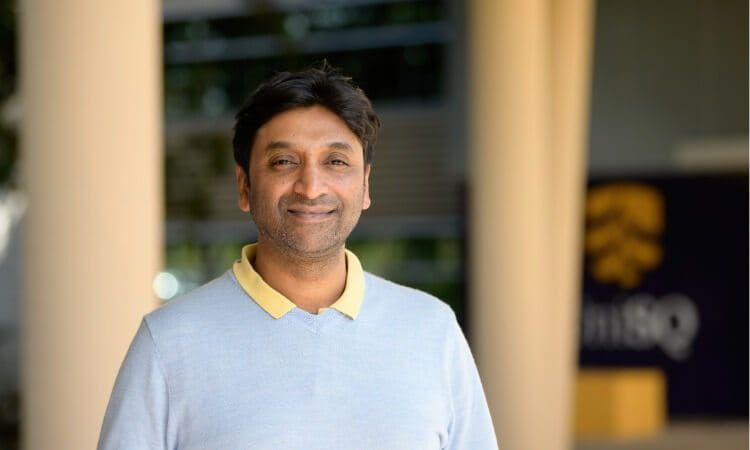
The University of Southern Queensland (UniSQ) has secured a $1.3 million grant from the Australian Research Council's Future Fellowship scheme to advance research on self-healing battery technology. Led by Professor Ashok Kumar Nanjundan, the project focuses on developing sodium-ion battery electrodes that can autonomously repair microscopic damage incurred during charging and discharging cycles.
Rechargeable batteries typically suffer from performance degradation over time due to mechanical stress, which can lead to cracks and loss of electrical contact. This challenge is exacerbated in thicker electrodes designed for higher energy storage. Professor Nanjundan's research aims to address this by integrating defect-rich graphene with dynamic polymer networks to create electrodes capable of self-repair.
The engineered graphene will enhance electron conductivity and facilitate the design of robust interfaces within the electrode. Concurrently, the dynamic polymer networks will be tailored to reconnect damaged regions, thus maintaining structural integrity and performance. "Rather than allowing damage to accumulate progressively over hundreds of cycles, we want to design materials that can reconnect damaged regions and restore contact," said Professor Nanjundan.
The research primarily targets sodium-ion batteries, an emerging alternative to lithium-ion batteries, particularly for stationary energy storage applications where cost, sustainability, and supply-chain resilience are critical. Sodium's abundance offers a sustainable material source for energy storage technologies.
Professor Nanjundan emphasized the relevance of this research in the context of Australia's increasing reliance on renewable electricity and the growing demand for reliable energy storage solutions. The project will also explore the development of thick, solvent-free electrodes, bridging fundamental materials research with the practical challenges of manufacturing advanced batteries.
Building on over a decade of expertise in graphene and functional nanomaterials, Professor Nanjundan's work aims to transition from laboratory materials to practical battery solutions. "The Future Fellowship brings these different strands of research together in a new direction around the concept of self-healing battery electrodes," he said. The research is expected to bolster Australia's capabilities in next-generation battery science and sustainable manufacturing, fostering collaborations in advanced energy-storage materials.
Source: Graphene Feed