Waste batteries and plastic transformed into ultrathin shields against radiation
Researchers have developed carbon nanotube structures that can absorb over 99.9999% of microwaves, using waste batteries and plastic as materials.
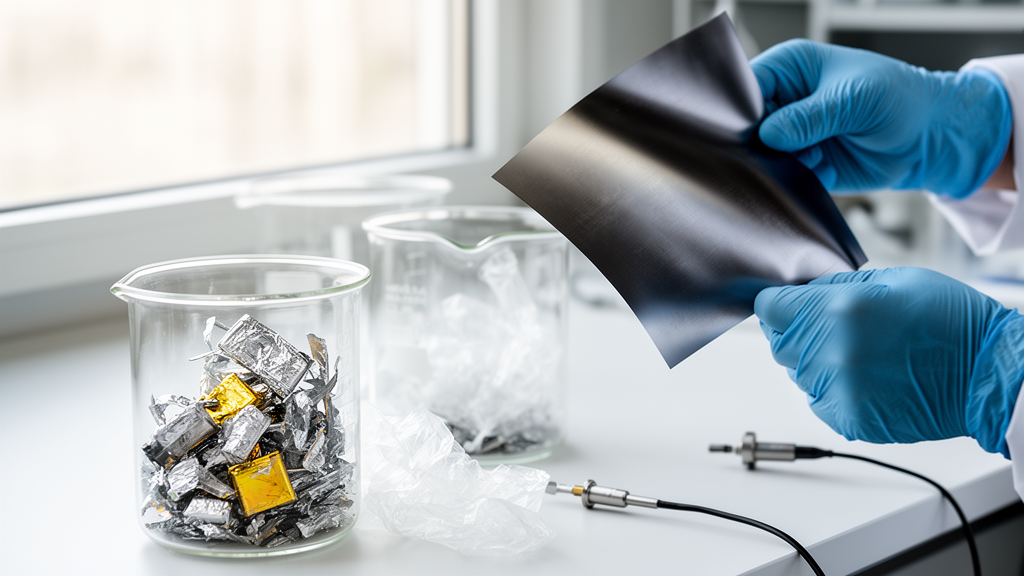
Researchers in China have developed a method to transform waste lithium-ion battery cathodes and discarded plastic packaging into an advanced carbon material with exceptional microwave absorption capabilities. Published in Advanced Composites and Hybrid Materials, the study details a one-step pyrolysis process that converts nickel cobalt manganese oxide (NCM) cathode scrap and low-density polyethylene (LDPE) into carbon nanotube structures. These structures absorb over 99.9999% of microwave energy at a thickness of just 1.63 millimeters, addressing the rising demand for efficient electromagnetic absorbers amid the expansion of 5G and 6G networks.
The innovation hinges on a carbon-supply-driven kinetic regulation strategy. In this process, metal nanoparticles from the battery cathode catalyze the growth of carbon nanotubes, with polyethylene serving as the carbon source. By adjusting the mass ratio of NCM to LDPE, researchers can control the length and defect density of the nanotubes, optimizing their microwave absorption properties. Raman spectroscopy revealed a balance between graphitization and defect generation, with the optimal point maximizing absorption performance.
The optimized material, NCC-6.7, features a sea urchin-like architecture that balances conductive networks and structural defects, achieving a minimum reflection loss of −63.45 dB at 1.63 millimeters. This performance is significant for practical applications, as traditional absorbers require much thicker materials. The Chinese team also demonstrated the material's flexibility by processing it into a textile, which retained its absorbing properties and showed enhanced corrosion resistance, making it suitable for marine applications.
The study highlights the sustainability benefits of co-upcycling battery and plastic waste. Spent lithium-ion batteries and LDPE are challenging waste streams, and this process extracts value by combining them into a functional product. The single-step co-pyrolysis approach simplifies manufacturing by eliminating the need for separate extraction and synthesis steps, potentially extending to other waste systems and nanomaterials.
As electromagnetic pollution becomes a growing concern, materials derived from waste offer a dual solution by addressing waste and providing effective absorbers. If scalable, this approach could transform waste liabilities into valuable resources for electromagnetic protection. Led by Han-Ming Zhang of Hebei University of Science and Technology, the research team presents a compelling case for the potential of waste-derived materials in addressing technological and environmental challenges.
Source: Carbon Nanotubes Feed