What your tears could reveal about your brain
Researchers used a laser to convert portions of a thin plastic film into electrically conductive graphene to create a sensor. This development could lead to new applications for graphene in biomedical devices, particularly in analyzing biological fluids like tears.
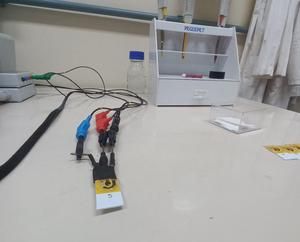
Researchers have developed a low-cost electrochemical sensor that utilizes graphene to detect dopamine in tears, potentially offering a noninvasive method for monitoring neurological health. The study, published in ACS Omega, demonstrates that this sensor can accurately measure dopamine concentrations in artificial human tears, which could aid in the early detection of conditions like Parkinson's disease. The sensor uses a laser to convert parts of a thin plastic film into electrically conductive graphene, producing an electrical signal when dopamine interacts with it.
The research team, led by Neftalí Lênin Villarreal Carreño, aims to facilitate early detection of neurological disorders, allowing for clinical interventions before significant symptoms arise. Current methods for monitoring dopamine levels often involve invasive procedures, whereas tears can be collected quickly and painlessly. The sensor, about the size of a postage stamp, maintained its performance even in the presence of other compounds typically found in tears.
Lucas Minghini Gonçalves, a coauthor, notes that the sensor can detect dopamine levels from below the healthy baseline to three times higher, enabling timely therapeutic interventions. The findings lay the groundwork for future studies using human tear samples and the development of point-of-care devices for monitoring neurological biomarkers.
The research received funding from several Brazilian institutions, including the Brazilian Federal Agency for Support and Evaluation of Graduate Education, Rio Grande do Sul Research Foundation, and the National Council for Scientific and Technological Development. The AgroHealth project, supported by the Center for Embedded Devices and Research in Digital Agriculture, also contributed financial resources.
The American Chemical Society (ACS), a nonprofit organization, publishes and publicizes peer-reviewed scientific studies but does not conduct research itself. ACS is dedicated to advancing scientific knowledge and providing access to chemistry-related information through various platforms, including journals and conferences.
Source: Graphene Feed