Almond shells produce up to 41% biochar through fixed-bed pyrolysis
Researchers achieved biochar yields of up to 41.3% from almond shells using fixed-bed pyrolysis at temperatures between 400 and 500 degrees Celsius.
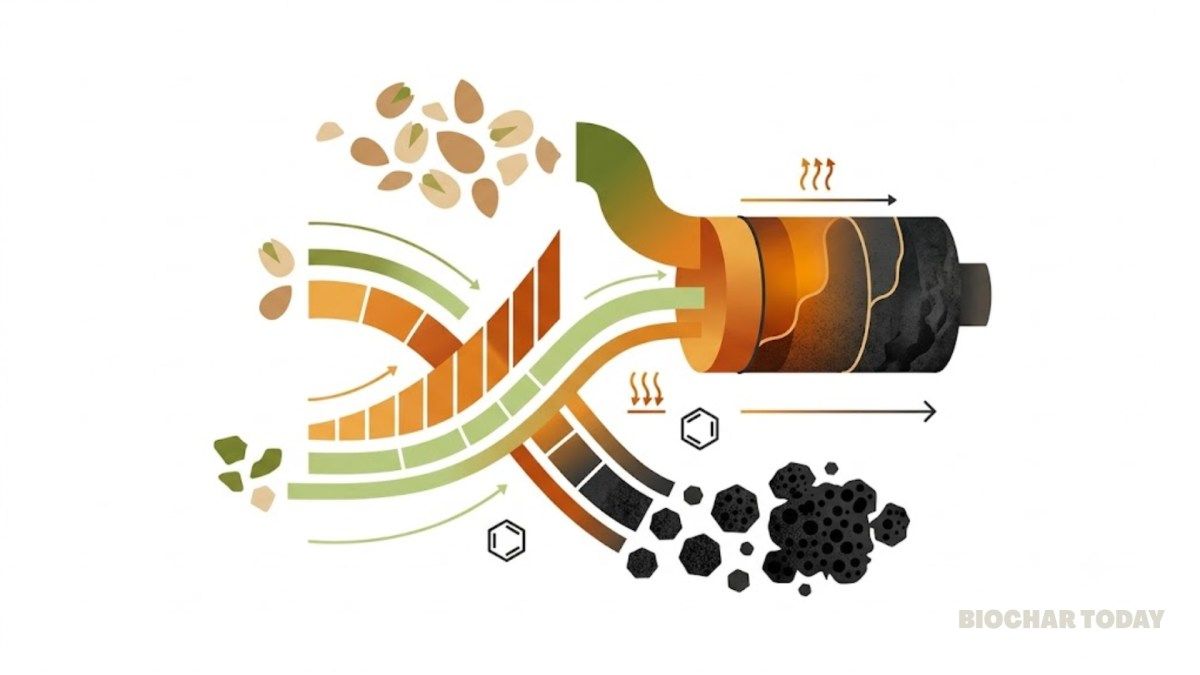
A study published in Bioresources and Bioproducts by Hamed M. El Mashad and colleagues reports that fixed-bed pyrolysis of almond shells yields biochar at rates between 35.0 and 41.3 percent. Pistachio shells, under similar conditions, produce biochar yields ranging from 26.8 to 36.7 percent when processed at temperatures from 400 to 500 degrees Celsius.
The conversion of agricultural byproducts, such as nut shells, into carbonized materials presents an opportunity for carbon sequestration and soil enhancement. The study evaluated the thermal conversion of almond and pistachio shells using micro-scale thermal analysis and fixed-bed processing to determine operational parameters and product characteristics.
The thermal decomposition profiles revealed operational differences between the two types of shells. Almond shells experienced a broad primary decomposition phase, while pistachio shells underwent a distinct two-stage degradation process. Kinetic modeling indicated that pistachio shells required higher apparent activation energy for thermal conversion compared to almond shells, with model predictions aligning closely with experimental data.
In fixed-bed processing, factors such as operational temperature, residence time, and shell type significantly influenced material recovery. Almond shells consistently produced more carbonized material than pistachio shells under similar conditions. Higher processing temperatures or extended residence times reduced total solid recovery due to the escape of volatile components. Fixed-bed processing achieved higher yields than micro-scale thermal testing, highlighting differences in heat and mass transfer.
Chemical analysis of the biochar revealed distinct mineral and structural differences. Almond shell biochar contained higher levels of nitrogen, calcium, potassium, magnesium, and soluble salts compared to pistachio shell biochar. Increasing processing temperatures led to greater carbonization, a loss of hydroxyl functional groups, and enrichment of stable aromatic structures. The higher soluble salt content in almond shell biochar suggests careful management of application rates to prevent increased soil conductivity.
Source: Biochar Feed