Biochar turns green roofs into effective methane sinks
Researchers found that adding biochar to green roof substrates significantly enhances their capacity to absorb methane.
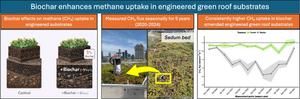
Biochar, a carbon-rich material, significantly enhances the methane absorption capacity of green roofs, according to recent research. Conducted by the University of Toronto's Green Roof Innovation Testing Laboratory (GRIT Lab II), the study highlights biochar's potential in urban climate resilience by improving the methane uptake of engineered green roof substrates. Over a five-year period, biochar-amended modules demonstrated a nearly fivefold increase in methane absorption compared to unamended controls, without increasing carbon dioxide emissions.
Green roofs are recognized for their environmental benefits, such as reducing building energy use, managing stormwater, and supporting biodiversity. However, their role in mitigating non-CO₂ greenhouse gases like methane has been less explored. Traditional substrates can promote methane production, making it crucial to enhance methane exchange in these systems. The study's findings suggest that biochar can transform green roofs into effective methane sinks, surpassing typical absorption rates of agricultural and urban soils.
The research identified biochar's influence on substrate moisture and water vapor flux as key to its effectiveness. Biochar enhances methane uptake by improving substrate moisture retention, which creates favorable conditions for methane-oxidizing microbes. Its porous structure and surface chemistry provide stable habitats for these microbes, facilitating efficient methane conversion.
Biochar's integration into green roofs offers a multifunctional approach to urban greenhouse gas mitigation. It supports hydrological functions, plant performance, and atmospheric methane removal, while also aligning with circular economy initiatives through the conversion of urban wood-waste into biochar. Future research should explore various biochar types and dosages, as well as the microbial communities involved, to further optimize methane uptake.
The study underscores the potential of biochar-amended green roofs as active components in urban climate strategies, offering a practical solution for greenhouse gas mitigation in city landscapes. Corresponding authors Imrul Kayes and Sean C. Thomas emphasize the importance of this research in advancing our understanding of biochar's role in urban environments.
Source: Biochar Feed