Boron-Doped Carbon Nitride Enhances Antibiotic Breakdown in Water
Researchers in China developed a boron-doped graphitic carbon nitride homojunction that degrades 98.6% of antibiotics in water using persulfate and visible light.
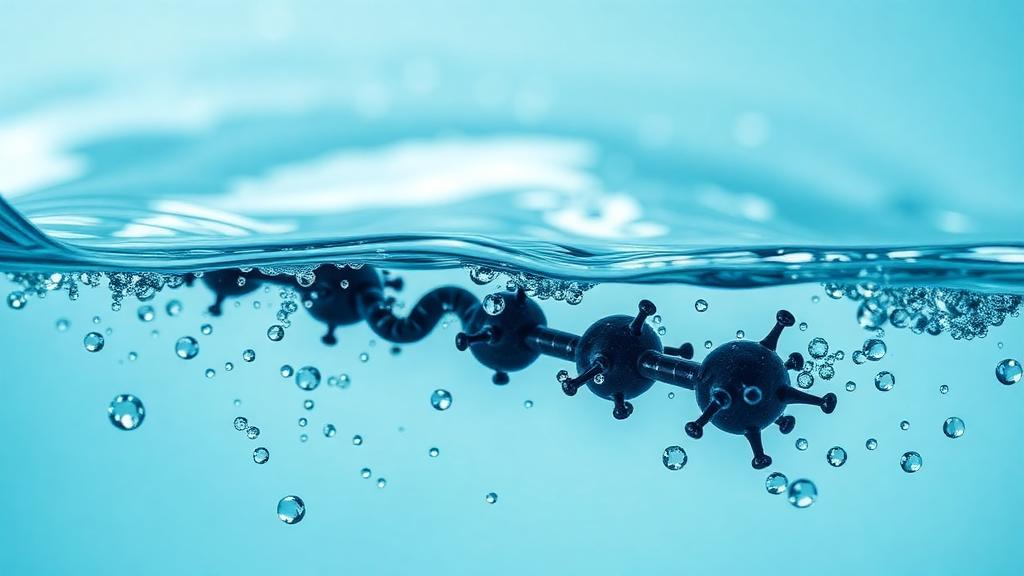
Researchers at Central South University in Changsha, China, have developed a boron-doped graphitic carbon nitride homojunction that significantly enhances the breakdown of tetracycline in water. This material, when combined with persulfate and exposed to visible light, achieves a 98.6% degradation rate of tetracycline within one hour. The study, published in the Journal of Nanoparticle Research, highlights the potential of this approach in addressing antibiotic pollution in water systems.
Graphitic carbon nitride (g-C₃N₄), a metal-free polymeric semiconductor, forms the basis of this innovation. Known for its cost-effectiveness and chemical stability, g-C₃N₄ can absorb visible light to drive photocatalytic reactions. However, its effectiveness has been limited by rapid recombination of light-excited electrons and holes. The research team, led by Zemin Zhu and Guodong Zheng, tackled this issue by doping g-C₃N₄ with boron and forming a homojunction with two variants of the material.
The team synthesized two types of carbon nitride: one from urea (CN) and another from melamine, doped with boron (BCN). Boron doping narrows the band gap, enhancing light absorption and charge separation. The homojunction formed between CN and BCN facilitates efficient charge separation, reducing recombination and extending the lifetime of reactive electrons and holes.
Electrochemical tests confirmed the improved performance of the CN/BCN homojunction. It exhibits low electrochemical impedance and an optimal photocurrent response, indicating effective conversion of light into mobile charge carriers. This enhanced charge carrier separation significantly boosts the photocatalytic activity of the material.
The CN/BCN catalyst, when used with potassium persulfate, a common oxidizing agent, and visible light, achieved a high rate of tetracycline degradation. Persulfate ions, activated by the photocatalyst, generate aggressive sulfate radicals that degrade organic pollutants. The study identified that photogenerated holes play a crucial role in the degradation process, emphasizing the importance of charge separation in the homojunction.
The catalyst demonstrated durability, maintaining over 90% efficiency in tetracycline removal across multiple cycles. It also showed resilience against common anions found in natural waters, which often hinder photocatalytic processes. The use of inexpensive and metal-free materials further enhances the practicality of this approach for real-world applications.
While challenges remain, such as scaling up for industrial use and ensuring consistent performance under varying conditions, this study provides a promising pathway for advanced water treatment solutions. The boron-doped carbon nitride homojunction represents a significant advancement in photocatalytic technology, offering a potential solution to the pressing issue of antibiotic pollution in water.
Source: Graphite Feed