C60 Functionalization: Bingel, Prato and Diels-Alder Routes
Bingel, Prato and Diels-Alder reactions each attach different groups to the C60 cage, changing solubility, electronic behaviour and how the fullerene organises with neighbouring molecules.
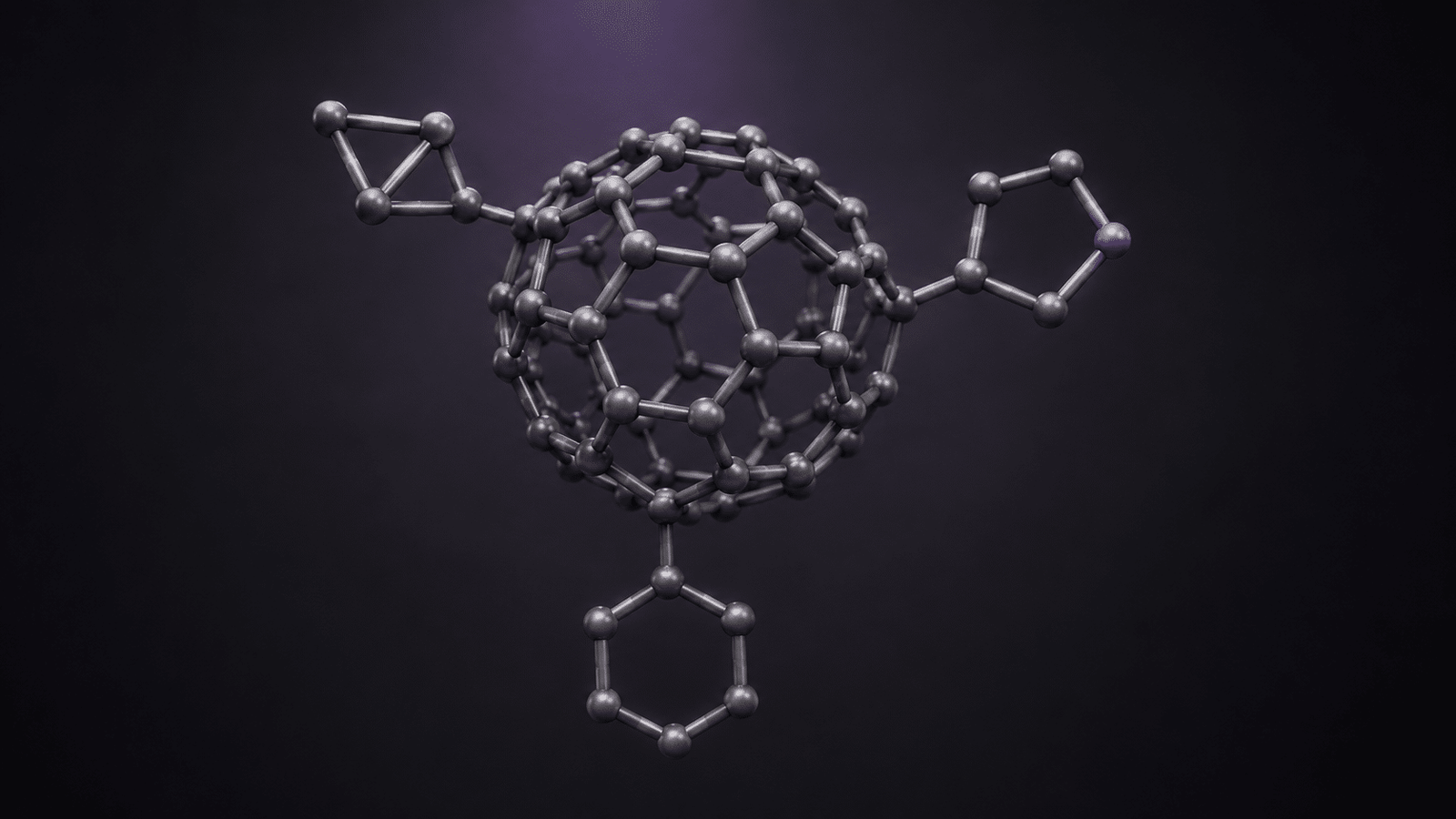
Functionalization of C60 fullerenes is a critical area of research in advanced carbon materials, offering diverse applications beyond the capabilities of pristine C60. Covalent attachment of functional groups can alter solution behavior, enable molecular connections, and create fullerene building blocks for larger systems. However, 'functionalized C60' encompasses a wide range of compounds, each with distinct properties based on attachment chemistry, addend identity, and isomeric composition.
Three primary reaction platforms are prevalent in fullerene chemistry: Bingel or Bingel–Hirsch cyclopropanation, Prato 1,3-dipolar cycloaddition, and Diels–Alder cycloaddition. Each method utilizes the addition chemistry of the C60 cage, but the resulting products are unique, necessitating careful selection based on the desired derivative architecture.
C60's structure consists of 60 carbon atoms in a symmetrical cage, with two types of bonds: [6,6] bonds shared by two six-membered rings, and [5,6] bonds shared by a five- and a six-membered ring. The [6,6] bonds, with greater alkene-like character, are common sites for addition reactions. The π-system of C60 makes it an effective electron acceptor and reactive partner in various cycloaddition and nucleophilic-addition sequences.
The Bingel reaction, a well-established method for creating methanofullerenes, involves cyclopropanation of C60 using a stabilized halogenated carbon nucleophile. This reaction is valuable for its ability to introduce modular substituents, such as ester groups, which are useful in materials research. However, achieving selectivity in multiple additions remains a challenge, as demonstrated by recent research on Bingel bis-functionalization.
The Prato reaction employs 1,3-dipolar cycloaddition of an azomethine ylide to functionalize C60, forming fulleropyrrolidines. This method offers flexibility in molecular design, allowing for the incorporation of various substituents around the pyrrolidine ring. However, researchers must carefully characterize these derivatives, as experimental behavior can vary significantly based on the substituents and overall structure.
In Diels–Alder reactions, C60 acts as a dienophile, forming a six-membered ring fused to the fullerene framework. This method is relevant for connecting π-electron donors to C60, but product stability and feasibility depend heavily on the diene and molecular context. Multiple reactive sites can lead to additional adducts if not carefully controlled.
Selecting the appropriate functionalization route depends on the desired structural outcome. Monoaddition preserves more of the original cage conjugation, while multiple additions increase functionality but complicate the isomer landscape. Researchers must design reactions with a plan for separating unreacted C60, desired adducts, and isomers, using techniques like HPLC and complementary analytical methods.
Functionalization trades part of the π-system for new chemical functionality. The balance between increased compatibility and preserving electron-accepting behavior must be evaluated against the intended application. Starting material purity is crucial, as impurities can affect reaction outcomes. Detailed characterization of both starting materials and derivatives is essential for precision synthesis.
Source: Emerging Nano Carbons