Carbon nanofiber inks convert cotton fabric into n-type thermoelectric
Researchers at the University of Minho demonstrated that Pyrograf III carbon nanofiber inks can transform cotton fabric into n-type thermoelectric textiles, achieving a conductivity of 35.4 siemens per meter.
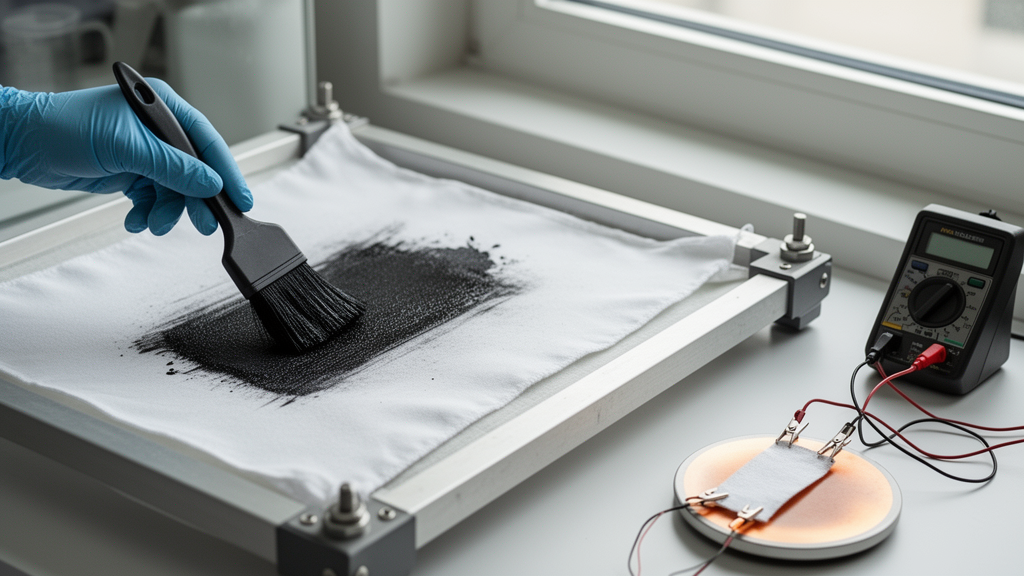
Researchers have advanced the development of thermoelectric textiles by using carbon nanofiber inks to transform cotton fabric into n-type conductive materials. A study published in Frontiers in Materials, led by Antonio J. Paleo from the University of Minho, demonstrates how two commercial grades of Pyrograf III carbon nanofibers can be used to coat cotton fabrics, enabling them to generate electricity from body heat. The study found that the concentration of the carbon nanofiber ink is more critical than the specific grade of nanofiber used, offering potential for integrating power sources into clothing.
The Seebeck effect, which generates voltage when one side of a material is hotter than the other, is central to these thermoelectric textiles. Cotton, being a widely used and comfortable fabric, serves as an ideal substrate for such applications. The challenge lies in making cotton conductive without altering its textile properties. Carbon nanofibers, typically produced as solid powders, are dispersed into inks for application via methods like dip coating.
In this study, aqueous inks containing Pyrograf III carbon nanofibers, PR 24 LHT XT and PR 25 PS XT, were used. These nanofibers, synthesized through chemical vapor deposition, underwent different thermal treatments, resulting in distinct structural characteristics. The PR 24 fibers, with smaller diameters and higher crystallinity, showed superior performance at higher ink concentrations.
The coated fabrics maintained thermal stability up to 300 degrees Celsius, similar to uncoated cotton. At the highest ink concentration, the fabrics contained about 8 to 9 percent nanofiber by weight. Electrical performance varied with ink concentration, with PR 24 fabrics achieving higher conductivity and Seebeck coefficients compared to PR 25.
The study also revealed that the coated fabrics exhibited a negative temperature coefficient, contrasting with the positive coefficient of the nanofibers alone. This indicates a change in the transport mechanism when the fibers are applied to cotton, with the fabrics conducting through thermally activated hopping of charge carriers.
Overall, the research highlights the potential of carbon nanofiber-coated textiles for wearable thermoelectric generators. The PR 24 nanofiber-coated fabrics, in particular, showed promising thermoelectric properties, suggesting their use as reference materials in future studies aimed at developing flexible energy-harvesting textiles.
Source: Carbon Nanotubes Feed