China's breakthrough in ultra-strong carbon fiber could reshape aerospace and energy industries
Researchers in China have developed an ultra-strong carbon fiber that could transform aerospace and energy sectors, offering enhanced performance and efficiency.
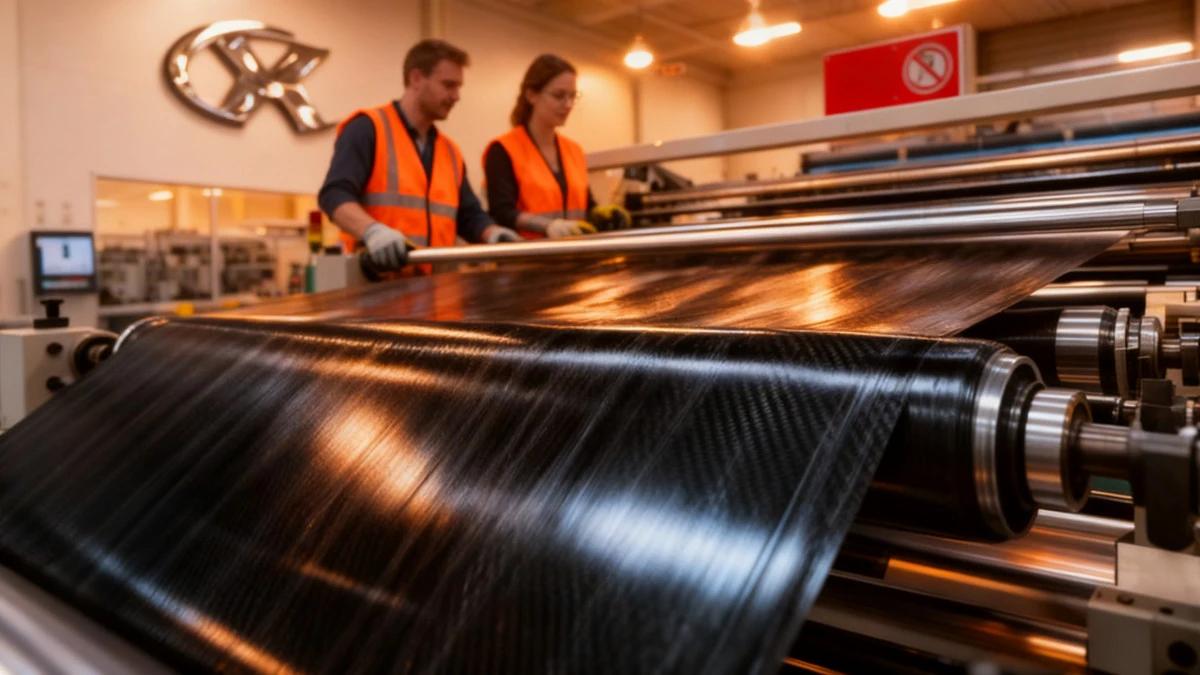
China's advancements in ultra-strong carbon fiber production are poised to impact the aerospace and energy sectors significantly. Carbon fiber, known for its lightweight and high-strength properties, is crucial in industries such as aviation, space exploration, automotive, and wind energy. Recently, Chinese manufacturers have begun mass-producing T1100-grade carbon fiber, which boasts a tensile strength of approximately 7 gigapascals (GPa), compared to the standard 5 GPa used in aerospace applications.
This development allows for the creation of lighter structures without sacrificing safety, offering potential efficiency gains in fuel and energy consumption. The space industry, in particular, stands to benefit, as lighter rockets and satellites reduce fuel needs and launch costs. Similarly, commercial aviation could see fuel savings with reduced aircraft weight.
China's progress in carbon fiber production marks a shift from reliance on foreign materials, with Japan and the United States previously dominating the high-end market. The key achievement lies in scaling up production to industrial levels, ensuring consistent quality and volume. This capability positions China to meet growing global demand for carbon fiber, driven by transportation, energy, and infrastructure projects.
The energy sector, especially wind power, could see enhancements with stronger carbon fibers enabling longer, lighter turbine blades, potentially increasing power output. Additionally, the electric vehicle industry may benefit from advanced fibers that help extend battery range by reducing vehicle weight.
China's strategic investments over the past decade aim to secure its position in the high-tech materials market. Recent geopolitical tensions have accelerated domestic innovation, narrowing the technology gap with Western and Japanese leaders. Increased Chinese production capacity could influence global pricing, challenging US and European manufacturers in specialized segments.
As China asserts its role in the ultra high-tech materials sector, the implications extend beyond industry, signaling a shift from competing on price to leading in technological innovation.
Source: Carbon Fiber Feed