Copper-Infused Biochar Achieves Over Ninety-Nine Percent Pollutant Removal
Chohee Yang and colleagues published a study in npj Clean Water showing that copper-incorporated biochar synthesized under a CO₂ atmosphere removes 90.8% of bisphenol A via adsorption and achieves over 99% total degradation with peroxydisulfate, while the production process yields syngas comprising 94% of total gas output. The findings are relevant to the biochar sector as they demonstrate a pathway to engineer biochar with both high-performance catalytic water treatment capability and improved thermochemical energy recovery in a single production process.
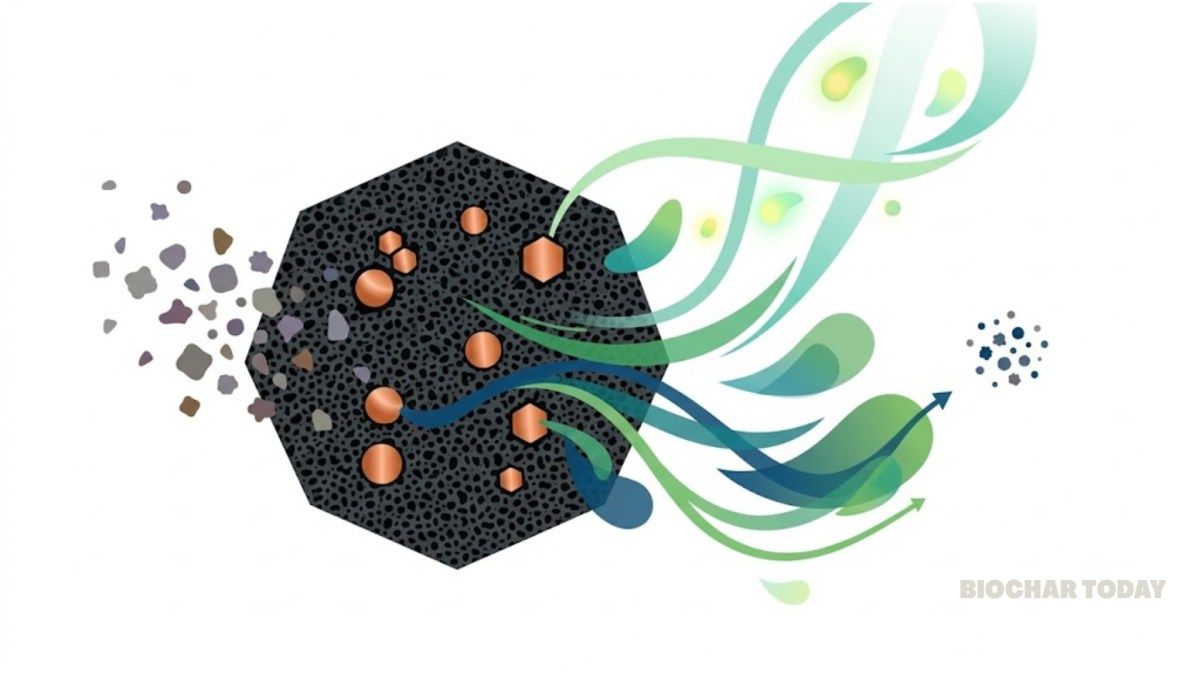
A study published in npj Clean Water by Chohee Yang and colleagues highlights the effectiveness of copper-infused biochar in environmental remediation. The engineered biochar removes 90.8% of bisphenol A through adsorption and achieves over 99% total chemical degradation with oxidants. Additionally, it increases syngas production to 94%.
This study introduces a high-performance copper-incorporated biochar, which efficiently removes toxic organic pollutants from water. Unlike traditional filtration materials, this biochar serves as both an adsorbent and a catalyst. It captures industrial contaminants like bisphenol A and offers efficient thermochemical energy recovery by converting biomass into clean fuels.
The copper-infused biochar, synthesized under a carbon dioxide atmosphere, shows a significant performance increase compared to standard biochars. It achieves 90.8% pollutant removal efficiency during adsorption, while biochar produced with nitrogen gas removes only 15.2%. This difference is due to the biochar's dense network of microscopic pores, which increases the surface area for trapping toxins.
The material also demonstrates excellent catalytic capabilities when paired with a chemical oxidant. Adding peroxydisulfate after initial adsorption leads to over 99% total contaminant removal. Copper nanoparticles within the biochar act as catalytic engines, activating the oxidant to break down toxins without releasing harmful byproducts.
The study also reports advancements in clean energy production during biochar manufacturing. The copper-catalyzed, carbon dioxide-assisted thermal treatment of wood chips enhances syngas production. It increases total gas yields from 35% to 49% and boosts carbon monoxide production by 2.03 times. This process reduces low-value bio-oils by 62%, offering a sustainable solution for wastewater treatment and renewable energy generation.
Source: Biochar Feed