Defect-engineered biochar breakthrough in water purification
Researchers developed defect-engineered biochar that achieves over 99% radical selectivity, enhancing its effectiveness for water decontamination.
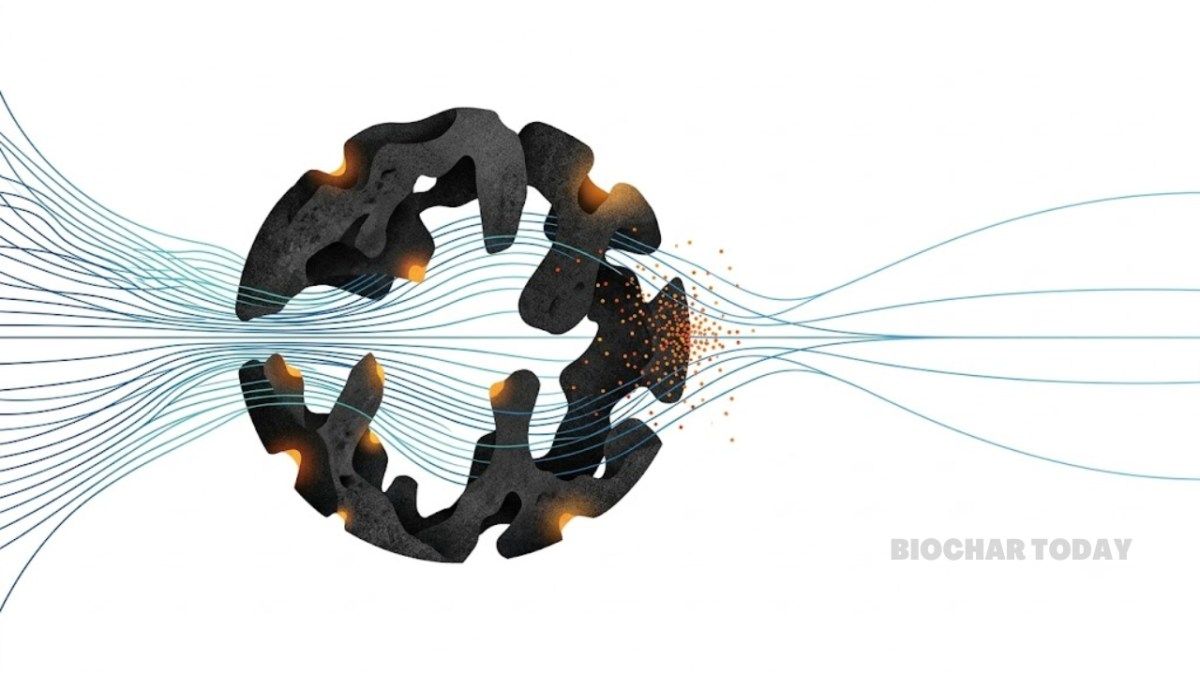
A study published in Nature Communications by Ying Hu and colleagues highlights the development of defect-engineered biochar with enhanced electron-accepting capabilities for water purification. By creating 5-14-5 vacancy-pentagon defects in nitrogen-removed biochar, the researchers achieved an electron accepting capacity of 3.77 millimoles per gram, resulting in over 99 percent selectivity for acetylperoxyl radicals and maintaining water decontamination for 260 hours.
Traditional water decontamination methods often face challenges due to low catalytic efficiency, as hydroxyl radicals react nonselectively and are rapidly quenched by background water constituents. The research team, including Wei Ren, Min Wang, Zhenqi Xu, and Yongfa Zhu, introduced a nitrogen-removal strategy to engineer defect-rich biochar catalysts that address these limitations. By thermally removing nitrogen atoms from nitrogen-containing agro-forestry biomass such as corn straw and sugarcane bagasse, they synthesized biochar with localized 5-14-5 vacancy-pentagon defects.
The removal of nitrogen atoms alters the electronic structure of the biochar, transforming it from an electron donor to an electrophilic electron sink. This change enhances its electron accepting capacity significantly, achieving an 8- to 40-fold increase over conventional biomass chars. The optimized biochar facilitates a thermodynamically favorable activation pathway for peracetic acid, reducing the Gibbs free energy for acetylperoxyl radical formation to -0.09 electron volts while minimizing hydroxyl radical generation.
The defect-engineered biochar catalyst effectively degrades organic pollutants by selectively producing acetylperoxyl radicals. It achieved a kinetic constant of 409.82 per minute per molar for bisphenol A removal, outperforming conventional metal-oxide and carbonaceous catalysts. The extended half-life of acetylperoxyl radicals and their ability to migrate into the solution phase prevent surface site poisoning. In continuous-flow tests, biochar-coated cotton fiber films maintained over 90 percent bisphenol A removal for 260 hours.
Ecotoxicity assays confirmed the ecological safety of the process, and life-cycle assessments showed that combining biochar's carbon storage with renewable energy results in a net-negative carbon footprint for water purification.
Source: Biochar Feed