Electroforming breakthrough enhances durability of composite aerospace structures
Researchers have enhanced the durability of Carbon Fibre Reinforced Polymer (CFRP) in aerospace structures by adding an electroformed nickel leading-edge guard.
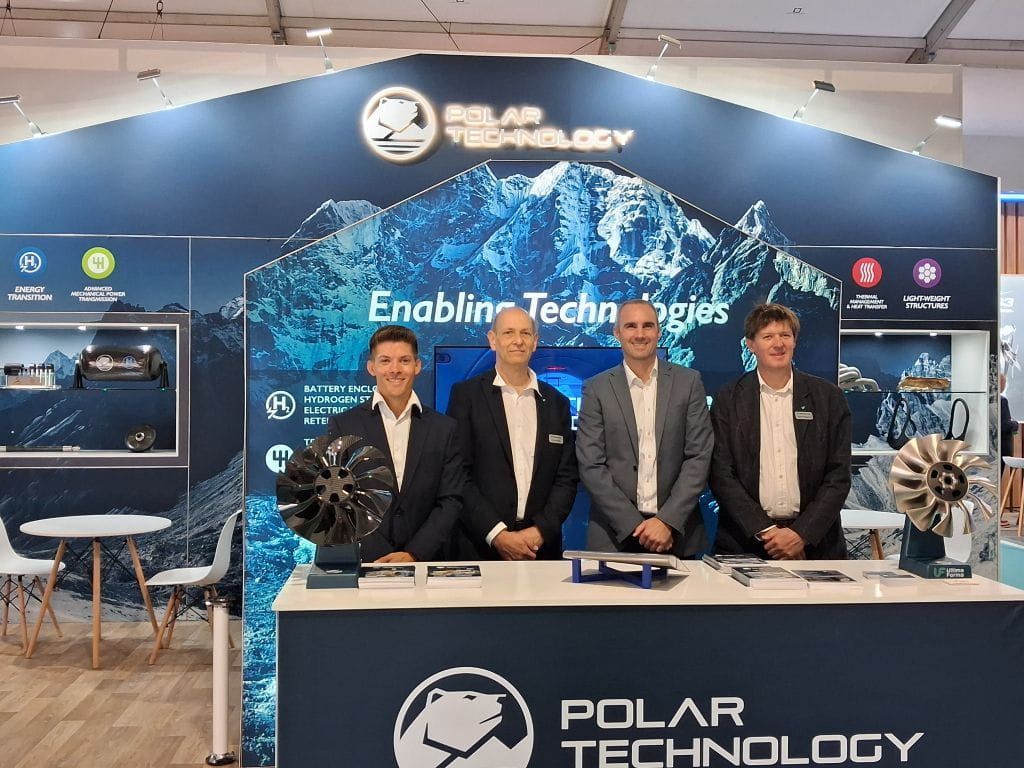
Polar Technology Management Group Limited and Ultima Forma Limited have completed the Leading-Edge Electro-Forms (LEEF) project, funded by Innovate UK. This collaboration developed an electro-formed leading-edge protection solution that enhances the durability of composite aerospace structures against erosion, impact, and corrosion.
The LEEF project showcased a substantial improvement in erosion resistance, providing lightweight and high-performance protection for composite aerospace structures. This advancement also strengthens the UK's aerospace supply chain through innovative manufacturing capabilities developed domestically.
The partnership leveraged Ultima Forma's electroforming expertise and Polar Technology's composite manufacturing skills. Ultima Forma uses electric currents to deposit a precise layer of nickel or nickel-cobalt onto a substrate. Polar Technology then applies this electroformed protection to composite structures using advanced bonding and co-moulding processes.
Erosion testing revealed that composite structures with electroformed protection showed an 88-fold improvement in erosion resistance compared to unprotected composites. Trials involved composite aerofoil sections in two configurations: baseline Carbon Fibre Reinforced Polymer (CFRP) and CFRP with a nickel leading-edge guard. Both were exposed to identical erosion conditions and evaluated over time.
Unprotected CFRP sections experienced severe material loss, while nickel-guarded sections exhibited minimal wear, demonstrating enhanced erosion resistance. The electroformed metal's thickness can be adjusted to optimize protection and weight, achieving a 64% lower erosion rate than titanium solutions.
This technology has immediate applications in aerospace and defense, including rotor and propeller blades for eVTOL and UAVs, turbine inlets, and outlet guide vanes. It could protect composite leading edges from rain, sand, and debris, extending their lifespan and reducing maintenance downtime. Further research may explore resistance to lightning and bird strikes.
The LEEF project received support from organizations like Short Brothers, a Boeing Company, and Vertical Aerospace, interested in its potential benefits for new aerospace applications. Innovate UK partially funded the project, with innovation lead Chaco van der Sijp highlighting the collaboration's success in overcoming technical barriers.
Polar Technology and Ultima Forma are exploring further applications for the leading-edge protection layer. Polar Technology's manufacturing strategy allows for immediate transition to long-term, high-volume contracts, showcasing the project's commercial and functional benefits.
Source: Carbon Fiber Feed