Engineers use coconut shells to create stronger asphalt with 12.5% biochar
Engineers found that adding 12.5% coconut shell biochar to asphalt can enhance its strength, offering a sustainable alternative for road construction.
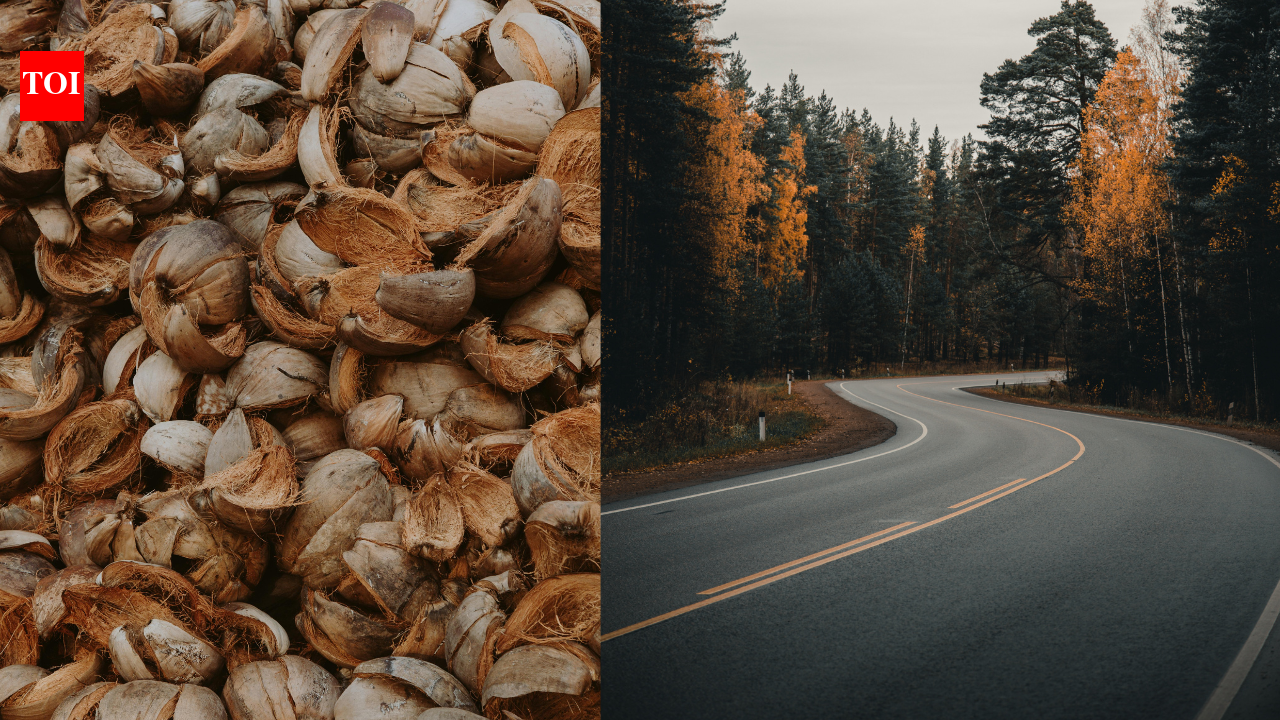
Researchers have explored the use of coconut shell biochar as an additive to enhance asphalt's properties, potentially transforming agricultural waste into a valuable component for road construction. The study, published in Next Materials in 2026, investigated how coconut shell biochar (CSB) can modify hot-mix asphalt to improve its stiffness, strength, and thermal stability. The biochar was produced through controlled laboratory pyrolysis and added to 40/50 penetration-grade asphalt in varying amounts. The modified binder and asphalt mixtures were then evaluated for mechanical, thermal, and moisture-related performance.
The research team, consisting of S. Mahalakshmi, Revathy Jayaseelan, and Gajalakshmi Pandulu, conducted laboratory tests and statistical optimization to determine the optimal amount of coconut shell biochar. Their findings suggest that 12.5% CSB is the ideal proportion for enhancing asphalt's properties. This amount resulted in a Marshall stability of 9.2 kN and a flow value of 2.6 mm, with air voids in the 3-5% range, suitable for good compaction.
Coconut shells, typically considered agricultural waste, can be transformed into biochar, a carbon-rich material, through pyrolysis. The study aimed to utilize this waste product to impart beneficial characteristics to asphalt. The addition of biochar reduced penetration and increased the softening point of the binder, indicating a stiffer material with improved thermal stability, crucial for roads in high-temperature environments.
The researchers used response surface methodology to identify 12.5% as the optimal biochar content. While tensile strength and moisture resistance improved up to 15% biochar content, they deteriorated beyond this point, confirming 12.5% as the balance point.
The study demonstrated enhanced stiffness, tensile strength, and moisture resistance in biochar-modified asphalt mixtures. Microstructural analyses, including scanning electron microscopy and X-ray techniques, provided insights into the interactions between biochar and asphalt. Although further research is needed to validate these findings in real-world applications, the study highlights the potential of coconut shell biochar as a sustainable material for pavement construction, particularly in regions with high temperatures and variable weather conditions.
Source: Biochar Feed