Full infill wins: tuning 3D-printed carbon fiber parts for space
Researchers found that fully dense 3D-printed carbon fiber reinforced PA12 provides optimal strength and thermal performance for space applications.
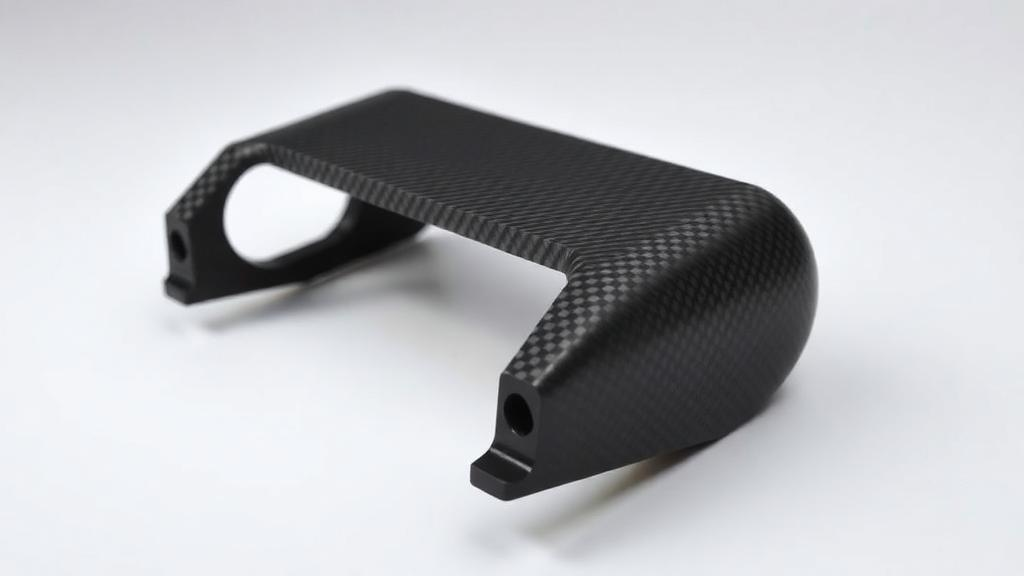
A recent study published in Polymer Bulletin explores the optimization of infill density for 3D-printed carbon fiber reinforced polyamide composites, specifically PA12-CF, in space applications. Researchers Jaya Kori, Somnath Chattopadhyaya, Sayan Chatterjee, and Madhulika Srivastava investigated how varying the internal structure of these components affects their mechanical and thermal properties. By testing infill densities of 60, 80, and 100 percent, the team provided insights into how the internal configuration influences strength and thermal behavior in the challenging environment of space.
The study focused on PA12-CF, a composite material made from polyamide 12 nylon reinforced with short carbon fibers, using fused deposition modeling (FDM). This technique allows for the creation of parts layer by layer, with the option to adjust the internal fill fraction. The research revealed that while fully dense parts exhibited the highest specific compressive and flexural strengths, the 80 percent infill specimens achieved the highest specific tensile strength, outperforming fully dense parts by 2.32 percent.
Beyond mechanical properties, the study also examined thermal performance using the hot disc transient plane source method. Results indicated that higher infill densities improved thermal conductivity and heat capacity, with full density achieving the highest values. This suggests that denser parts are better at conducting and storing heat, which is crucial for managing thermal conditions in space.
To determine the optimal infill density, the researchers employed the Technique for Order Preference by Similarity to Ideal Solution (TOPSIS), a decision-making method that ranks alternatives based on their proximity to an ideal solution. The analysis concluded that 100 percent infill offers the best overall balance of thermo-mechanical performance for PA12-CF parts.
This study provides valuable data for the space industry, where reducing the mass of structural components can lower launch costs and increase payload efficiency. The findings offer a quantitative basis for selecting print settings, emphasizing the advantages of solid infill for achieving a balanced performance in 3D-printed satellite hardware.
Source: Carbon Fiber Feed