Graphene Applied to Gymnasts' Uniforms and Artificial Muscles
Researchers at KAIST have discovered liquid crystal behavior in graphene oxide, marking a world first in materials science.
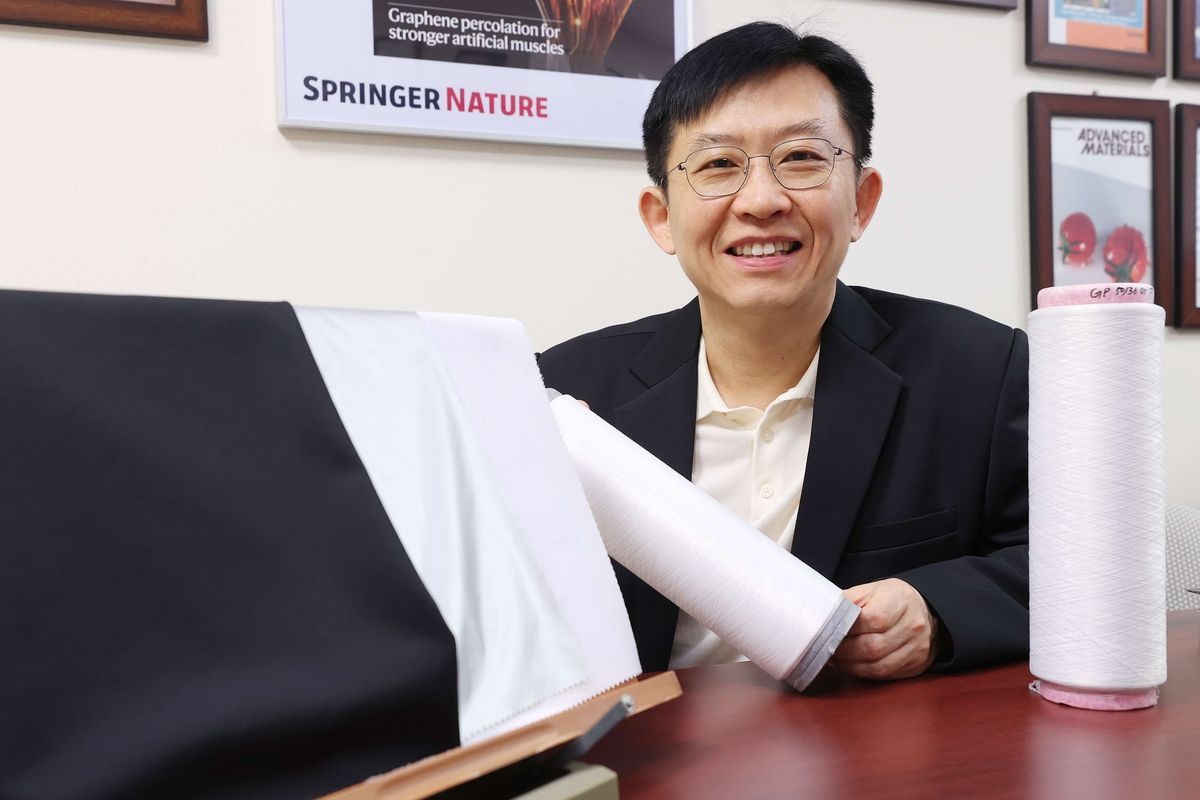
South Korea's national gymnastics team competed at the 2026 Aichi-Nagoya Asian Games in uniforms made from GrapheneTex, a fabric incorporating graphene oxide. This advanced carbon material, known for its lightness and elasticity, was integrated into textiles to enhance athletic performance during aerial rotations and landings.
Graphene, a single layer of carbon atoms arranged in a honeycomb lattice, is gaining traction in everyday products. Initially isolated in 2004, its properties include high strength and excellent thermal and electrical conductivity. Despite these attributes, processing challenges have historically limited its commercial applications. Professor Kim Sang-ouk from KAIST shifted focus to graphene oxide, which disperses easily in water, facilitating practical applications through solution processing.
Kim's 2011 discovery revealed that graphene oxide flakes align in a liquid crystal state when dispersed in water at certain concentrations. This alignment allows for the creation of fibers or films, paving the way for mass production. His team secured a patent and partnered with Graphene All to scale production, transforming graphene oxide from a lab material to a commercially viable product.
Graphene oxide's integration into consumer goods is expanding. Smyze toothbrushes utilizing this technology have sold millions since 2023. Graphene-based fabrics were also used in the 2024 Paris Olympics and are now in the gymnastics team's apparel. Graphene All's textile division aims for significant revenue growth, targeting 100 billion won within three years.
Research into graphene fibers for artificial muscles is ongoing, with potential applications in robotics. These fibers, capable of contraction and relaxation, are seen as crucial for developing wearable robots and humanoids. The team is also exploring graphene's use in ultra-hard alloys and semiconductor equipment.
Global competition in graphene oxide research is intensifying, with China making notable advancements. A Zhejiang University team recently developed a technique for aligning graphene oxide in glycerol, achieving high tensile strength and thermal conductivity. Kim's team published a commentary in Nature Materials, highlighting the importance of uniform alignment in graphene fibers for strength and heat transfer.
Kim emphasizes the need for sustained government support in materials research to maintain South Korea's competitive edge. Advanced materials require long-term investment to transition from discovery to industrial application, and once integrated into supply chains, they are difficult to replace.
Source: Graphene Feed