How MXene-Cellulose Composites Could Transform Wound Care and Wearables
Researchers developed a biodegradable hydrogel combining Ti3C2Tx MXene and bacterial cellulose, potentially enhancing wound care and wearable technology applications.
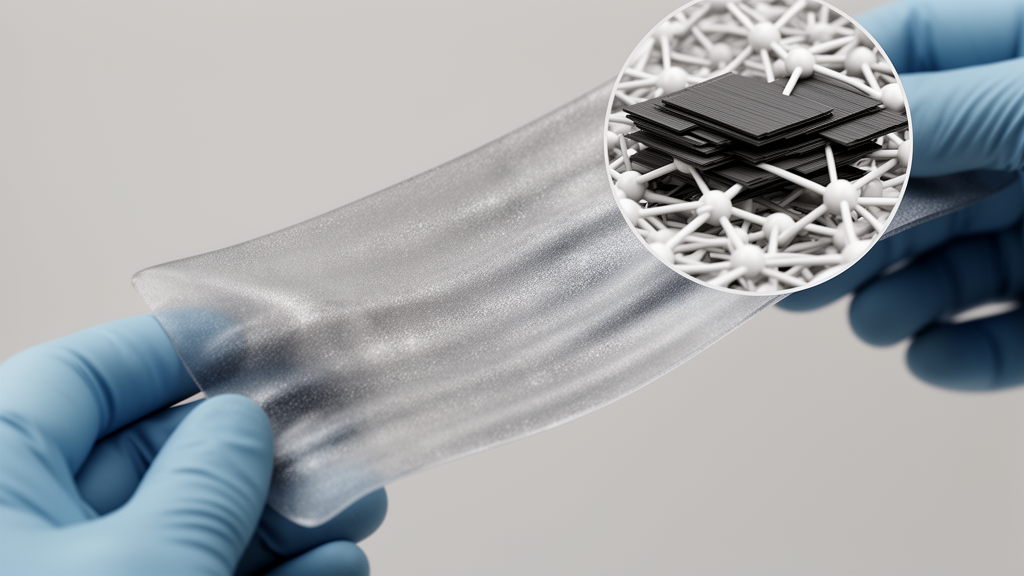
A recent review in Frontiers in Sensors explores the potential of MXene-cellulose composites in healthcare applications, highlighting their properties as electrically conductive, mechanically robust, biocompatible, and biodegradable materials. Authored by Mokae Bambo, Teboho Clement Mokhena, and Joe Modise, the review suggests that these composites could be pivotal for next-generation wound dressings and wearable health monitors. The study emphasizes the growing need for nanotechnology-based solutions in healthcare due to increasing pressures from chronic diseases and aging populations.
MXenes, a family of two-dimensional transition metal carbides, nitrides, and carbonitrides, have been of interest since their discovery in the early 2010s. These materials, derived from chemically exfoliating MAX phases, exhibit impressive electrical conductivity, thermal conductivity, and hydrophilicity. However, their application in healthcare faces challenges such as restacking, structural instability, and toxic residues from common synthesis methods.
Cellulose, the most abundant organic polymer, offers a solution to these challenges. Its hydroxyl-rich surface can form strong bonds with MXene terminations, creating a conductive network within a biocompatible scaffold. This partnership enhances the mechanical properties and stability of MXenes, making them suitable for biomedical applications.
The review discusses various synthesis methods for MXenes, including fluoride-free routes and alkaline treatments, which improve biocompatibility and reduce toxicity. These methods, combined with fabrication techniques like vacuum filtration and layer-by-layer self-assembly, allow for the creation of composites with tailored properties.
In healthcare, MXene-cellulose composites show promise in wound care and wearable sensors. For wound care, these materials can form biodegradable hydrogels that enhance cell proliferation and accelerate healing. In wearable devices, they convert mechanical deformation into electrical signals, enabling the monitoring of joint movements and other physiological activities.
Challenges remain, particularly regarding MXene oxidation and cytotoxicity. Strategies such as freeze-drying, antioxidant integration, and careful dose management are necessary to mitigate these issues. The review calls for further research into green synthesis methods, scalable fabrication, and long-term safety studies to advance these materials from laboratory research to clinical use.
The authors align their work with the United Nations Sustainable Development Goals, advocating for responsible material design and life-cycle assessment. They envision a future where MXene-cellulose composites contribute to sustainable and effective healthcare solutions.
Source: MXenes