Isar Aerospace carbon fiber composite rocket reaches orbit
Isar Aerospace's Spectrum rocket, made with carbon fiber composites, successfully reached orbit on its second flight.
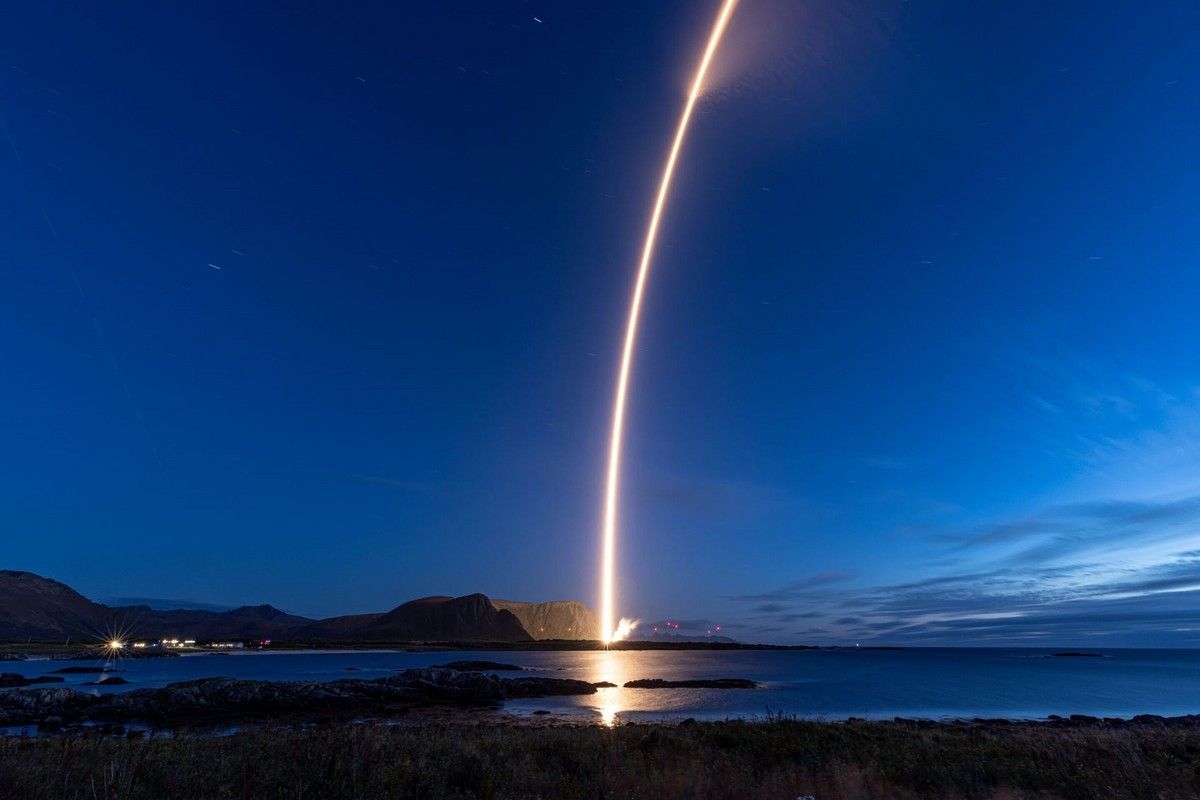
Isar Aerospace GmbH (Ottobrunn, Germany) successfully reached orbit on September 5 with the second flight of its Spectrum launch vehicle, marking a milestone for European commercial space companies. The Spectrum's primary structure is a single carbon fiber composite part, manufactured through an automated process. Multiplast - Groupe Carboman (Vannes, France) has produced four 6-meter-long fairings over the past three years, integrating the heat shield into the composite using an innovative method. Automation is crucial to Isar Aerospace's strategy to scale production, as highlighted by JEC Composites.
The mission, named "Onward and Upward," launched from Isar Aerospace's complex at Andøya Spaceport in Norway at 10:12 p.m. CEST. The two-stage vehicle successfully completed stage separation, second stage ignition, fairing jettison, and orbital insertion before deploying its payloads, which included five CubeSats and one experiment from the German Space Agency's Microlauncher Competition, funded by the European Space Agency's Boost! program.
Daniel Metzler, CEO and co-founder of Isar Aerospace, stated, "We achieved within a few years what had taken the European space industry decades before." The company plans to rapidly scale launch vehicle production to fulfill its order pipeline and meet increasing global demand.
Composite materials are integral to this scale-up. Isar Aerospace emphasized that its automated production process allows for the efficient scaling of high-performance rocket stages. This approach combines the weight benefits of composites with a manufacturing process designed for higher production volumes.
Production of Spectrum vehicles numbered 3 through 7 is already underway. Isar Aerospace is nearing completion of a 40,000-square-meter integrated production facility near Munich, which will eventually support the manufacturing of up to 40 launch vehicles annually. Additionally, a second launch complex is under construction in Nova Scotia, Canada, to serve mid- to high-inclination orbits for Earth observation and communications missions.
Source: Carbon Fiber Feed