Lab-scale study assesses groundwater treatment using combined methods
Researchers evaluated biochar's effectiveness in treating groundwater at a laboratory scale, highlighting its potential due to high adsorption capacity and large surface area for removing heavy metals.
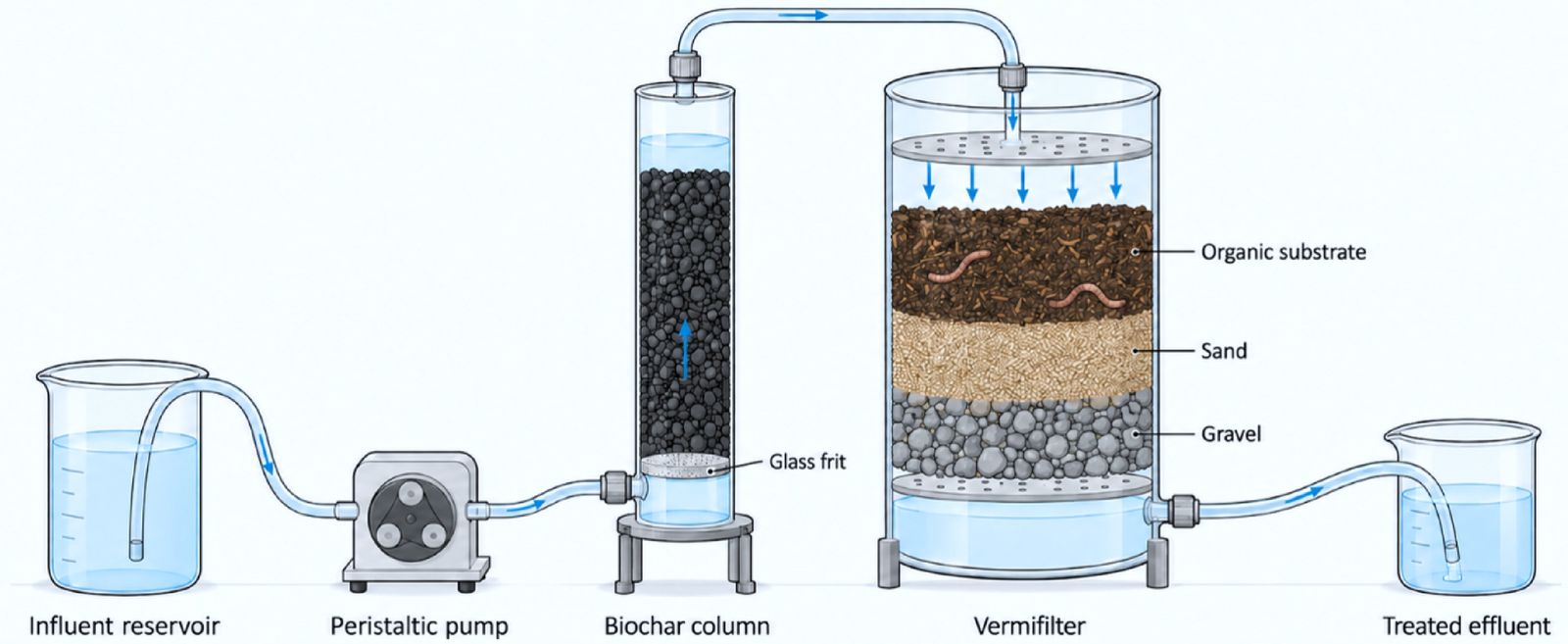
Groundwater serves as a crucial source of fresh water for human consumption, agriculture, and industry globally, particularly in small urban and rural areas. However, its quality is declining due to human activities such as mining, industrial discharge, agricultural runoff, and poor waste management. These activities often introduce heavy metals like chromium, arsenic, lead, and cadmium into groundwater systems. Unlike organic pollutants, these metals do not degrade and can accumulate in living organisms, leading to health issues such as neurological disorders, kidney failure, and cancer. Therefore, effective and economical groundwater treatment technologies are urgently needed.
In Sub-Saharan Africa, rapid urban growth has outpaced municipal infrastructure and services, creating significant environmental challenges in urban fringe areas. Limited financial resources and inefficient institutions have led to unauthorized waste disposal issues. The proliferation of illegal dumpsites highlights inadequate planning, weak governance, socioeconomic inequalities, and insufficient infrastructure. Understanding the interactions between land-use planning, informal settlements, and community waste disposal is essential to address the spatial and temporal distribution of dumpsites.
A key challenge is the relationship between municipal services, urban development, and land management. Peripheral settlements often grow faster than the extension of essential services, resulting in areas with inconsistent or inaccessible waste collection. Environmentally sensitive zones and open spaces are often used as informal dumping grounds. Research shows illegal dumping reflects governance failures, such as poor enforcement of environmental regulations and unclear land ownership. Weak community engagement with municipal authorities exacerbates the problem, as residents perceive governance as detached from their needs, leading to widespread illegal dumping.
Unmanaged dumpsites have severe environmental and public health consequences. Unlike sanitary landfills with leachate and gas control systems, illegal dumpsites lack environmental safeguards. They become pollution sources, with leachate contaminating groundwater and surface water. Waste burning releases harmful pollutants, while stagnant water fosters disease-carrying vectors. These impacts are severe in low-income communities near dumpsites, increasing environmental inequalities and straining public health services.
To address these issues, urban environmental research increasingly uses geospatial technologies for waste management and environmental monitoring. Geographic Information Systems (GIS) and remote sensing integrate environmental, socio-economic, and infrastructural data to understand waste disposal patterns and risks. Techniques like Kernel Density Estimation and Geographically Weighted Regression identify spatial clusters and factors influencing illegal dumping. Variables such as proximity to waste facilities, road access, land slope, settlement density, and vacant land availability help delineate vulnerable areas. This information supports targeted interventions, resource allocation, and municipal monitoring. However, more research is needed to combine spatial analysis with local government planning to develop effective waste management tools in rapidly growing African cities.
Biochar is gaining attention for water biotreatment due to its high adsorption capacity, large surface area, and functional group content. Produced through pyrolysis of organic waste under low oxygen conditions, biochar is a low-emission option for waste disposal and pollutant treatment. Biowaste sludge-derived biochar is particularly appealing, addressing disposal issues while creating a useful product. Heavy metal adsorption on biochar occurs through ion exchange, surface complexation, electrostatic attraction, and precipitation, making it effective for contaminant removal from water.
Source: Biochar Feed