MXene-wrapped phase change materials offer multitasking thermal energy solutions
Researchers have developed MXene-wrapped phase change materials using Ti3C2Tx MXene and gelatin aerogels to enhance thermal energy storage capabilities.
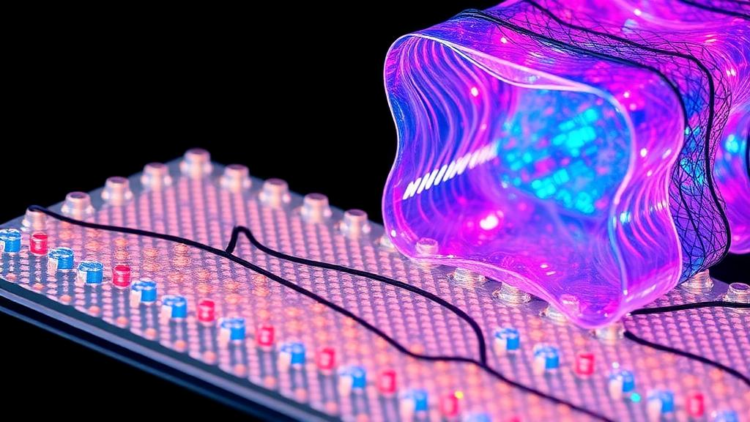
A recent review in the Journal of Materials Science highlights the potential of MXenes to address key challenges in phase change materials (PCMs). Authored by Yishen Wu, Yihan Huang, and Lei Li from the China University of Petroleum, the review examines a decade of research on MXene-enhanced PCMs and their applications in solar energy storage, battery safety, and infrared camouflage. This work is timely, as efficient thermal energy storage is crucial for achieving carbon neutrality goals, particularly in managing the variability of solar and wind power.
PCMs are known for their ability to absorb and release large amounts of heat during phase transitions, making them suitable for temperature regulation in various applications. However, traditional PCMs face issues such as leakage when melted, poor thermal conductivity, and limited energy conversion capabilities. MXenes, first isolated in 2011 as two-dimensional titanium carbide sheets, offer a solution by enhancing thermal conductivity and providing structural support to PCMs.
The review details the synthesis of MXenes, primarily through selective etching of MAX phases, and explores newer methods like electrochemical etching and laser synthesis. These processes influence the properties of MXenes, such as surface terminations and defect density, which affect their integration with PCMs. MXenes improve PCM performance by acting as thermal bridges, absorbent scaffolds, and energy converters.
Encapsulation strategies are crucial for PCM stability. MXene aerogels or hydrogels can be infused with molten PCMs to create form-stable composites. These composites maintain their shape above melting points and offer additional benefits like electromagnetic interference shielding. Hybrid frameworks with graphene or copper nanowires enhance conduction, while polymer partners add flexibility, enabling applications in fabrics and coatings.
MXene composites excel in solar photothermal conversion, efficiently converting absorbed solar energy into heat. Various MXene-based composites, including those with gelatin aerogels and gold nanorods, demonstrate high solar-thermal conversion efficiencies. These materials are also used in desalination and water purification processes.
Electrothermal applications are another frontier for MXene composites. Their electrical conductivity allows for efficient conversion of electrical energy into latent heat. This property is utilized in flexible films for wearable thermal management and electrically rechargeable heat packs. The review also highlights the role of MXenes in enhancing battery safety by preventing thermal runaway in lithium-ion cells.
Despite their potential, MXenes face challenges such as oxidative degradation and large-scale synthesis. However, ongoing research aims to improve their stability and reduce production costs. The review envisions MXene-based PCMs as integrated platforms for energy conversion, storage, and management, offering solutions for renewable energy intermittency and advanced thermal management.
Source: MXenes