Nanosheet interlayers convert conductive membranes into oily wastewater filters
Researchers developed an antifouling polypyrrole membrane using a tannic acid-anchored titania nanosheet and graphitic carbon nitride interlayer to filter oily wastewater.
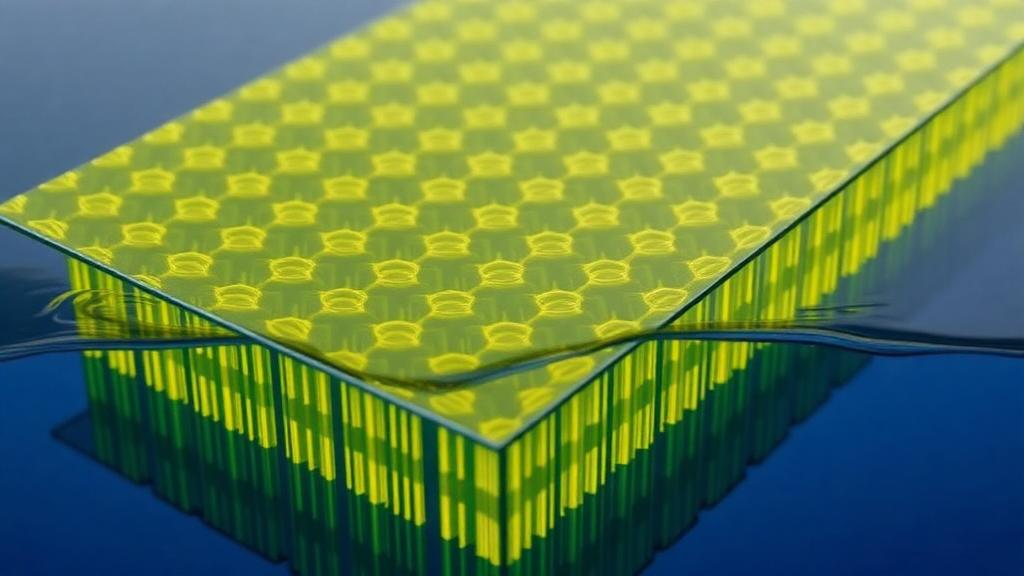
Researchers at King Fahd University of Petroleum and Minerals have developed an innovative antifouling membrane utilizing advanced carbon materials to enhance the filtration of oily wastewater. The membrane features a hybrid interlayer composed of titania nanosheets and graphitic carbon nitride, sandwiched beneath a conductive polypyrrole layer. This design aims to address the persistent issue of membrane fouling in conventional membrane bioreactors, which combine biological oxidation and membrane filtration.
The research team, led by Lukka Thuyavan Yogarathinam, Nadeem Baig, and Alexis Nzila, reported their findings in Results in Engineering. The choice of materials leverages the super-hydrophilicity and photocatalytic properties of titanium dioxide, alongside the visible-light activity and nitrogen-rich surface chemistry of graphitic carbon nitride. By integrating these materials into a single hybrid nanosheet, the team created continuous water-transport pathways that enhance the membrane's performance.
A key innovation in the membrane's construction is the use of coordination chemistry inspired by plant biology. Tannic acid, a natural polyphenol, forms a stable network with ferric iron, anchoring the nanosheets and regulating the polymerization of pyrrole monomers into the polypyrrole layer. This approach ensures the nanosheets remain active at the membrane surface, enhancing antifouling properties.
The hybrid membrane demonstrated significant performance improvements. It achieved a pure-water flux of 106.85 liters per square meter per hour, compared to 67.81 for the unmodified membrane. In oil-water emulsion separation, the hybrid membrane maintained a steady-state flux of 19.17 liters per square meter per hour and rejected 95.88 percent of oil content. The membrane also showed resilience against biofouling, maintaining higher flux rates and lower flux reduction when filtering biologically treated oily wastewater.
Stability tests confirmed minimal leaching of iron and titanium, ensuring the membrane's durability. The study highlights the potential of interlayer engineering using abundant nanomaterials and plant-derived compounds to create effective, fouling-resistant membranes for industrial water treatment applications.
Source: Graphite Feed