New graphene layer extends lithium-sulfur battery lifespan to 1,000 cycles
Researchers at Tohoku University have developed a graphene-based interlayer for lithium-sulfur batteries that maintains capacity over 1,000 charge-discharge cycles. This advancement addresses the polysulfide shuttle effect, enhancing the lifespan and efficiency of lithium-sulfur batteries, which are seen as a promising alternative to lithium-ion technology due to their higher energy storage potential.
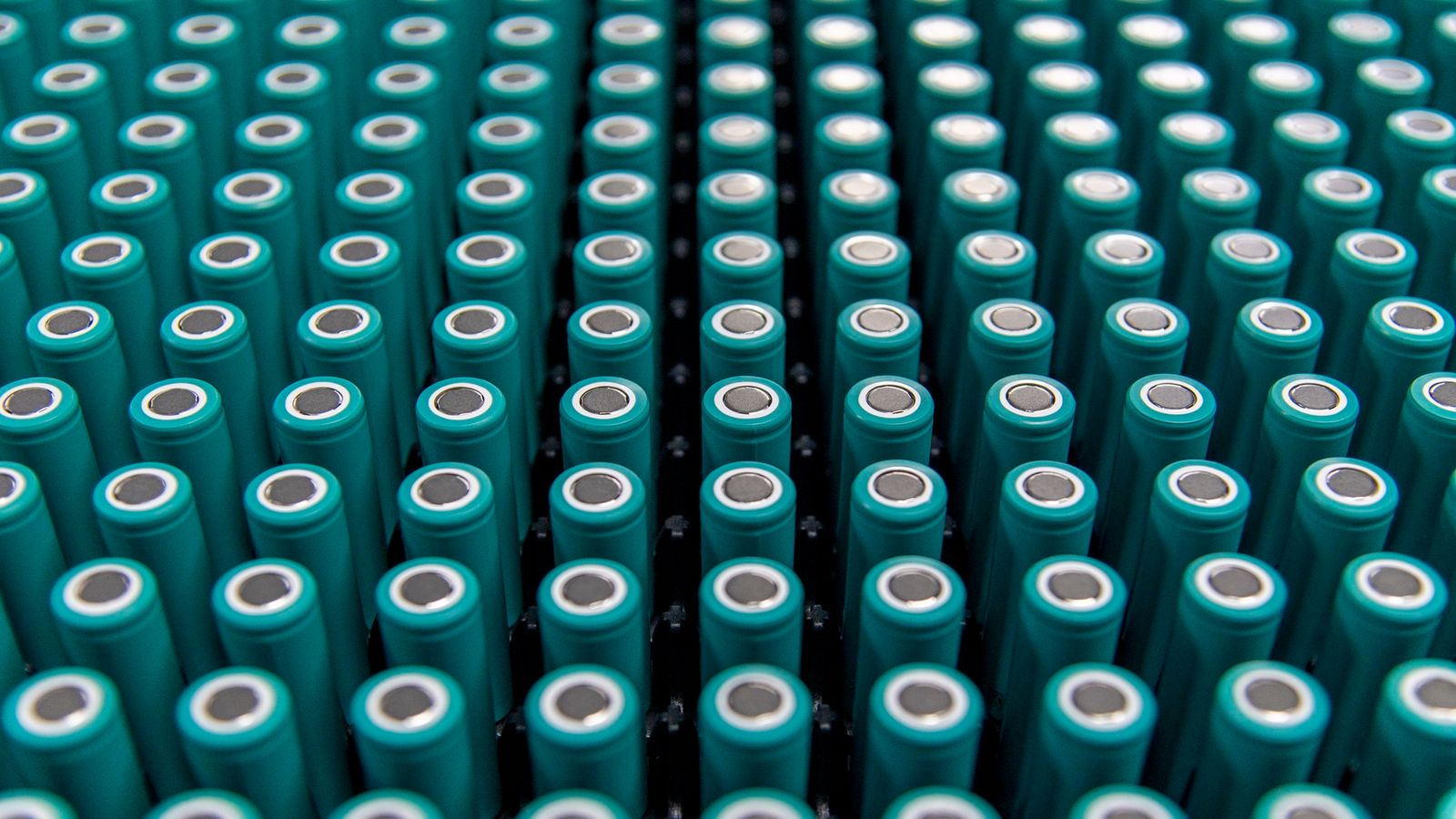
Researchers have developed a graphene-enhanced interlayer that addresses a major challenge in commercializing lithium-sulfur batteries, enabling them to maintain capacity over 1,000 charge-discharge cycles while offering high energy density.
The team from Tohoku University and collaborating institutions engineered a covalent organic framework (COF)-graphene interface to prevent the movement of lithium polysulfides within the battery. This movement, known as the polysulfide shuttle effect, has historically reduced the lifespan and efficiency of lithium-sulfur batteries.
Lithium-sulfur batteries are a promising alternative to lithium-ion technology due to sulfur's abundance, low cost, and high energy storage potential. However, the migration of dissolved lithium polysulfides during charging and discharging can lead to side reactions and rapid capacity loss.
The researchers designed an interlayer that chemically captures polysulfides, allowing them to continue participating in the battery's electrochemical reactions. This new material, TUS-44, is a tetrathiafulvalene-crown ether covalent organic framework combined with conductive graphene, forming a lightweight layer that traps lithium polysulfides and accelerates electron transport.
The COF includes imine nitrogen, crown-ether oxygen, and sulfur-rich tetrathiafulvalene sites that interact with lithium polysulfides. Graphene provides a conductive pathway, enhancing charge transfer and supporting sulfur conversion during battery operation.
In laboratory tests, lithium-sulfur cells with the TUS-44@G interlayer achieved a reversible capacity of 1,455.7 mAh g⁻¹ at 0.2 A g⁻¹ and maintained 773 mAh g⁻¹ at a high current density of 10 A g⁻¹. The batteries also showed capacity fading of only 0.034% per cycle over 1,000 cycles at 5 A g⁻¹.
The researchers also developed a lithium-sulfur pouch cell using the same interlayer, which achieved an initial energy density of approximately 674 Wh kg⁻¹, demonstrating the material's potential for practical high-energy applications.
Saikat Das, junior associate professor at the Institute of Multidisciplinary Research for Advanced Materials, Tohoku University, explained that the goal was to design an interlayer that actively manages the reaction pathway of polysulfides rather than merely blocking them. By integrating crown ether and tetrathiafulvalene chemistry into an ordered COF and coupling it with graphene, a cooperative interface was created that efficiently anchors, redistributes, and converts sulfur species.
Unlike conventional porous carbon materials, which interact weakly with polysulfides, covalent organic frameworks can be precisely engineered for pore structures and chemical functionalities. This allows them to capture lithium polysulfides while promoting electron transport and sulfur conversion simultaneously.
The TUS-44 was synthesized using Schiff-base chemistry to create a two-dimensional porous framework with uniform micropores and a high surface area. When coated onto a polypropylene separator with graphene, the material formed a thin interfacial layer that absorbed electrolyte while suppressing polysulfide migration.
Professor Yuichi Negishi of Tohoku University stated that this study demonstrates the potential of reticular chemistry to program battery interfaces at the molecular level. The TUS-44@G design offers a pathway to lightweight, durable, and high-rate lithium-sulfur batteries by combining polysulfide immobilization with catalytic sulfur conversion.
Source: Graphene Feed